

Kadyrov "lashed Out" At Federal Security Forces
- The "Socrates' Sieve" Telegram channel
- 29.11.2026, 15:35
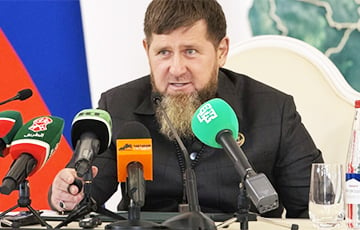
The Kremlin finds itself facing a difficult governance dilemma.
A statement by the head of the Chechen Republic Ramzan Kadyrov during a “direct line” broadcast on November 24 escalated the long-standing standoff between the region’s leadership and federal law enforcement agencies. During the live broadcast, Kadyrov categorically questioned the legality of the Russian Federation Supreme Court’s October 14 ruling, which the “Community of Followers of Batal-Haji Belkhoroev—the Batal-Hajins” was designated a terrorist organization and banned within the country.
Kadyrov shifted the blame for the criminal prosecution of the group onto its former members, calling them “renegades” who allegedly committed unlawful acts and, after leaving the “Sufi” brotherhood, began spreading slander. According to the Chechen leader, these statements were manipulated by the Second Directorate of the FSB of the Russian Federation, which led to the imposition of collective responsibility on the entire community, including women and children.
Such rhetoric goes far beyond an emotional reaction, as the head of the federal subject is publicly demonstrating a willingness to interfere in the work of the judicial and executive branches of government through informal connections.
The promise to appeal directly to President Putin and secure a review of the verdict by the highest court underscores the regional leader’s confidence that personal agreements carry more weight in the Russian political system than established legal procedures.
It is noteworthy that the General Prosecutor’s Office filed the lawsuit seeking to ban the organization, and that law enforcement agencies—the FSB, the Investigative Committee, and the Ministry of Internal Affairs—had previously linked representatives of this group to a number of high-profile cases. Investigators examined the involvement of certain members of the community in supplying weapons to the perpetrators of the terrorist attack at the “Crocus City Hall” concert venue in March 2024, aiding in the murder of General Igor Kirillov, commander of the Chemical, Biological, Radiological, and Nuclear Defense Forces, in December 2024, as well as ties to the banned “Imarat Kavkaz.”
Against the backdrop of these accusations by the relevant federal authorities, the intercession of an official who has received numerous departmental awards for countering extremism appears particularly contradictory.
In 2016, Ramzan Kadyrov received a commemorative medal from the National Anti-Terrorism Committee “For effective and fruitful work in the fight against extremism and terrorism,” and in subsequent years, he and his family members were awarded dozens of state and departmental honors.
As a key argument in favor of rehabilitating the Batalhajins, the head of Chechnya cited the participation of some followers of the Sufi brotherhood in combat operations against Ukraine as part of the “SOBR-Akhmat” unit.
In his speech, he presented the military service of individual members as unequivocal proof of the entire community’s loyalty and as a kind of indulgence justifying the demand to overturn court rulings.
At the same time, Kadyrov shifted the discussion to a religious plane, declaring that the community belongs to a “single tariqa.” Framing the issue in this way makes the enforcement of federal law appear, in the eyes of part of the population, as an encroachment on the shared spiritual traditions of Chechnya and Ingushetia, which could exacerbate inter-clan tensions and complicate efforts to maintain law and order in areas where followers of the brotherhood live in large numbers.
The conflict is further exacerbated by the Chechen leader’s harsh remarks directed at the heads of federal agencies — Investigative Committee Chairman Bastrykin and Interior Minister Kolokoltsev, whom he had previously publicly accused of incompetence and threatened with divine retribution.
The combination of personal attacks against the heads of law enforcement agencies and a direct challenge to the verdict of the Supreme Court of the Russian Federation creates a complex governance dilemma for the Kremlin. The federal government’s subsequent response to this public defiance will reveal whether the Russian judicial system retains at least formal autonomy in matters of counterterrorism, or whether the regional leader’s political loyalty ultimately places him above federal legal norms.
Telegram channel “Socrates’ Sieve”

Bank's name: Bank Millennium S.A.
Address: ul. Stanislawa Zaryna, 2A, 02-593, Warszawa
IBAN: PL97116022020000000216711123
SWIFT: BIGBPLPW
Name of the account holder: Fundacja “KARTA ‘97”
Purpose/title of payment: Donation for statuary aims
You can contact us by the e-mail charter97@gmail.com