


Bloomberg: Clouds Are Gathering Over Orbán's Oligarchs
3- 24.04.2026, 11:45
- 3,504
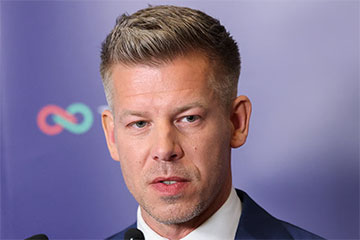
What will happen to their fortunes after the change in power?
The defeat of Viktor Orban's government has drawn attention to the biggest financial beneficiaries of his regime, who enriched themselves during his years in power. Hungary's new Prime Minister Peter Magyar promises a large-scale audit of their assets, writes Bloomberg.
It is noted that some of the country's wealthy businessmen have already adapted to the new reality, supporting the new government's initiatives to introduce a wealth tax.
At the same time, other representatives of the former entourage look more vulnerable. We are talking, in particular, about Orban's son-in-law Istvan Tiborc and his childhood friend Lorenz Mesaros. The new prime minister has already announced his intention to probe the billions of dollars in assets accumulated during his predecessor's 16-year rule.
Magyar repeatedly mentioned both businessmen during the election campaign, promising to investigate exactly how they obtained their fortunes. Tiborz, who does business in Hungary in the banking and logistics sectors, moved to the United States. Mesaros, who has been called "Orban's wallet," has built a business empire from banking to construction.
Magyar, who won the election on a promise to root out corruption and fix the economy, plans to probe the accumulation of wealth over the past 20 years and set up an agency to recover assets that may have been illegally sold or transferred from state ownership.
According to the Bloomberg Billionaires Index, Mesaros controls stakes in Opus Global Nyrt. and MBH Bank, which are worth at least $1.5 billion. Their shares have fallen markedly since Orban's defeat. Tiborz's main asset is private company BDPST Group, whose net worth is estimated at about $100 million.
The new government's probes in Hungary are expected to affect more than just business. Magyar has also accused leading politicians in the ruling party of enriching themselves and their families. In addition, the newly elected head of government does not rule out checks at the central bank.

Bank's name: Bank Millennium S.A.
Address: ul. Stanislawa Zaryna, 2A, 02-593, Warszawa
IBAN: PL97116022020000000216711123
SWIFT: BIGBPLPW
Name of the account holder: Fundacja “KARTA ‘97”
Purpose/title of payment: Donation for statuary aims
You can contact us by the e-mail charter97@gmail.com