“Belarusian nuclear power plant creates new risks”
1- 27.04.2026, 11:26
MEPs issued a statement on the anniversary of the Chernobyl disaster.
Chair on behalf of the Bureau of the EP Delegation for Relations with Belarus Małgorzata Gosiewska, her deputies Tomas Tobé and Michał Kobosko, as well as the Chair of the Delegation for Relation with Ukraine Pekka Toveri, and the European Parliament’s standing rapporteur on Belarus Helmut Brandstätter, issued a statement on the occasion of the 40th anniversary of the Chernobyl disaster. Charter97.org publishes the text of the statement.
“26 March 2026 — Forty years ago, the world witnessed one of the most devastating technological catastrophes in human history. The name “Chornobyl” has since become a universal symbol of tragedy, of the failure of public responsibility and transparency, a warning of the dangers of radiation, and a reminder of consequences that outlive generations.
The explosion at the nuclear power plant spread radioactive fallout across much of the Northern Hemisphere. While Belarus bore the heaviest burden – with nearly a quarter of its territory contaminated – the disaster began on Ukrainian soil, in communities whose names have become synonymous with loss: Pripyat, once a vibrant city, now frozen in time; villages erased from maps; families uprooted overnight. Across borders, millions of lives were irreversibly altered.
Four decades later, its consequences have not faded. They remain in poisoned soil and in the fragile health of affected communities. Yet as the years pass, memory risks fading, and with it, the full weight of the catastrophe. Chornobyl is not only history – it is a living disaster whose impacts will endure for generations.
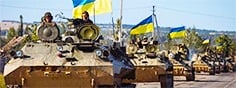
More recently, that memory has been tested again. The ongoing Russian invasion of Ukraine and repeated threats to nuclear facilities – including the occupation of the Chornobyl zone in 2022 and the dangers surrounding the Zaporizhzhia Nuclear Power Plant — have brought the world perilously close to new nuclear risks.
The reckless Russian drone attack on the New Safe Confinement structure in February 2025 was yet another stark reminder of the need for international norms even during armed conflict, as well as for nuclear safety and effective mechanisms for their enforcement. Nuclear safety cannot be separated from peace, and armed aggression near nuclear sites places entire regions – and beyond – at risk. Durable peace must also be underpinned by credible and effective mechanisms for nuclear safety and oversight.
On this anniversary, we reaffirm the urgency of preventing future radiation catastrophes. This requires not only preserving the memory of Chornobyl beyond commemorative dates, but also ensuring that its lessons are not overshadowed by short-term political or economic narratives. The truth of Chornobyl must remain visible, because forgetting it would mean accepting the risk of repetition.
We draw particular attention to Belarus. Following the consolidation of power by the Lukashenka regime, the authorities have systematically downplayed the true scale of the catastrophe, restricted public access to medical statistics, and, without proper scientific justification, reclassified contaminated territories as “clean” while resuming agricultural production on these lands. Such practices pose serious risks to the health of current and future generations. This reflects a broader pattern whereby the legacy of Chornobyl is being obscured rather than addressed.
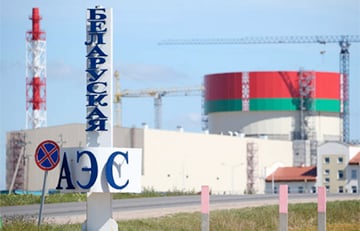
Today, this legacy is further compounded by ongoing risks – including for citizens of European Union Member States – associated with the Astravets Nuclear Power Plant. Calls on the authorities to ensure full transparency and independent monitoring, and to halt the use and resettlement of contaminated territories, while restoring protections for affected populations.
The international community must act with resolve. It must strengthen accountability for the concealment of radiation risks and for attacks on nuclear facilities, particularly in the context of Russia’s illegal war of aggression against Ukraine. It should establish an independent and publicly accessible global radiological registry and recognise the deployment of nuclear weapons in Belarus as a threat to collective security.
Forty years after Chornobyl, military uses of nuclear technology continue to pose profound risks to humanity and the planet. We owe it to those who suffered, and to those yet to come, to act with responsibility and clarity. Only through transparency, scientific integrity, and respect for human life can we truly reckon with the legacy of Chornobyl and ensure that such a catastrophe is never repeated,” the statement reads.

Bank's name: Bank Millennium S.A.
Address: ul. Stanislawa Zaryna, 2A, 02-593, Warszawa
IBAN: PL97116022020000000216711123
SWIFT: BIGBPLPW
Name of the account holder: Fundacja “KARTA ‘97”
Purpose/title of payment: Donation for statuary aims
You can contact us by the e-mail charter97@gmail.com