
Qatar Resumes LNG Exports Through The Strait Of Hormuz
5- 10.05.2026, 9:11
- 4,978
For the first time since the war with Iran began.
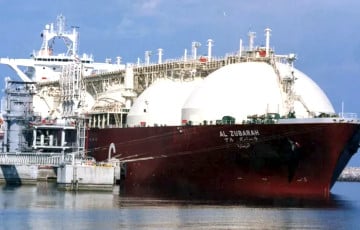
Qatar was able to bring a tanker carrying liquefied natural gas through the Strait of Hormuz for the first time since the war with Iran began. This could indicate a gradual recovery of supplies from the region.
According to Bloomberg.
Vessel tracking data shows that the Al Kharaitiyat LNG tanker, which was loaded at Qatar's Ras Laffan export terminal earlier this month, has already left the Strait of Hormuz and is in the Gulf of Oman.
The vessel's next destination is listed as Pakistan.
Bloomberg noted that the tanker likely took a northern route along the coast of Iran, which was agreed upon by Tehran.
According to the Equasis database, the Al Kharaitiyat tanker is owned by Qatar's Nakilat. Nakilat and QatarEnergy have not yet commented on the situation.
Since the beginning of the conflict, the Strait of Hormuz has remained virtually blocked, which has seriously affected the global supply of liquefied natural gas. Against this background, LNG prices have risen sharply and Asian countries have faced fuel shortages.
Despite the successful Al Kharaitiyat flight, the publication notes that this does not yet mean a return to pre-war export volumes. Before the escalation, about three LNG tankers passed through the Persian Gulf every day.
Qatar had previously tried several times to export LNG through the Strait of Hormuz, but the ships were eventually forced to turn around. According to Bloomberg, since the war began in late February, Qatar has not been able to export a single cargo of LNG from the Persian Gulf.
With the war in Iran and the actual blockage of the Strait of Hormuz, the world's oil reserves have begun to decline rapidly. According to Bloomberg, only from the beginning of March to the end of April global reserves decreased by about 4.8 million barrels per day - this is a record rate of depletion.
The greatest risks of fuel shortages are now recorded in Asia, particularly in Indonesia, Pakistan, Vietnam and the Philippines. At the same time, oil and jet fuel stocks are also falling rapidly in the US and Europe, adding to fears of a new spike in global energy prices.

Bank's name: Bank Millennium S.A.
Address: ul. Stanislawa Zaryna, 2A, 02-593, Warszawa
IBAN: PL97116022020000000216711123
SWIFT: BIGBPLPW
Name of the account holder: Fundacja “KARTA ‘97”
Purpose/title of payment: Donation for statuary aims
You can contact us by the e-mail charter97@gmail.com