
Germany Reacts To Putin's Strange Idea Of Negotiating With The EU
19- 10.05.2026, 18:17
- 7,496
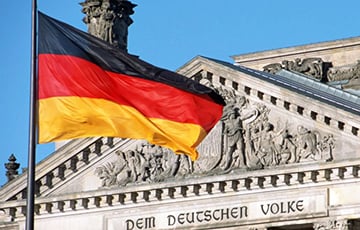
Berlin was skeptical of the Kremlin's proposal to make Gerhard Schroeder a mediator.
Berlin is not thrilled with the Kremlin's idea to appoint former German Chancellor Gerhard Schroeder as the EU's chief representative in talks with Russia on peace in Ukraine. This is according to Reuters, citing an unnamed German government official.
The publication recalls that European Council President Antonio Costa not long ago expressed his belief that the EU has "potential" to negotiate with Russia on the future security architecture in Europe. Yesterday, Vladimir Putin said Schroeder would be the best mediator if such talks were to actually begin.
Commenting on the Russian dictator's statement, an unnamed Reuters interlocutor said the Kremlin's offer was not convincing because Moscow had not moved away from its maximalist demands. He said the first test of Russia's ability to negotiate would be Moscow's willingness to extend the three-day ceasefire that is currently in place.
The German government official added that Putin had put forward a series of false proposals aimed at splitting the Western alliance. Given this, Berlin sees no sign of Moscow's interest in serious negotiations.
Who is Gerhard Schroeder
Gerhard Schroeder was German chancellor from 1998-2005 and became one of the brightest symbols of pro-Russian politics in Western Europe. During his tenure, he actively promoted an energy partnership with Russia, which led to Germany's significant gas dependence. Schroeder himself was the one who pushed for the construction of the infamous Nord Stream pipeline, signing the agreement with Vladimir Putin just weeks before his resignation in 2005.
After his political career ended, Schroeder quickly moved on to work for Russian energy companies. Just weeks after resigning as chancellor, he chaired Nord Stream AG's shareholder committee and later held top positions on the supervisory boards of Gazprom and Rosneft. For this "job" he received cosmic salaries, which critics considered "payment" for his pro-Russian activities during his chancellorship.
After Russia's full-scale invasion of Ukraine in February 2022, Schroeder denounced the aggression as a "mistake" but maintained a close relationship with Putin and refused to distance himself from him. He tried to act as an unofficial mediator, criticized Russia's "demonization," called for renewed energy cooperation, and believed that the West and the United States had derailed possible peace agreements in the spring of 2022.

Bank's name: Bank Millennium S.A.
Address: ul. Stanislawa Zaryna, 2A, 02-593, Warszawa
IBAN: PL97116022020000000216711123
SWIFT: BIGBPLPW
Name of the account holder: Fundacja “KARTA ‘97”
Purpose/title of payment: Donation for statuary aims
You can contact us by the e-mail charter97@gmail.com