

The U.S. Asked Three Countries To Lift Sanctions On Belarusian Potash
35- 22.05.2026, 14:42
- 13,972
(updated) The information was confirmed by the Ukrainian Foreign Ministry.
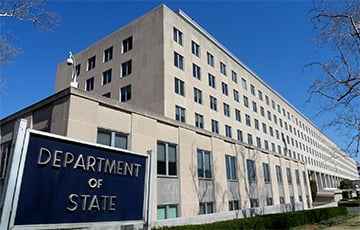
The United States officially asked Lithuania, Poland and Ukraine to lift sanctions on Belarusian potash in order to allow the transit of this product through their territory. This is evidenced by an informal appeal of the US State Department to the three capitals, which was read by Radiyo Svaboda.
The one-page document says: "Now that the United States has lifted US sanctions on Belaruskali, American companies are interested in buying and transporting Belarusian potash. This would require transit through EU countries bordering Belarus or through Ukraine to avoid transportation through Russia."
The appeal also notes that "the United States is interested in exploring potential routes for transit of Belarusian potash to alleviate global shortages through Poland, Lithuania, or Ukraine and looks forward to future discussions with you on this topic."
The Ukrainian Foreign Ministry confirmed to Radyo Svaboda that it had received the letter. The foreign ministries of Poland and Lithuania have not yet responded to requests. However, Lithuanian Foreign Minister Kiastutis Budrys recently admitted that Washington was putting pressure on the country to allow the transit of Belarusian products.
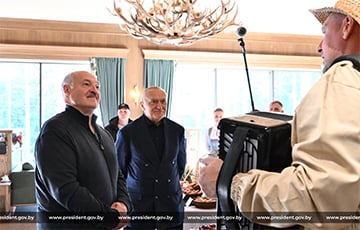
In addition to easing restrictive measures against Belarusian potash giant Belaruskali in March, Washington also removed from the sanctions list its marketing division, Belarusian Potash Company, as well as Agrodevelopment, following an agreement to release 250 political prisoners in Belarus.
These sanctions had been in place since 2021. Then Alexander Lukashenko's regime forced a Ryanair passenger plane flying from Greece to Lithuania to land in Minsk on May 23, 2021, to detain opposition blogger Roman Protasevich and his partner Sofia Sapieha.
The European Union, for its part, earlier this year unanimously extended economic sanctions against Belarus for another year. These measures include a ban on imports of Belarusian potash fertilizers and targeted sanctions against companies such as Belaruskali.
Although nitrogen-based fertilizers can technically still be imported into the EU, they are also being phased out of the market. Last year, the EU imposed additional duties of €40-45 per ton on top of a 6.5 percent tariff on such products from Belarus and Russia. These duties should rise to €60 per ton this summer and to €80 next year, and reach €350 per ton by 2028.
For several months, European officials both publicly and in private conversations denied that the U.S. was putting pressure on Europe to ease sanctions against Belarus.
The Cole letter, however, actually promotes such an idea, noting, "Transit through EU countries would require either that the European Union lift sanctions on Belarusian potash or that transit countries waive them through an appropriate legal mechanism. Any purchase of Belarusian potash by the West could deprive Russia of the opportunity to sell its own potash and prevent it from benefiting from transit fees."
The document also mentions a possible compromise option: "Part or all of the transit fees received under this arrangement could be directed by the transit country to a special fund to support Ukraine's self-defense."
The latest request signals both a warming of relations between the United States and Belarus since Donald Trump returned to the White House last year, and a growing global demand for fertilizer following restrictions on shipping in the Strait of Hormuz due to the broader conflict in the Middle East.
Through this waterway typically passes about a fifth of the world's energy resources, but also up to 30 percent of global fertilizer exports, including about 20 percent of global trade in liquefied natural gas, a key component in the production of synthetic fertilizers.
Kalium is critical to food production. Together with nitrogen and phosphorus, it is used in the fertilizers needed to fully cycle important crops such as wheat, rice and corn - products that provide more than 40 percent of the world's caloric intake.
It is estimated that Belarus provides about 15 percent of the world's fertilizer production, generating more than $1 billion for the country in 2024. Belarus previously exported potash through ports in the Baltic states, primarily through Klaipeda in Lithuania, but now has to transport the product by Russian rail, mostly to St. Petersburg, which takes longer given the priority of Russian potash.
On May 20, several foreign agencies reported that the United States was pushing Ukraine to lift restrictions on potash imports from Belarus and urged that country to influence European allies to do the same.
Washington argued its The European sanctions are in place until February 2027 and could be extended.

Bank's name: Bank Millennium S.A.
Address: ul. Stanislawa Zaryna, 2A, 02-593, Warszawa
IBAN: PL97116022020000000216711123
SWIFT: BIGBPLPW
Name of the account holder: Fundacja “KARTA ‘97”
Purpose/title of payment: Donation for statuary aims
You can contact us by the e-mail charter97@gmail.com