


World Oil Reserves Are Declining At A Record Pace
- 6.05.2026, 14:05
- 1,962
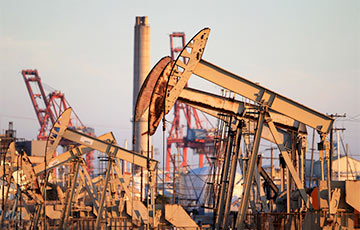
A "tipping point" may be about to occur.
World oil stocks in April underwent a record reduction amid the escalating conflict in the Middle East. The latter increases the risks of supply disruptions and may provoke a new jump in prices ahead of the tourist season. This is reported by Financial Times.
S&P Global Energy estimates that crude oil in storage has fallen by nearly 200 million barrels, equivalent to about 6.6 million bpd.
This came even though high prices had already reduced demand by about 5 million bpd, the biggest drop outside the COVID-19 pandemic period.
"This is a huge scale, well above the normal range," said S&P's head of oil market research Jim Berkgard. In a normal month, he said, global inventories only fluctuate by a few hundred thousand or at most a million barrels.
In total, the oil market has already lost about 1 billion barrels because of the war with Iran. While demand is rapidly declining, supply is shrinking even more rapidly. This creates an environment in which oil prices could continue to rise.
Oil has risen markedly in price since the fighting began in late February. Iran and the U.S. have been restricting traffic through the Strait of Hormuz, one of the key sea routes for energy supplies. Additionally, the situation was complicated by strikes on energy infrastructure in the region, which further disrupted the stability of supplies.
Traders warn: a sharp jump in prices could occur when global stocks fall below a critical level. Some analysts believe such a "tipping point" could come within weeks.
On Tuesday, benchmark Brent crude fell about 4% to about $110 a barrel. That came after an extended truce between Iran and the U.S.
S&P Global Energy's findings take into account both inventories held by governments and companies and oil on tankers at sea. The total reduction also includes volumes that the U.S. previously released from the Strategic Petroleum Reserve in response to the energy crisis.
Formally, the world's oil reserves total about 4 billion barrels, but much of that volume is used to keep the energy system running on a daily basis.
It is about keeping refineries running, pipelines pressurized, and supply chains uninterrupted. Thus, the reserve available for quick use is much smaller.
Goldman Sachs estimates that global oil reserves are already close to their lowest level in eight years. The bank notes that there are only about 45 days of stocks of petroleum products - in particular gasoline, diesel and jet fuel - left in the world. The most notable declines are being recorded in the Asian and African regions.
In Northern Europe, jet fuel stocks fell to their lowest level in six years in April. In the U.S., gasoline inventories could fall to historic lows as early as summer - during the peak driving season.
Although average prices at U.S. gas stations are approaching $4.50 per gallon ($1.19 per liter), U.S. consumers have not yet significantly reduced their fuel use.
The bank estimates that about one in eleven barrels of oil in the world is used by American motorists. U.S. oil inventories could fall below 200 million barrels by the end of August, to about one week of consumption.
The U.S. as a whole has yet to feel the full effects of the crisis: the country's crude stockpiles remain higher than at the same time last year. The main decline in global reserves, according to S&P, is now in Asia.
The head of oil market research at S&P, Jim Burkgard, warns that the sharp decline in U.S. inventories could be a trigger for a broader market panic. In his view, the most acute phase of the crisis is yet to come.

Bank's name: Bank Millennium S.A.
Address: ul. Stanislawa Zaryna, 2A, 02-593, Warszawa
IBAN: PL97116022020000000216711123
SWIFT: BIGBPLPW
Name of the account holder: Fundacja “KARTA ‘97”
Purpose/title of payment: Donation for statuary aims
You can contact us by the e-mail charter97@gmail.com