


Hole-in-the-wall Blockade: UAE Tankers Sneak Through The Strait Of Hormuz
3- 7.05.2026, 19:15
- 2,744
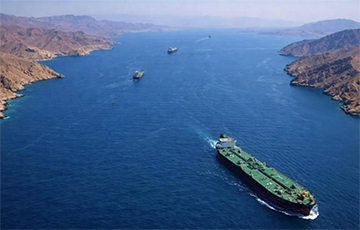
At least 6 million barrels of oil from the Emirates have "leaked" through Iran's blockade.
At least four tankers loaded with oil from the United Arab Emirates recently passed eastward through the Strait of Hormuz with tracking systems disabled to avoid Iranian attacks.
According to Reuters (translated by "Unian"), citing its own sources, the Emirates' Abu Dhabi National Oil Co (ADNOC) managed to export at least 4 million barrels of Upper Zakum and 2 million barrels of Das oil on four tankers from terminals in the Persian Gulf in April,
These volumes represent only a fraction of typical UAE exports before the U.S.-Israeli war against Iran began, but they demonstrate the risks exporters and buyers are willing to take to unlock oil sales. Other Gulf producers - Iraq, Kuwait and Qatar - have either halted sales, cut prices significantly or, as in the case of Saudi Arabia, are shipping exclusively through the Red Sea.
Tehran responded to the U.S.-Israeli attacks that began Feb. 28 by effectively closing the Strait of Hormuz to exports other than its own, blocking a fifth of the world's oil and gas supplies. The closure of the strait and the U.S. blockade, which has halted Iranian exports in recent weeks, has pushed global oil prices above $100 a barrel.
Risks from Iran
According to analysts at Kpler, ADNOC has had to cut exports by more than 1 million bpd since the war began, down from the 3.1 million bpd it shipped last year.
ADNOC's cargoes are at risk of attacks from Iran. This is indicated by the UAE's accusation on Monday, May 4, that Iran used drones to attack Barakah, the company's empty tanker that was passing through the Strait of Hormuz.
The ships are traveling with automatic identification system transponders turned off, making them less likely to be detected by Iranian forces. This tactic is often used by Iran to circumvent U.S. sanctions on its oil exports.
It also makes it difficult to track ADNOC's total export volumes using industry shipping data, meaning that the volumes shipped from the Persian Gulf in April could have been larger.
How the UAE's contrived scheme works
According to analysts Kpler, the supertanker Hafeet loaded 2 million barrels of Upper Zakum crude in the Persian Gulf on April 7 and left the Strait of Hormuz on April 15. Outside the Strait, the cargo was transferred to the Greek-flagged VLCC Olympic Luck on April 17-18 and shipped to the Pengerang refinery in Malaysia.
Ship-to-ship (STS) oil distribution allows ADNOC to sell smaller shipments and free up VLCC-class vessels for a quick return to the Persian Gulf for re-loading.
The Upper Zakum portion of the cargo went to a refinery in Northeast Asia and was sold at a record $20 per barrel premium over ADNOC's official selling price, a Reuters source said.

Bank's name: Bank Millennium S.A.
Address: ul. Stanislawa Zaryna, 2A, 02-593, Warszawa
IBAN: PL97116022020000000216711123
SWIFT: BIGBPLPW
Name of the account holder: Fundacja “KARTA ‘97”
Purpose/title of payment: Donation for statuary aims
You can contact us by the e-mail charter97@gmail.com