
The End Of The CSTO
12- 7.05.2026, 14:52
- 18,468
For the region, the very fact of holding the summit in Yerevan is already a political signal.
Armenia, which for many years has been in Russia's orbit and formally remains a member of the CSTO, is hosting a major European forum. This marks a shift in the balance: Russia maintains its presence, but no longer dominates, but competes with the EU, Turkey and other players for influence in the region.
With this background, the visit of Vladimir Zelensky has a special significance. The Ukrainian president used the summit platform as pragmatically as possible. At its conclusion, agreements were reached on accelerating the receipt of EU financial support in the amount of 90 billion euros, as well as on strengthening air defense. This shows that Ukraine continues to hold the agenda and convert political attention into concrete resources.
Why is Zelensky's visit important?
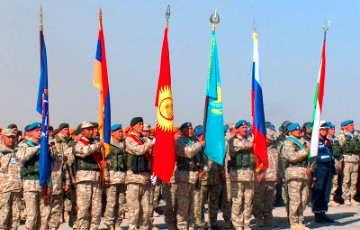
First of all, this is the second post-Soviet country where a Ukrainian president has traveled since 2022, and importantly, at least formally, a member country of the CSTO, the Russians' military bloc. This shows that the CSTO, by and large, no longer exists as a military alliance. Zelensky discussed a lot with Pashinyan there, but I am very skeptical about economic or military cooperation between Ukraine and Armenia. We have other priorities and other allies - militarily it's Azerbaijan and Turkey, not Armenia. In terms of economics, I simply do not see how and what we can cooperate with Armenia in the short term - very expensive and complicated logistics. But the fact itself is a good signal, showing that Putin is losing control over the entire South Caucasus region, which includes Azerbaijan, Armenia and Georgia.
Secondly, another notable event is President Zelensky's talks with Georgian Prime Minister Irakli Kobakhidze. Let the meeting be "on the legs", let there were no official talks, but the conversation itself is important and has significance. I have no illusions about normalization of this government in Georgia - they have long been hostages of the Kremlin and will not get out of this trap, and probably do not want to. Kobakhidze is a clerk of Bidzina Ivanishvili. Therefore, everything is understandable. But the very fact that Ivanishvili gave Kobakhidze permission to talk to Zelensky is already an indicator that the entire thieving clique that holds control over Georgia is starting to look where the wind is blowing. They realize that the balance of power in the region has changed, that China has come in very strongly and that Turkey has become stronger - and Turkey is now one of China's key allies in the region and in general. Turkey is a formal member of NATO, but NATO is no longer there, and neither is the CSTO. We are entering a world of small situational alliances around common interests, where each country, except China and the US, will have 3-4-5 allies in different regions, with whom there will be the closest possible cooperation in all possible spheres.
Third, Zelensky talked to another "great friend" of Ukraine - Slovakian Prime Minister Robert Fitzo, who allegedly has already said that he will not hinder Ukraine's membership in the EU for the time being, and they even agreed that he will come to Kiev and Zelensky will visit him in Slovakia. Also, Fitzo seemed to even promise not to participate in the May 9 parade in Moscow. Slovak Prime Minister Robert Fitzo has announced that he will visit Moscow on May 9 and meet with Russian leader Vladimir Putin, but will not take part in the military parade. In fact, this is already an important political signal - Fitzo is also starting to look where the wind is blowing.
Fourth, for the first time, a country that is not in Europe - Canada - participated in the European Political Community summit. Their prime minister Mark Kearney was there. This is a significant factor. Europe and Canada will strengthen their strategic alliance without the US. Even though Canada is not yet a strong player militarily, in terms of resource potential and economy, it is a very powerful country. To be clear, Canada's GDP is already 2.2 trillion dollars - this is comparable to Russia. But there are only 40 million people living in Canada - that's not many. Therefore, for such a population, this level of GDP is a significant indicator.
Georgy Birkadze, Observer

Bank's name: Bank Millennium S.A.
Address: ul. Stanislawa Zaryna, 2A, 02-593, Warszawa
IBAN: PL97116022020000000216711123
SWIFT: BIGBPLPW
Name of the account holder: Fundacja “KARTA ‘97”
Purpose/title of payment: Donation for statuary aims
You can contact us by the e-mail charter97@gmail.com