

It's An Illusion
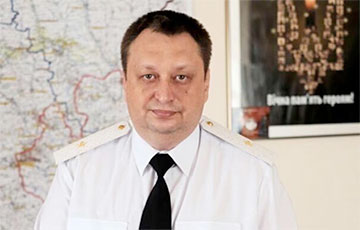
1- Victor Yagun
- 17.06.2026, 11:42
- 8,210
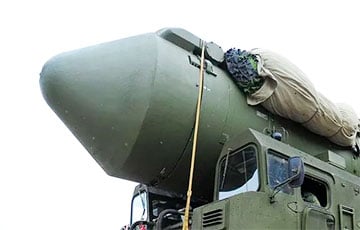
"Oreshnik" as a reflection of the decline of the Russian military-industrial complex.
Recently, analysts have taken note of information released by Dallas Analytics. The documents in question are internal correspondence between representatives of the Michurinsk “Progress” Plant and the Azov Optical-Mechanical Plant, both of which are part of the production chain for Russian high-precision weapons systems.
If the documents are authentic, they may point to a much deeper problem within the Russian military-industrial complex (MIC) than simply sanctions-related restrictions or a shortage of specific components.
The correspondence refers to the loss of technologies and equipment necessary for adjusting, calibrating, and testing gyroscopic assemblies. In fact, this may indicate a situation where a company is capable of manufacturing a single component of a guidance system but can no longer reliably verify its performance characteristics or ensure the consistent quality of the finished product.
For high-precision weapons, this is critically important. A missile may look modern and be marketed as “state-of-the-art” or even “hypersonic,” but if the guidance system relies on inconsistent manufacturing quality, outdated technological solutions, and inadequate calibration, the result is not a technological advantage, but an increased risk of errors and deviations.
It is precisely that the story of the “Oreshnik” deserves attention—not as yet another reason to mock Russian propaganda, but as a possible indicator of a much more serious trend.
Ukrainian and international sources have already pointed out that the missile’s design incorporates solutions and components whose roots go back to Soviet-era developments. This fact alone does not spell doom for the weapons system. Many countries use modernized versions of previous-generation technologies. The problem arises when the ability to reliably reproduce, modernize, and control these technologies is lost.
At the same time, it would be premature to assert that the identified problems with a specific component automatically explain all instances of inaccurate target strikes or deviations of missiles from their intended trajectory. Such a conclusion requires additional technical evidence and independent verification.
However, even without this, the overall conclusion seems quite telling.
The Russian defense-industrial complex is increasingly facing more than just the problem of import substitution. The loss of its technological expertise could prove far more dangerous. The Soviet defense industry relied not only on blueprints and production facilities. Its foundation consisted of specialized test benches, manufacturing processes, design schools, production expertise, and generations of engineers who ensured the replication of complex systems.
If such a system is gradually being dismantled, it cannot be quickly restored either through administrative decisions or additional budgetary injections.
This is precisely the main conclusion.
Russia remains a dangerous adversary, capable of producing missiles, stockpiling them, and using them to terrorize Ukraine. It would be a mistake to underestimate this threat.
At the same time, however, there are increasing signs pointing to another process—the accumulation of technological limitations, dependence on the Soviet legacy, and the gradual degradation of critically important engineering capabilities.
The “Oreshnik” was supposed to become a symbol of Russia’s technological might. Instead, it increasingly resembles a symbol of a different process—the slow depletion of the scientific, technical, and industrial potential that Russia inherited from the USSR but has never been able to fully recreate and develop in the 21st century.
Viktor Yagun, Facebook

Bank's name: Bank Millennium S.A.
Address: ul. Stanislawa Zaryna, 2A, 02-593, Warszawa
IBAN: PL97116022020000000216711123
SWIFT: BIGBPLPW
Name of the account holder: Fundacja “KARTA ‘97”
Purpose/title of payment: Donation for statuary aims
You can contact us by the e-mail charter97@gmail.com