


The Lithuanian Seimas Has Denounced The Agreement With Belarus
1- 30.06.2026, 15:45
- 2,820
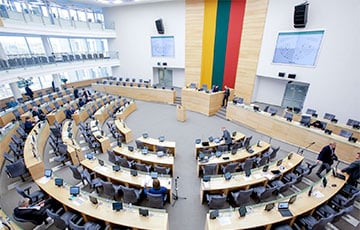
All 98 deputies who participated in the vote supported the bill.
On June 30, the Lithuanian Seimas passed a bill denouncing the agreement with Belarus—which never entered into force—on travel procedures for residents of border areas, according to the legislative body’s press service, as reported by LRT.
It is noted that all 98 deputies who participated in the vote supported the draft law.
“The agreement was concluded to provide individuals residing in the border regions of Lithuania and Belarus with the opportunity to cross the state border using special permits for local border traffic and to stay in the border territory of the other state for up to 90 days within a six-month period,” the statement reads.
However, as Lithuania’s Deputy Minister of Foreign Affairs Vidmantas Verbickas stated during the presentation of the bill, the agreement has not yet entered into force because Vilnius has not received notification from Minsk that the internal procedures necessary for the agreement to take effect have been completed. He noted that Lithuania itself ratified this agreement on June 28, 2011, and notified Belarus through diplomatic channels of the completion of procedures on its part.
“In the opinion of the Ministry of Foreign Affairs, given that this agreement has not entered into force and more than 15 years have passed since its conclusion, it has lost its relevance for both parties, so it is advisable to denounce it,” said Verbickas.
The news portal Delfi reported on March 23, 2026, on the Lithuanian Ministry of Foreign Affairs’ proposal to denounce the agreement on cross-border movement with Belarus.
According to the document signed by Lithuania and Belarus in 2010, certain categories of residents of border regions would be allowed to cross the state border without visas using special permits. The agreement allowed individuals to stay within a 50-kilometer border zone of the other country for up to 90 days within a six-month period.
The plan was to issue five-year permits to permanent residents of border areas who, due to family ties, economic reasons, cultural connections, or other important reasons, planned to frequently stay in the border area of the neighboring country. These permits did not grant the right to work.
It should be noted that the Belarusian legal framework includes a law dated January 10, 2011 “On the Ratification of the Agreement between the Government of the Republic of Belarus and the Government of the Republic of Lithuania on the Procedure for Mutual Travel by Residents of the Border Areas of the Republic of Belarus and the Republic of Lithuania.”

Bank's name: Bank Millennium S.A.
Address: ul. Stanislawa Zaryna, 2A, 02-593, Warszawa
IBAN: PL97116022020000000216711123
SWIFT: BIGBPLPW
Name of the account holder: Fundacja “KARTA ‘97”
Purpose/title of payment: Donation for statuary aims
You can contact us by the e-mail charter97@gmail.com