Trump May 'finish Off' Putin In The Baltics
2- 1.06.2026, 12:08
- 1,164
There are five steps to take.
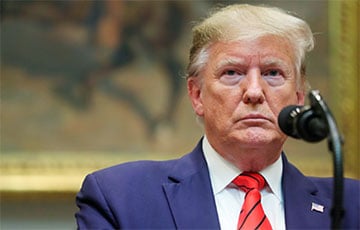
U.S. President Donald Trump has tools that could theoretically hasten the end of Russia's war against Ukraine, according to Forbes. The publication draws parallels with its approach in Iran policy and suggests that a similar pressure mechanism could be applied in the Baltic region through increased air and sea control.
The gist of the idea is that the US, with the support of NATO allies and the EU, could tighten sanctions enforcement in the Baltic Sea. We are talking about stricter monitoring of ships, cargo, insurance operations and financial schemes related to Russian exports. Such an approach, Forbes notes, would give Washington "an enforcement tool that would be legal, coalition-based, scalable and directly linked to negotiations."
Special attention is being paid to the Russian ports of Primorsk and Ust-Luga, which play a key role in energy exports. According to the authors, increased pressure in the region would make Russia's maritime revenues more expensive, unstable and vulnerable.
It is emphasized that it should not be a formal blockade. As Forbes notes, "the goal should not be to declare a formal blockade of Russian ports." Instead, it is proposed to use the wording "Baltic initiative to ensure the safety of air and sea transport and compliance with sanctions".
The piece also describes five key principles of such a campaign:
Targeting - focus on sub-sanctions structures, shadow fleet and schemes to circumvent restrictions, without interfering with legitimate shipping.
Coalition character - participation of European countries to enhance legitimacy and spread the burden.
Legal discipline - reliance on sanctions, customs and environmental legislation instead of military blockade.
Gradual and reversible - possibility of easing measures if Russia fulfills the terms of negotiations.
Linking to diplomatic objectives - pressure should be linked to concrete steps: ceasefire, withdrawal of troops, return of deported civilians and participation in reconstruction and compensation mechanisms.

Bank's name: Bank Millennium S.A.
Address: ul. Stanislawa Zaryna, 2A, 02-593, Warszawa
IBAN: PL97116022020000000216711123
SWIFT: BIGBPLPW
Name of the account holder: Fundacja “KARTA ‘97”
Purpose/title of payment: Donation for statuary aims
You can contact us by the e-mail charter97@gmail.com