


Russia Has Lost A Third Of Its Refining Capacity Due To Attacks On Oil Refineries
4- 15.06.2026, 20:40
- 4,508
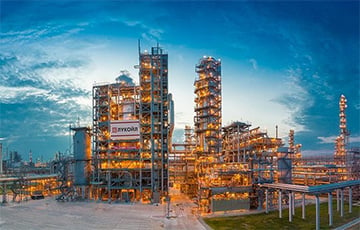
Russia is experiencing "the worst fuel crisis in history."
A series of drone strikes, which in May managed to hit Russian oil refineries 16 times—including 8 of the 10 largest—has set the Russian oil refining industry back two decades, writes The Moscow Times.
In the first week of June, oil refining volumes in Russia fell below 4 million barrels per day, reaching their lowest level in the past 21 years, according to analysts at Energy Intelligence. According to their calculations, nearly a third of refinery capacity—2.14 million barrels per day—is currently idle due to Ukrainian drones.
“Ukraine’s campaign against the Russian energy sector, particularly oil refineries, has caused massive damage, and as a result, the country appears to be heading toward what could be the worst fuel crisis in its history this summer,” writes Energy Intelligence.
The fuel shortage that began in Crimea is spreading across regions and has already affected more than 25 regions. Restrictions on gasoline sales have begun to appear in cities with populations over a million, including Moscow and St. Petersburg. Supply disruptions at gas stations have occurred in Kuzbass, Tatarstan, and the Ulyanovsk and Nizhny Novgorod regions. Tatneft gas stations have become a hotspot for the gasoline crisis, selling no more than 20 liters per customer in at least six regions.
Following the gasoline shortage, farmers began facing difficulties, complaining of disruptions in diesel fuel supplies in southern Russia, the Central Black Earth Region, and the Volga region. Airports in St. Petersburg, Yekaterinburg, and Ufa faced a shortage of jet fuel as early as the end of May. And in mid-June, restrictions on refueling passenger aircraft were introduced in six cities, including Nizhny Novgorod and Krasnodar.
“A full-blown fuel crisis is beginning to take shape in Russia. The problem is no longer limited to seasonal price increases or market speculation. The source of the shock lies on the supply side,” notes Finam strategist Yaroslav Kabakov. The problem is exacerbated by the fact that drones are increasingly targeting not the main but secondary facilities at refineries responsible for producing gasoline and diesel. “Repairs take months and are complicated by sanctions restricting equipment supplies,” notes Kabakov.
Fuel supplies are dwindling, and the market is responding with rising prices. Since the beginning of the year, AI-92 has risen in price on the exchange by 28%, AI-95 by 34%, diesel fuel by 43%, and jet fuel by 40%. At the retail level, over the four weeks ending June 10, gasoline prices rose by 3.93%, according to calculations by the Center for Market Analysis and Consulting (CMAC). The surge in prices at gas stations has been the sharpest since May 2018, when gasoline prices rose by more than 5% in a single month.
The government is attempting to douse the fire in the fuel market with money and regulatory concessions. In April and May, oil companies received 700 billion rubles in subsidies from the budget, and in June they were granted permission to lower gasoline quality and sell “Euro-3” grade instead of “Euro-5.”
“The most alarming aspect is that the crisis is only just beginning,” Kabakov argues. “The peak of seasonal demand traditionally falls in August–September, yet signs of shortages and accelerating prices appeared as early as June. If the situation with the refineries does not stabilize, the fuel factor could become one of the key drivers of inflation in the second half of the year.” And if rising fuel prices take hold, this “will already become a problem for the entire economy,” the expert emphasizes.

Bank's name: Bank Millennium S.A.
Address: ul. Stanislawa Zaryna, 2A, 02-593, Warszawa
IBAN: PL97116022020000000216711123
SWIFT: BIGBPLPW
Name of the account holder: Fundacja “KARTA ‘97”
Purpose/title of payment: Donation for statuary aims
You can contact us by the e-mail charter97@gmail.com