
Pavel Durov: Russian Officials Have Gotten Confused About Who Can Ban Whom Online
1- 30.07.2026, 22:12
- 2,112
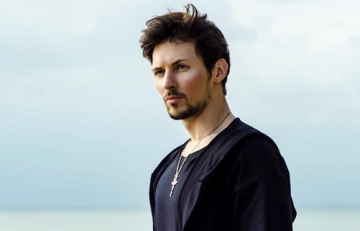
The founder of Telegram responded to the allegations made by Russia's FSB.
Telegram founder Pavel Durov stated that the Russian government has labeled him a “terrorist” for refusing to participate in “mass surveillance and censorship” on the messaging app. The entrepreneur wrote about this on his channel. “According to Russian law, I am prohibited from ‘publishing information on the internet.’ Russian officials have gotten it wrong about who can ban whom on the internet,” he said. Under current regulations, individuals on the “extremist” list are prohibited from publishing information online and interacting with the media.
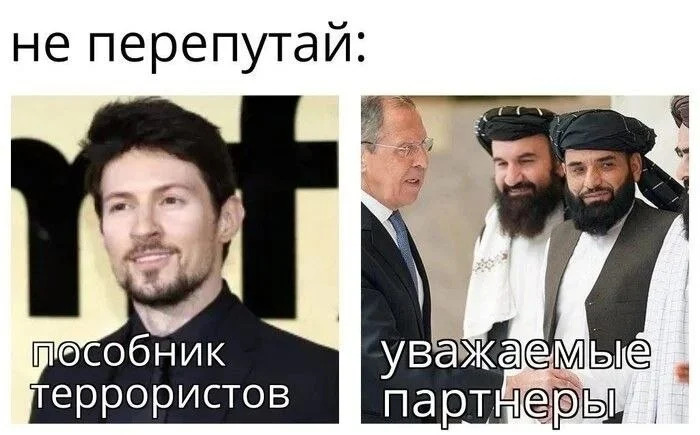
Durov, who lives in the UAE, also posted an image on his channel showing the Telegram founder himself labeled as a “terrorist,” while representatives of the “Taliban” movement, with whom Russian Foreign Minister Sergey Lavrov is shaking hands, are referred to as “respected partners.” The day before, the FSB charged Durov with aiding terrorist activities, after which Rosfinmonitoring added him to the list of extremists and terrorists. In addition to a ban on online activity, this entails the freezing of bank accounts and restrictions on most financial transactions.
According to the FSB, Telegram’s administration refused to remove channels, chats, and bots through which Ukrainian intelligence agencies, as well as “terrorist and extremist organizations,” were organizing terrorist attacks, cyberfraud, and “mass murders” on Russian territory. In particular, Ukrainians allegedly recruited young Russians into sabotage and terrorist activities via the “Dainvichik/Leo” dating chatbot. Durov has been placed on an international wanted list and faces a life sentence in Russia.
On Monday, Kremlin spokesman Dmitry Peskov reported that the authorities are continuing to contact Telegram’s leadership to restore access to the platform, but “there hasn’t been much activity so far.” In February, FSB Director Alexander Bortnikov stated that previous negotiations with Durov “led to nothing good.” According to him, the entrepreneur “pursues his own self-serving interests,” which result in juvenile crime, terrorist attacks, and acts of sabotage.
At the same time, pro-government media, citing FSB reports, wrote that a criminal case had been opened against Durov and that, under wartime conditions, Telegram “had become the main tool of the intelligence services of NATO countries and the ‘Kyiv regime.’”

Bank's name: Bank Millennium S.A.
Address: ul. Stanislawa Zaryna, 2A, 02-593, Warszawa
IBAN: PL97116022020000000216711123
SWIFT: BIGBPLPW
Name of the account holder: Fundacja “KARTA ‘97”
Purpose/title of payment: Donation for statuary aims
You can contact us by the e-mail charter97@gmail.com