

Why Armenia's Elections Make Lukashenko So Nervous
4- 4.06.2026, 10:28
- 8,874
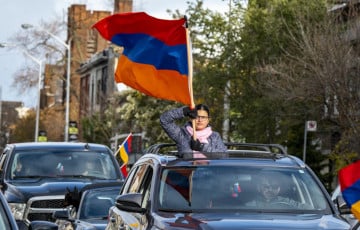
Yerevan on the threshold of geopolitical choice.
Perhaps the "most geopolitical" election in Armenia's history is approaching, which could strengthen or halt the country's departure from the Russian orbit. Yerevan's relations with Moscow are more strained than ever, with news of detentions, searches and accusations of opposition figures appearing one after another. Belsat looked into what's going on.
Parliamentary elections in Armenia are to be held on June 7 from 8am to 8pm. There is no early voting for them, and only diplomats and some military personnel can vote outside of Armenia. The election comes against a backdrop of threats from Vladimir Putin and Alexander Lukashenko, high-profile arrests and investigations, and rumors of voters being brought into the country to vote for the opposition.
At least 101 members of the unicameral National Assembly are to be elected. The elections are held under a proportional system with party lists - voters vote for one party or bloc. The threshold for parties is 4%, for blocs - 8-10%. One mandate each is reserved for representatives of the four largest national minorities (Russians, Yezidis, Kurds and Assyrians).
The constitution provides for a second round of elections in 35 days if the first round does not result in a stable parliamentary majority with 54% of mandates. In such a case, the two most popular parties advance to the second round and the winner gets additional mandates to have 54% of parliamentary seats.
Who is on the ballot
There are 19 parties and blocs on the ballot for the 2026 elections. About six or seven political forces are actually competing for seats in Armenia's National Assembly, according to polls. It is hard to say whether the opposition parties together will collect more than half of the votes, but even if they do, it is not at all guaranteed that they will be able to form a coalition. However, the results of the polls vary widely and do not look reliable - many Armenians in the polls say they are still undecided.
The main parties are as follows:
Civil Pact (Քաղաղքացիական պայմանագիր) is the current ruling party and the favorite in the elections. According to various polls, it can get from a third to a half of the vote, but it is not certain that it will get an absolute majority without forming a coalition or a second round. The party's leader is incumbent Prime Minister Nikol Pashinyan. The party is considered centrist or center-right, pro-European, and is sometimes called populist. Pashinyan has been openly supported by United States President Donald Trump.
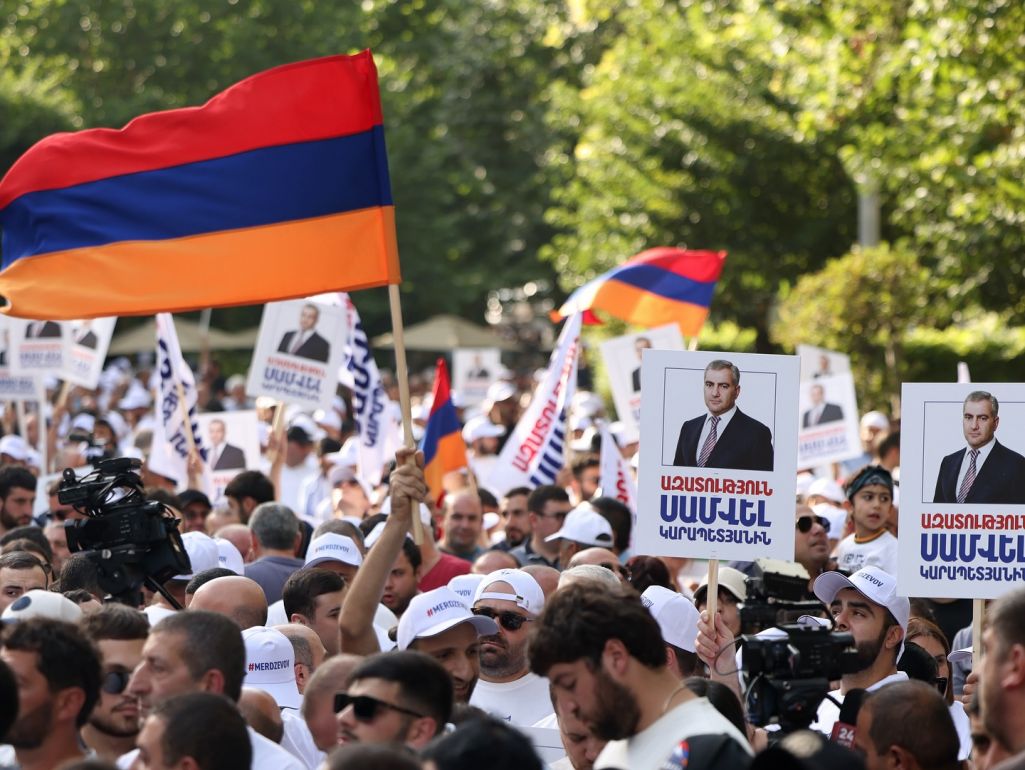
"Strong Armenia" (Ուժեղ Հայաստան) is an amalgamation of the Strong Armenia Party with two smaller parties. The main party was founded only at the end of 2025. Its leader is Russian billionaire of Armenian origin Samvel Karapetyan, who was arrested a year ago. He is now under house arrest over charges of calling for a power grab and money laundering. Karapetyan is considered a pro-Russian candidate, with Russia demanding his admission to the elections. He was far from politics until Pashinyan's conflict last year with the Armenian Apostolic Church, which authorities suspected of plotting a coup after Armenia's defeat in wars with Azerbaijan. Four days before the election, an associate of Karapetyan and a member of his party was arrested, accused of vote-buying and money laundering. It looks like the Strong Armenia bloc could become the largest opposition force in parliament, but will not take an absolute majority.
"Alliance Armenia" (Հայաստան դաշինք) is a bloc of the Armenian Revolutionary Federation (Հայ Յեղափոխական Դաշնակցութիւն; it is often referred to only by the last word "Dashnaktsutsyun") with one extreme party. It is the largest opposition faction in the current parliamentary convocation. "Dashnaktsutsyun" is considered a leftist or center-left pro-Russian party. The leader is the president of Armenia in 1998-2008, Robert Kocharyan. He was arrested several times in 2019-20 in the case of the 2008 rally dispersal and attempted overthrow of the constitutional order. The relevant criminal article was later called unconstitutional, but he may face new charges, while an unnamed number of his associates were arrested in May and the bloc's headquarters were searched in early June. Despite this, it looks from the polls that Alliance Armenia may come in third.
"Prosperous Armenia" (Բարգավաճ Հայաստան) is the party of Armenian businessman Gagik Tsarukyan, founder of the Multi Group concern and a friend of Lukashenko (whose youngest son he even gave lion cubs to). In 1979, Tsarukyan was sentenced to 7 years in prison for robbery and gang rape; the sentence was overturned in 2001, and it is still unknown whether Tsarukyan has served his sentence. His party is considered pro-Russian, but positions itself as "pragmatic" and "multi-vector". The number two on the list, Andranik Tevanyan, was arrested on May 23 on suspicion of espionage and treason. Tsarukyan himself sued Pashinyan before the election, who called him an "agent" and a "spy." Polls show that the Prosperous Armenia party could come in fourth place.
A few other parties are likely to enter parliament, including Democracy, Law and Order (whose leader Vardan Ghukasyan was on an international wanted list and last year was detained in the United States and deported to a third country) and Wings of Unity (investigators have alleged Kremlin funding for this party, as well as for Strong Armenia and the Armenia Alliance).
The "Republican Party of Armenia" of past prime minister (2007-2008 and six days in 2018) and former president (2008-2018) Serzh Sargsyan declined to run, although polls suggested it could have broken the barrier and won several mandates. Last year, a criminal case against Sargsyan for bribery was refused to be dropped and a new criminal case was opened against him. "The Republican Party of Armenia" should not be confused with the pro-European parties "Republic" and "For the Republic," which are unlikely to break the passage barrier.
Are they persecuting the entire opposition?"
Ahead of these elections, many cases involving past authorities as well as pro-Russian politicians have surfaced. Most of the pro-European electorate supports Pashinyan, while the pro-Russian opposition to him is not very popular.
It is noteworthy that Pashinyan himself has been to court: in 1999, he, then a journalist, was convicted of slandering the wife of an MP, sentenced to a year in prison, and after public pressure replaced the sentence with a suspended sentence; in 2010, he was sentenced to seven years for "organizing mass riots" in 2008, and was released a year and a half later under an amnesty.
Human Rigths Watch in its report on the 2026 election campaign passes on statements about the use of administrative resources in the elections, pressure on public sector workers, suspected vote-buying, lack of accountability for improper police actions...
Organization for Security and Cooperation in Europe observers noted that the election campaign is taking place in an atmosphere of polarization, against the background of the authorities' conflict with the Armenian Apostolic Church and criminal charges against prominent opposition figures. This has caused serious concern among OSCE observers.
Human rights activists and observers do not draw conclusions about political persecution or liquidation of the opposition - they only relay such statements from the opposition and journalists. The authorities respond to such statements by saying that this is a legitimate persecution for real crimes. Whether this is true or not is not easy to understand.
Freedom House still considers Armenia a partially free country, where the biggest problems are not with political rights, but with the rule of law and the independence of the courts. According to Reporters Without Borders, Armenia has problems with freedom of the press, but that freedom is slightly greater than in Italy or Ukraine. Corruption remains a big problem, and according to Transparency Intenational's rankings, the perception of corruption has improved since 2018, when Pashinyan toppled Sarkisian.
And the actions of law enforcers are mostly directed against pro-Russian politicians who have been suspected of corruption before, and Russia has made no secret of wanting to interfere in these elections.
The stakes are as high as ever?
The June 7 elections are being called "the most geopolitical" in Armenia's history: if Pashinyan is defeated, the course toward rapprochement with the European Union, which his supporters call a move toward a more democratic model, could be halted. The main issue for voters in Armenia, according to one recent poll, is national security and peace - people fear a new war with Azerbaijan. In the "tug-of-war", as The Guardian notes, Turkey is also involved - it is on the side of Pashinyan, who wants normalization of relations. Against this background, unemployment, high prices and low wages are secondary for voters.
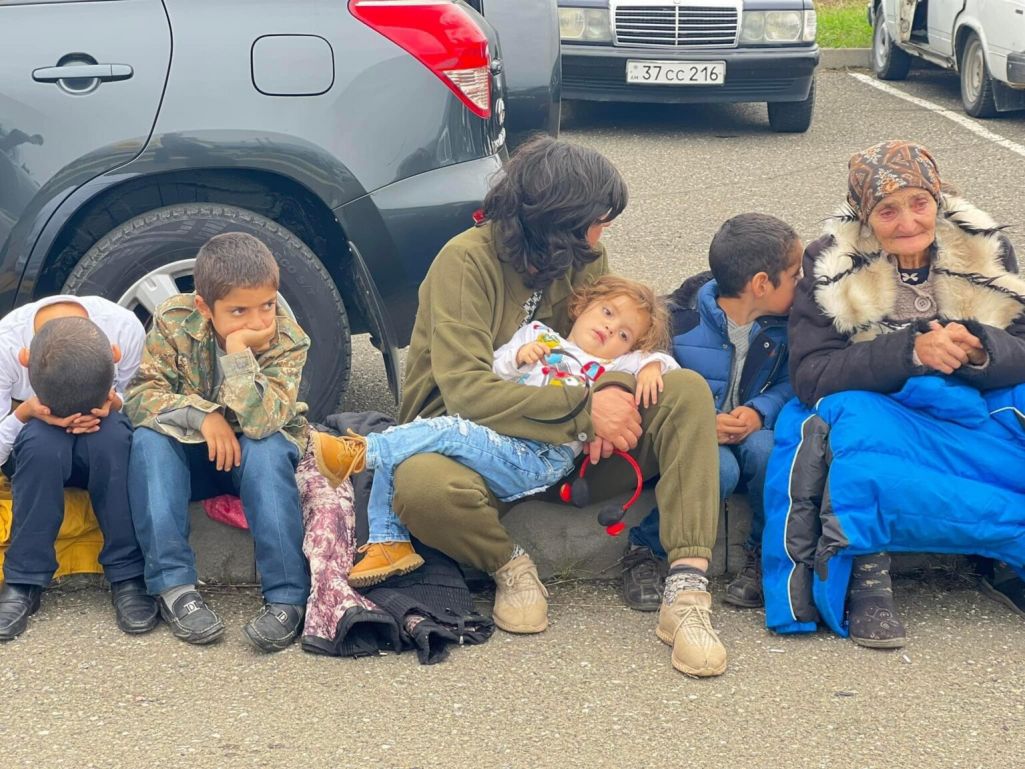
In 2020 and 2023, Armenia lost wars with Azerbaijan - and the latter liquidated the unrecognized Armenian Nagorno-Karabakh Republic on its territory. As a result, almost the entire population - over 100,000 people who were still there - was expelled from Nagorno-Karabakh. Russia did not support Armenia in these wars, although it is a member of the Collective Security Treaty Organization, while Azerbaijan did not. As political observer Sergei Naumchik told "Belsat," Armenia's experience has shown that attempts to placate the Kremlin do not yield results.
Belarus also did not support Armenia and even supplied weapons to Azerbaijan. While Pashinyan still communicates with Putin with relative restraint, he publicly argued with Lukashenko and eventually refused to talk to him.
Armenia eventually turned its back on the CSTO, and Pashinyan did not rule out a referendum on choosing between the Eurasian Economic Union and the European Union, but after a June 3 conversation with Putin said he would not argue with Russia about the EAEU - asking only to explain how the union benefits his country. In May, Armenia - a country where a Russian military base still operates - hosted the European Political Community summit and the first Armenia-EU summit.
This clearly did not please the Kremlin. First Putin and then Lukashenko threatened Armenia with the fate of Ukraine, where "everything started with attempts to join the European Union." The Russian Ministry of Foreign Affairs declared "attempts to drag Armenia into the anti-Russian orbit". The Russian Energy Minister threatened Armenia with cutting off oil and gas supplies. Rosselkhoznadzor has launched a major trade war against Armenia.
Russia, according to Reuters, citing Western intelligence, is not only going to influence these elections with threats, propaganda and disinformation, but is also considering the mass importation of 100,000 Armenians from exile to Armenia to participate in the elections (because you can't vote outside of Armenia). These are significant figures: less than 2.5 million people have the right to vote in total. The scenario was called expensive and doubtful, but proposals to bring people from abroad to vote did appear.
Is this just an information war? The European Union is a very distant goal for Armenia
Organized importation of Armenians from Russia looks unrealistic, political scientist, journalist of "Votak. Armenia" Arutyun Voskanyan. Russia, in his opinion, has more serious problems than the election results in Armenia. And there are more serious instruments of pressure:
"Whoever becomes the representative of the next government, I think Russia will always find a way to negotiate with him," Voskanyan believes. - Because there are certain situational and structural constraints in Armenia: economic, foreign-political..."
The information war continues now, but it is even beneficial for the current Armenian authorities, the interlocutor said. Such threats allow the incumbent leaders to position themselves as pro-Western forces and get the necessary votes.
Pashinyan also finds it convenient to argue with Lukashenko, Voskanyan noted: you can say things to Lukashenko that you can't say to Putin's face and thus consolidate your electorate.
Armenia at a geopolitical crossroads? Before the elections, Putin and Lukashenko threaten it with war
Voskanyan does not take Putin's and Lukashenko's threats of war "like in Ukraine" seriously:
"Armenia has no opportunities to become a member of the European Union. This is unequivocal! This is a long-term perspective: there are examples of Turkey, Northern Macedonia, Albania, Montenegro, not to mention other countries."
Neighboring Georgia has applied to join the European Union in 2022 - at the same time as Moldova and Ukraine. It was granted candidate status for EU accession at the end of 2023, but less than a year later actually withdrew itself. In Georgia, the pro-European party United National Movement was in power in 2004-2012. It was replaced by the Georgian Dream, which in its first 10 years in power looked kind of pro-European. The party changed its foreign policy after the outbreak of a full-scale war in Ukraine, and at the end of 2024 gave up negotiations on joining the European Union until 2028. Now Georgian Dream acts more like a pro-Russian party and even blames the West for Russia's attack on Georgia in 2008.
Ukrainian President Vladimir Zelensky believes that Russia's threats against Armenia cannot be ignored and should "think more about security." He hopes the European Union will support Armenia. But will it need to? Voskanyan doesn't think so:
"I don't imagine what Moscow can do in this case. Some kind of information attacks - yes, there can be, but not always centralized specifically against Armenia or against the election campaign. I don't think that Russia has the desire to do that. Both financially and strategically there are more serious issues."
The fact that Zelensky speaks about Russia's threats to Armenia is natural, as it fits into the context of Russia's war against Ukraine, Voskanyan believes. This is Ukraine's military rhetoric, but not Armenia's reality, the interlocutor believes.
The interlocutor does not dare to predict the outcome of the parliamentary elections in Armenia: Pashinyan's party has high chances, but things can still change dramatically and radically.

Bank's name: Bank Millennium S.A.
Address: ul. Stanislawa Zaryna, 2A, 02-593, Warszawa
IBAN: PL97116022020000000216711123
SWIFT: BIGBPLPW
Name of the account holder: Fundacja “KARTA ‘97”
Purpose/title of payment: Donation for statuary aims
You can contact us by the e-mail charter97@gmail.com