
You Can't Get Better Without Pain
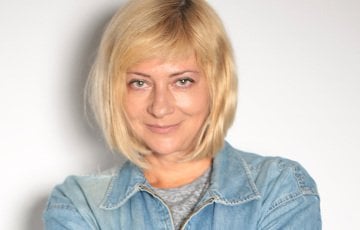
8- Irina Khalip
- 10.07.2026, 11:50
- 11,042
We'd better remain nonpartisan.
A new meme has recently emerged in Russia: “the February 23 Party.” It refers to those who dream of going back to February 23, 2022—so that February 24 would never come, and everything would remain as it was. Five-year Schengen visas obtained by simply “walking past a travel agency, dropping off your passport, and picking it up a couple of weeks later”; platinum credit cards accepted everywhere from Japan to the Cayman Islands, not to mention Europe and the U.S.; Aeroflot flights to Paris and London, concerts by global superstars in Moscow, Chanel and Gucci boutiques in every major city, open arms in any country—“Oh, the Russians are here! They’re rich and generous—what can we do for you?”...
It’s not just those “outside of politics” who dream of a return on February 23 is a dream not only for those who are “apolitical”, but also for those who have openly expressed an anti-war stance and left Russia. They, too, long for that day when there was no full-scale invasion yet and it was possible to live at home, book a ticket to Paris online, and not worry about how to legalize their status in a new country or where to find housing and a job. February 23 also seems to them like some kind of ideal day, when everything was still so good that it was all one could dream of.
The fact that the war had already been going on for eight years was somehow easily forgotten by them. Crimea—well, to hell with Crimea, with the partisans, with the power line sabotage, with the criminal cases against the Crimean Tatars. Crimea is childhood; you can even visit without approving of the occupation as a whole. And Donetsk and Luhansk—they’re so far away, it’s like they’re on another planet. We read about the Luhansk region in school in *The Young Guard*; that’s where the kids fought the fascists. But Donetsk is just mines and slag heaps—people don’t even need to live there, so nothing tragic has happened. The main thing is that no one asked anyone’s opinion about Donetsk, Luhansk, or Crimea. Chanel didn’t disappear from the market, Schengen visas were still being issued, and European real estate was still happily sold to Russians—after all, they didn’t haggle. The world didn’t notice the occupation and the war, just as the Russians themselves didn’t notice it. It was convenient for everyone—except for the Crimeans and the residents of Donbas. Torture prisons and kidnappings—all of this was so far away not only from Moscow but also from Voronezh, not to mention European countries, that it was possible to simply ignore it or pretend that nothing was happening. Well, yes, the dollar exchange rate temporarily skyrocketed after the occupation of Crimea, but then, slowly, like a rusty wheel, it rolled downhill. It was possible to carry on living—and to live wonderfully. Until February 24, of all days. With gasoline at the gas stations.
In Belarus, oddly enough, there is a friendly, almost partner-like faction. It could be tentatively called the “2019 faction.” These are people who dream of going back to 2019, when, in their view, everything was wonderful, and problems could only arise for those who went looking for trouble. And if you leave everyone alone, don’t go to protests, and limit your criticism of Lukashenko to jokes in the smoking room, then life is wonderful. In the winter—down to Zakopane for downhill skiing (or to the Alps, or the Carpathians); in the summer—to any seaside destination, in any country. For shopping—to Vilnius, Białystok, or Khmelnytskyi. And no fear of crossing the border, no purges of messaging apps, no second thoughts before sending someone a donation. A transparent, peaceful life in a European country. The only problem—the lines at the Lithuanian embassy. But other than that—it was all still okay, right? And business was booming—that’s the key argument of the 2019 party members.
No, these people weren’t “backwater bumpkins” at all. They were quite critical of the government. They condemned many things. But for them, the authorities were roughly like Donetsk and Luhansk are for Russians from the February 23 Party—somewhere very far away. There, in that endless distance, were political prisoners—without whom the regime could not have survived even in its most lenient days—as well as torture, abductions, and murders. And right nearby—coffee shops, festivals, cultural spaces, concerts, trivia nights, vacation plans. It would be nice to go back there, wouldn’t it? Big deal, Lukashenko has been around for decades—you can live as if he doesn’t exist at all.
To be honest: sometimes (very rarely, thankfully) I, too, am suddenly tempted to join that party and go back to 2019—in moments of weakness and longing for my hometown. But I understand that I can’t; I need to remain nonpartisan. We’re going through a very difficult ordeal right now, but we must see it through to the end—with the suffering of both those who’ve left and those who’ve stayed behind, with the longing of the former and the fear of the latter. With memories of time behind bars, which are becoming common to an ever-growing number of Belarusians. And so, along with our skin, painfully and irreversibly, the hope that “if you don’t get involved, you can live” is peeling away in shreds. No, from now on, Belarusians will always get involved. Into politics, into the electoral process, into election monitoring, into protests. And we’ll still have to endure the pain. Without it, there can be no recovery. Or even birth.
Irina Khalip, exclusively for Charter97.org

Bank's name: Bank Millennium S.A.
Address: ul. Stanislawa Zaryna, 2A, 02-593, Warszawa
IBAN: PL97116022020000000216711123
SWIFT: BIGBPLPW
Name of the account holder: Fundacja “KARTA ‘97”
Purpose/title of payment: Donation for statuary aims
You can contact us by the e-mail charter97@gmail.com