


Scientists Are Getting Closer To Unraveling The Mystery Of How The Egyptian Pyramids Were Built

A mysterious system hidden beneath the sands came to the rescue.
A mysterious engineering system has been discovered near one of Ancient Egypt’s oldest pyramids, providing a new clue as to how these iconic structures were actually built.
In a recent study, two enormous structures buried beneath the sand were discovered near the Red Pyramid. These structures stretch across an entire valley and resemble colossal dams rather than roads, according to the Daily Mail.
It should be noted that the mysterious structures were discovered near the Red Pyramid, located approximately 24–40 kilometers south of Cairo. For decades, these mysterious formations were interpreted as a stone causeway and a natural elevation in the landscape. But now, a new study suggests that these structures were actually part of a complex hydraulic network designed to collect floodwaters, trap sediment, and regulate their flow.
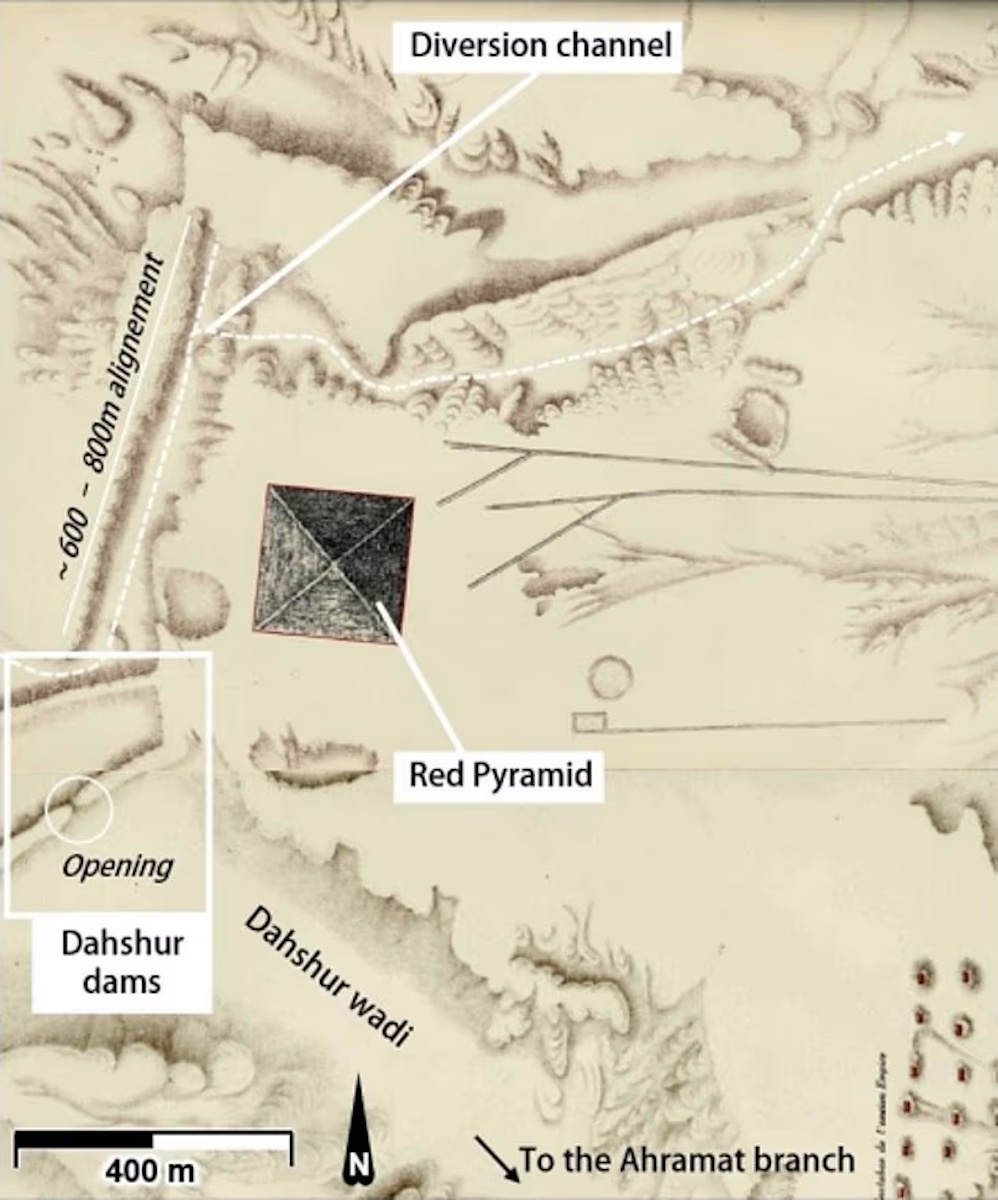
If this theory is confirmed, experts believe the discovery could show that the Egyptians mastered complex hydraulic engineering structures some 4,500 years ago, when Pharaoh Sneferu transformed Dahshur into a monumental construction site. However, these structures have never been excavated or precisely dated, which means that their connection to the Red Pyramid remains an intriguing but unproven theory.
Scientists note that the Red Pyramid in Egypt was likely built about 4,600 years ago. It was built around 2590 B.C. during the reign of Pharaoh Sneferu of the Fourth Dynasty of the Old Kingdom of Egypt. Incidentally, Pharaoh Sneferu is the father of Khufu, who commissioned the construction of the Great Pyramid.
Previously, scientists interpreted the mysterious eastern feature as roads used to transport limestone to the Red Pyramid. At the same time, the western feature was sometimes considered a natural elevation. But now scientists believe that both structures were actually used as a two-stage system for managing water resources and sediment.
It is believed that the upper structure functioned as a water-retaining dam, slowing down flash floods and allowing rocks, sand, and suspended sediment to settle before the water continued flowing downstream. At the same time, the upper structure likely served as the main retaining dam.

Bank's name: Bank Millennium S.A.
Address: ul. Stanislawa Zaryna, 2A, 02-593, Warszawa
IBAN: PL97116022020000000216711123
SWIFT: BIGBPLPW
Name of the account holder: Fundacja “KARTA ‘97”
Purpose/title of payment: Donation for statuary aims
You can contact us by the e-mail charter97@gmail.com