
Iran Has Bought Russia Some Time, But That Won't Save The Kremlin
- 18.08.2026, 13:13
- 1,272
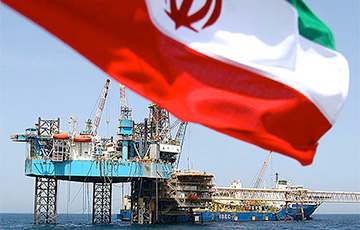
The outlook for Moscow isn't very optimistic.
Trump’s war against Iran has brought Russia $30 billion. But that’s not enough. In the future, should tensions de-escalate, oil production could face stagnation or even a decline… This is not an assessment by Western analysts, émigrés, or Ukrainian sanctions experts. This picture was painted by Andrei Klepach—chief economist of the Russian state development corporation “VEB.RF” and former Deputy Minister of Economic Development of the Russian Federation.
Despite the fact that he is a thoroughly establishment Russian official and scholar who has consistently supported the “goals of the special military operation,” referred to the Donetsk, Luhansk, Kherson, and Zaporizhzhia regions as “new regions of the Russian Federation,” and proposed a separate development model for them, all it took was for him to publish a bleak forecast for the Russian economy in May 2026, and… in August, he was fired. This is what drew attention to his May report.
It is interesting primarily because it shows how a part of the Russian economic system itself views the connection between sanctions, the war in the Middle East, oil revenues, and the state of the Russian budget. And the picture there isn’t very optimistic for the Kremlin.
In late 2025–early 2026, the oil sanctions began to take effect exactly as expected. India sharply reduced its purchases of Russian oil, as did China, while Turkey suspended purchases of some Russian petroleum products. Klepach writes explicitly: “Everything was proceeding according to the sanctions scenario.” If this situation had continued throughout the year, according to estimates by the VEB Institute, the Russian budget would have fallen short by about 2–2.5 trillion rubles compared to planned revenues.
But then the attack on Iran began: “…thanks to Trump and the war in the Persian Gulf, we got temporary relief and a spike in prices for oil, gas, and fertilizers”…
The blockade of the Strait of Hormuz and the risk of an oil shortage caused global prices to skyrocket. And, as Klepach himself puts it, Russia gained a “temporary respite” thanks to rising prices for oil, gas, and fertilizers. This is clearly evident in VEB’s scenarios. In the event of a relatively short conflict, the average price of Brent in 2026 is estimated at approximately $89 per barrel, and Urals at $68. In the event of a longer conflict, the prices rise to $103 and $83, respectively.
However, the main benefit for Russia does not stem from a sharp increase in physical exports. In 2025, Russia exported 231 million metric tons of oil. In VEB’s first scenario for 2026, exports are projected at 239 million metric tons—a mere 3–4 percent increase. However, total revenue from energy sector exports is growing much more rapidly due to higher prices.
It is precisely the global energy shortage that is temporarily easing the sanctions restrictions on Russian exports: the world needs oil, and the possibilities for completely replacing Russian barrels are dwindling.
But the sanctions aren’t going anywhere.
Even during the oil shock, Urals remains cheaper than Brent. In other words, Russia receives only a portion of the global price bonus. And Klepach warns explicitly: the gains from the war in the Gulf will be felt primarily in 2026 and, possibly, early 2027. Once the global market potentially normalizes, the pressure from sanctions could resurface in full force.
There is also a second source of pressure—the Ukrainian strikes. The report already describes losses from strikes on Russia’s port, oil and gas, chemical, and logistics infrastructure as a “significant macroeconomic barrier” to growth. VEB acknowledges that the Russian oil industry, rather than expanding, is entering a phase of decline, and production may not exceed 500–505 million metric tons.
In other words, sanctions and Ukrainian strikes are affecting different parts of the same system. Sanctions make it difficult to sell oil and drive down its price. Attacks on refineries, ports, and transportation infrastructure limit the ability to process this oil and physically export it.
It is particularly telling that VEB separately models attacks on export infrastructure as a factor capable not only of reducing exports but also, in the event of further escalation, of forcing Russia to cut production itself.
But the most interesting part comes next. A war against Iran brings Russia tens of billions of dollars in additional export revenue, but contributes virtually nothing to economic growth. Under the first scenario, Russia’s exports in 2026 rise from $422 billion to $498 billion. GDP, however, grows by only 0.3%. Meanwhile, investment declines by 2.5%.
Even under the significantly more favorable second scenario, where exports reach $566 billion, GDP grows by only 0.6%, while investment falls by 1.7%. Klepach himself therefore writes that the Middle East conflict has given the economy “a breather,” but the positive effect on the real sector will be minimal.
Part of the additional oil revenues goes into reserves, part into capital outflows, and part supports the budget. In other words, the Russian economy is becoming increasingly ineffective at converting oil rents into investment and long-term growth.
And then comes 2027. In VEB’s short-term scenario, the price of Urals crude falls from $68 to $48 per barrel. Russia’s total exports drop from $498 billion to $414 billion—even lower than the 2025 level.
And this hits the budget the hardest. In Klepach’s scenario, oil and gas revenues for the federal budget fall from approximately 9.1 trillion rubles in 2026 to 6.8 trillion in 2027. Total budget revenues end up being about 3.3 trillion rubles below the target. And this already creates a problem not only for the oil industry.
Defense spending remains at an elevated level. Therefore, Klepach explicitly warns of the risk of cuts to so-called “development spending”—science, education, infrastructure, and national projects. The mechanism is as follows: cheaper oil → lower budget revenues → larger deficit → budget cuts → less investment in the future.
Moreover, even a prolonged war in the Middle East does not fully solve the problem. High oil prices can sustain oil and gas revenues, but the entire economy is already weakening—and with it, the oil and gas tax base. Therefore, VEB’s medium-term forecast speaks volumes. In the baseline scenario, the price of Urals crude falls to $48–57 per barrel after 2026 and does not return to the levels driven by the Middle East shock even by 2030. VEB itself states explicitly: the positive effect of rising oil prices will be exhausted by 2028.
And if we add to this a further tightening of sanctions and continued Ukrainian strikes on industrial and transportation facilities, Klepach estimates Russia’s potential GDP growth in 2027 at only 1–1.5%.
This leads to an important conclusion for assessing the sanctions: one cannot look at Russia’s high oil revenues amid a global energy shock and conclude that the sanctions “aren’t working.”
By early 2026, the sanctions regime had already begun to put pressure on Russian exports and the budget. The war against Iran simply drastically altered the global market conditions and temporarily offset this effect.
Simply put, Iran bought the Kremlin some time. But it did not solve any of the problems for which Russia needed that time.
Maksim Gardus, UNIAN

Bank's name: Bank Millennium S.A.
Address: ul. Stanislawa Zaryna, 2A, 02-593, Warszawa
IBAN: PL97116022020000000216711123
SWIFT: BIGBPLPW
Name of the account holder: Fundacja “KARTA ‘97”
Purpose/title of payment: Donation for statuary aims
You can contact us by the e-mail charter97@gmail.com