The Trade Has Been Designated As Extreme
- 18.08.2026, 13:28
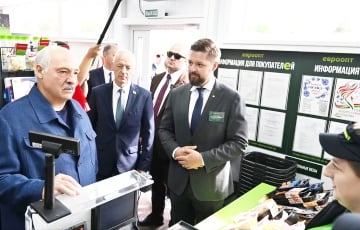
Why don't Belarusians buy Belarusian products?
The share of Belarusian goods in retail sales is 54.6%, with a 0.1% increase over the first half of the year—which is within the margin of statistical error. Alexander Lukashenko cited these figures at a recent meeting in Vileika. He also noted that even this increase was driven by sales of “Belji” cars financed by government loans. “Retail chain owners also bear responsibility for shaping demand specifically in favor of domestic products,” Lukashenko stated. But is that the root of the problem?
In just the first five months of this year, $7.5 billion worth of consumer goods were imported into Belarus—nearly a third more than a year earlier. And over a longer period, the picture is even more striking. In January–June 2015, the share of domestic goods in the turnover of retail organizations was 69.5%. In 2021, it was 59.2%. In 2024, it was 57.9%. Currently, it stands at 54.6%. That’s a decline of 15 percentage points over 11 years, despite varying market conditions and different sets of directives from above. A clear trend.
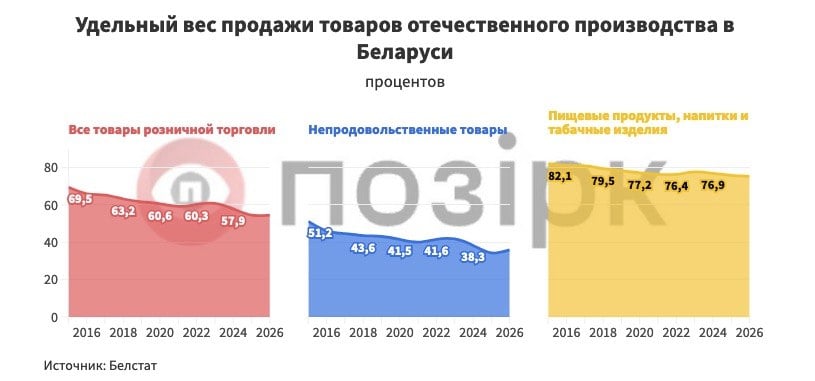
The structure of the current “growth” in the share of Belarusian goods on domestic store shelves is also telling. Non-food goods did indeed increase from January through June—from 34.3% to 35.9% compared to the first half of 2025. But within this group, there is one line item that explains it all: the share of domestically produced new passenger cars rose from 39% to 68%. These are the “Belji” cars, sold with government-backed loans.
Subtract this component—and there will be no growth left.
When there’s no choice, people take what’s available
But here’s what wasn’t reported at the meeting. Household refrigerators and freezers: the share of domestic models in sales fell in the first half of the year compared to the same period last year, from 47.2% to 31.3%—a drop of 16 percentage points. Household chemicals—from 36.8% to 31%. Ceramic tiles—from 55.9% to 51.9%.
The trends in the light industry are no less striking: knitwear: 36.6% in 2021, 13.1% now. Underwear: from 64.2% to 37.9%. Footwear: from 34.1% to 14.9%. Hosiery, a sector where Belarusian manufacturers recently dominated the market, has dropped from 78.8% to 62.5%. This isn’t about sanctions or online marketplaces: consumers have simply stopped buying domestic products.
Food is holding up better—at 75.4%—but there are setbacks there as well, specifically in processing. Baby food: 78.7% in 2021, now 67.4%. Canned fruits and vegetables and juice products: from 80.6% to 65.8% in just four years—and this in a country with a strong agricultural sector that prides itself on its harvest. Pasta: from 65.7% to 57%. Fresh apples: from 62.2% to 47.8% in just one year.
However, there are also examples of the opposite trend, and they are no less telling. Televisions: from 14.3% in 2021 to 27.4%. Bicycles: from 22.7% to 30.5% in one year. Cognac—from 65.8% to 71.6%. No meetings were held regarding televisions or bicycles. It’s simply that products people are buying have appeared on the market.
Of course, there are de facto monopolies. Gasoline—100%. Diesel fuel—100%. Eggs—100%. Pork—100%. Sugar—99.3%, vodka—99.1%, butter—practically 100%. But where there is a real choice, the share drops to 13–15%.
The pattern is simple: the figure is 100% where there is physically no alternative—either due to logistics or because the import route is closed. Belarus-style import substitution in retail is based not on competitiveness, but on the absence of competitors.
Retail Is Designated as the Front Line
The diagnosis made at the meeting is as follows: chain owners are responsible for shaping demand in favor of domestic products, and they are failing at this task. According to officials, the retail sector should not merely satisfy demand but shape it—and in a predetermined direction set not by the buyer but by a plan from above, where those in charge have a better view.
In a normally functioning economy, demand creates supply. Businesses see what people are buying and, in response, begin to produce it. The goods themselves end up on the shelves because retailers make money through sales volume, not financial reports.
And here, no one orders retail chains to stock Belarusian goods that are in demand: if they sell well, the chains stock them anyway.
In the logic of the meeting, the chain is reversed: the official directs the retail chain, the retail chain directs the manufacturer, the manufacturer produces what the retail chain is required to sell, and the retail chain reports on the growth in the share of Belarusian goods in sales. A closed loop in which everything is present except the customer with their own opinion.
Artur Karpovich, Minister of Antimonopoly Regulation and Trade, noted at the same meeting that the product range is wide and customers have plenty to choose from. Formally, it’s a report on success. In essence, it’s a description of a mechanism that was portrayed as a problem at the meeting.
Choice is precisely the reason for the “failure”: as long as there is no choice, the share of domestic goods automatically approaches 100%. That is exactly how it worked in the system for which Lukashenko made no secret of his nostalgia that same day, stating that the country lacks the Soviet management system and citing China as an example, a country that “didn’t foolishly dismantle anything.”
Sociology at the Cash Register
The formula regarding money that could have stayed with domestic producers but instead flows abroad deserves a separate mention. It’s hard for officials to accept that this is other people’s money—even if it belongs to households that earned it and spent it as they saw fit.
Buying an imported refrigerator instead of a Belarusian one isn’t a “leak”—it’s voting with your wallet. Today, this is practically the only form of free sociology in the country that cannot be manipulated: it takes place daily at the cash register and is published in retail sales statistics.
It is difficult to reconcile two sets of rules—market-based and non-market-based—within a single economy. Either price and profit determine what is produced, or production quotas do. The Soviet model was internally consistent: it excluded profit as a criterion, so planned losses were the norm rather than a problem.
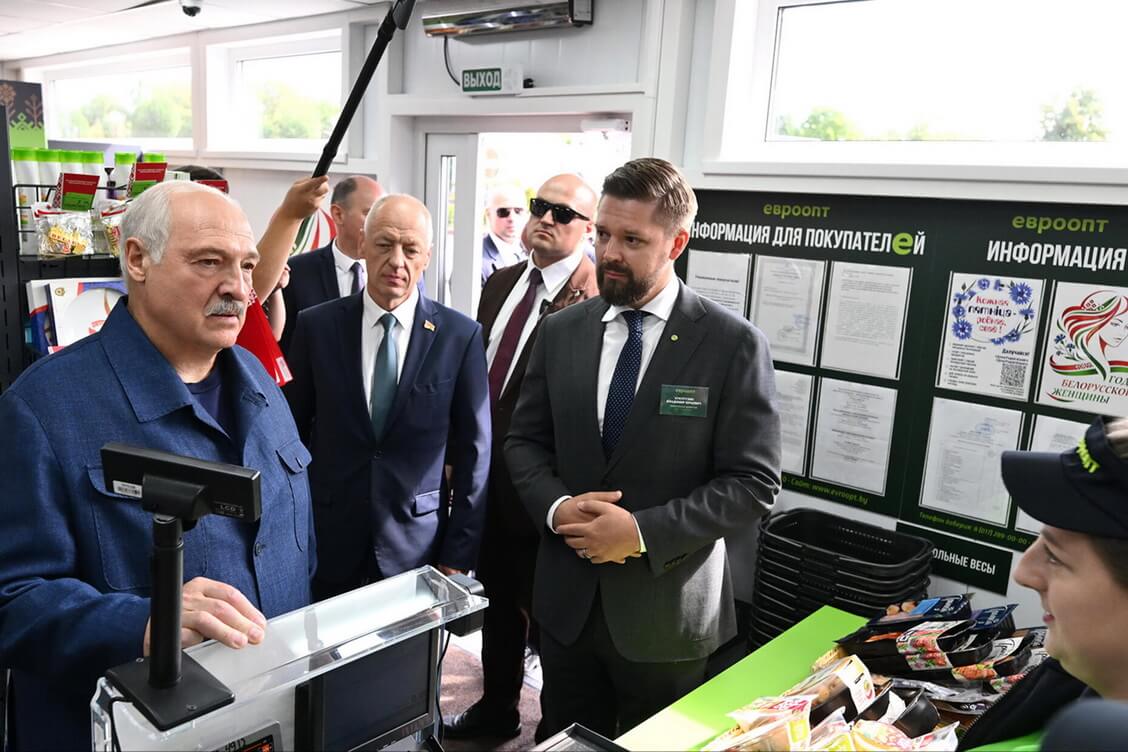
A striking example of attempts to achieve such a combination is Belkoopsoyuz, the most heavily regulated player in rural trade—the one tasked with setting the trends in that sector. The retail sector’s net loss for the first half of the year was 16.4 million rubles, an 11-fold increase (even Lukashenko called it “horrific”). A net loss of 314 stores in rural areas over the past year. Maximum control, minimum results. However, officials’ complaints are directed at “Eurotrg” and online marketplaces, whose profitability they describe as outrageously high.
That said, even such a system can survive for a long time, but only under one condition: as long as there is rent to cover the gap between the plan and the numbers.
Russian support, transit flows, and access to cheap raw materials—all of this has for years funded the coexistence of the incompatible. This rent, however, is not infinite, not unconditional, and is becoming more expensive: today, it is increasingly paid for with political concessions, and over time, the bill is presented in the currency of sovereignty.
Ales Gudiya, “Pozirk”

Bank's name: Bank Millennium S.A.
Address: ul. Stanislawa Zaryna, 2A, 02-593, Warszawa
IBAN: PL97116022020000000216711123
SWIFT: BIGBPLPW
Name of the account holder: Fundacja “KARTA ‘97”
Purpose/title of payment: Donation for statuary aims
You can contact us by the e-mail charter97@gmail.com