

The Strikes On Moscow Will Be Much More Powerful
1- 20.08.2026, 12:23
- 2,844
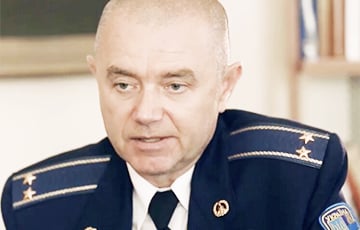
Roman Svitana's Forecast.
Russian propagandists are already openly warning that Ukraine’s current strikes on Russian territory are just the beginning. On the air, they talk about new Ukrainian ballistic missiles, long-range missiles, and even heavy unmanned mini-submarines, which they compare to Russia’s “Poseidons.”
What “surprises” can we actually expect from the Ukrainian Armed Forces in long-range strikes against Russia? What new types of weapons might Ukraine deploy? The website Charter97.org discussed this with retired Ukrainian Armed Forces Colonel, military expert, and flight instructor Roman Svitan:
— Indeed, Ukraine already has semi-submersible unmanned aerial vehicles (UAVs) of the Toloka type, from the TLK family, in serial production. There are also UAVs with payloads of up to one metric ton—some even larger—but the main ones have payloads of approximately one metric ton.
A few months ago, a pre-production model of such a semi-submersible UAV struck a Russian submarine in Novorossiysk. This vehicle entered Novorossiysk Bay itself. It’s practically a submarine, only operated remotely. It carried out its combat mission: the vehicle was detonated next to the submarine, after which it was put out of action.
These vehicles are already in mass production in Ukraine. And now the Russians are, in fact, starting to talk about them. They understand that such semi-submersible vehicles can, by and large, sink virtually any vessel in the Black Sea.
In addition to the BEKs and the unmanned Sea Baby and Magura boats, the the “Mamai” unmanned surface vessel has also entered production. It was developed by the Security Service of Ukraine. In other words, this is yet another area related to warfare at sea.
As for airborne weapons, the situation here has not changed significantly or fundamentally. "Winged" missiles are primarily used. However, thanks to the scaling up of production, a large number of mass-produced winged missiles of various classes will soon be deployed to carry out combat missions. Moreover, these are not only long-range missiles such as the "Flamingo." We’re mainly talking about operational-range missiles, up to 500 kilometers. There are literally about a dozen different types. The “Long Neptune” has already proved itself in strikes on Novorossiysk. In other words, production will be scaled up and the geographic scope of use will expand specifically for cruise missiles.
And the main thing, of course, is our ballistic missiles, which are scheduled to enter mass production this year. Mass-production models have already been tested and proven. The Russians have, as they say, already felt their impact. There have been several strikes with ballistic missiles—tactical-range ones so far. But there will also be operational-range missiles. These make it possible to reach Moscow from a distance of 500 kilometers.
If you draw a line 500 kilometers deep along the perimeter of the front and the border, that will be the approximate strike range for Russian targets of various levels—military and dual-use—depending on the target designation. These ballistic missiles, equipped with warheads ranging, let’s say, from 225 kilograms to half a metric ton, will operate precisely within this operational depth. That covers a large portion of Russia’s territory. To the north, Moscow; to the east, we’ll be able to reach practically as far as the Volga. In other words, the range of application is quite broad.
And the Russians know this very well. They are already predicting and roughly assessing the impact of these ballistic missiles on themselves. But I’ll say it again: there will be several types. There will be tactical-level ballistic missiles with a range of around 100 kilometers. There will be short-range operational missiles with a range of up to 200 kilometers, such as the FP-7. There will be missiles like the FP-9 with a range exceeding 800 kilometers. The “Grom” tactical ballistic missile system will be actively deployed; we have it in two range variants: the base version, with a range of 300 kilometers, and one with a range of 500 kilometers. These systems are manufactured by our state-owned enterprise. Our partners have already begun mass production of hypersonic ballistic missiles with a range of 600–700 kilometers. The British conducted pre-production tests of these missiles several months ago. The results were quite good.
I think that by the end of the year, Ukraine will also receive another type of ballistic missile capable of reaching Moscow, with a 225-kilogram warhead. That’s the caliber of an Mk 82 aircraft bomb.
— What targets within Russian territory could become priority targets for Ukrainian long-range strikes in the near future?
— Strikes will continue against Russia’s oil industry and its entire hydrocarbon infrastructure at various levels: production, transportation, refining, and transshipment. This is the main focus of the strikes.
Second are military targets that drones haven’t reached or that we cannot reach with drones. That is, military targets at various levels. Also, steel mills.
The main efforts will be directed at destroying Russia’s energy sector, primarily power generation. It depends on gas supply. Power generation mainly runs on gas. Even small cogeneration plants. In this sense, the energy sector will be one of the main targets this fall and winter. We’re talking not only about cutting off water supplies and immobilizing infrastructure, but also about cutting off power to the Russian Federation. At least at the operational level.

Bank's name: Bank Millennium S.A.
Address: ul. Stanislawa Zaryna, 2A, 02-593, Warszawa
IBAN: PL97116022020000000216711123
SWIFT: BIGBPLPW
Name of the account holder: Fundacja “KARTA ‘97”
Purpose/title of payment: Donation for statuary aims
You can contact us by the e-mail charter97@gmail.com