
"How Can You Sell A Product Like This As If It Were Beer?"
2- 20.08.2026, 13:48
- 1,486
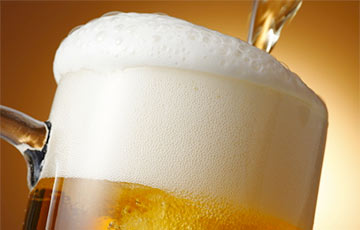
The taste of the foamy drink came as an unpleasant surprise to the Belarusian.
A Belarusian man named Alexei, who lives in Poland, wrote to the editorial staff of the website Charter97.org. His friends brought him two bottles of “Rechitsky Zolotisty” from Belarus. The taste of the beer came as an unpleasant surprise to the Belarusian:
— After the well-known events of 2020, I was forced to leave my country. Now I live in Poland, regularly read your website, and follow what’s happening in Belarus. Over the past five years, Poland has become a second home to me, but the thought of returning to my homeland never leaves me.
I’m always happy to hear any news from Belarus, especially from friends. Not long ago, some acquaintances from Belarus were passing through Warsaw on their way to the airport and brought me two bottles of Belarusian beer. I’m not a big fan of beer, but ever since my college days, it has reminded me of get-togethers with friends, good times, and my youth. So I saw these two bottles almost as a little greeting from back home.
It was “Rechitsa Zolotistoye.” I was immediately pleased to see that almost the entire label and the ingredient list were written in Belarusian. I put the beer in the fridge and waited until the weekend to open a bottle at my leisure, reminisce about the old days, and feel a connection to Belarus—even if just for a moment. I hadn’t had Belarusian beer in five years, so I was really curious to see if it had changed during that time.
On my day off, I opened the fridge in high spirits. I took out a beautiful, fogged-up bottle—just like in an ad. The Belarusian label looked nice. I was a little surprised by the 1.4-liter plastic container, but I didn’t think much of it at first.
I grabbed my favorite glass, opened the bottle—and immediately a sharp, very unpleasant smell hit my nose. It’s even hard to say exactly what it smelled like.
The first thing that came to mind, as Alexei writes, was that the beer had gone sour and was far from fresh:
— I poured the beer anyway and took a few sips. But it didn’t get any better. The bottle contained some kind of sour liquid that I simply couldn’t bring myself to call beer. I took a couple more sips, hoping that maybe I was imagining things. Nope. This was not at all the beer I remembered. To be honest, I just couldn’t understand how anyone could drink something like that at all.
In the end, the first bottle went straight down the toilet. I left the second one alone for a while. I thought maybe I’d just had bad luck with the first one. Then I opened it after all. But history repeated itself: the same sharp smell that immediately hit my nose. I didn’t even try it a second time.
And I was left with one simple question: how can anyone sell a product like this under the guise of beer? I understand that Belarus may currently be facing problems with the supply of high-quality raw materials, such as barley or hops. But that’s no reason to bottle something that has practically nothing in common with normal beer.
It’s also clear that a significant portion of Belarusian beer is exported to the Russian market. But I honestly find it hard to imagine how people can regularly buy and drink such a product. How used to poor quality do you have to get before you stop noticing the difference?
Given this, I’m not at all surprised that the Lukashenko regime restricts the import of foreign beer into Belarus. Compared to a decent imported product, I’m afraid the difference would be all too obvious.

Bank's name: Bank Millennium S.A.
Address: ul. Stanislawa Zaryna, 2A, 02-593, Warszawa
IBAN: PL97116022020000000216711123
SWIFT: BIGBPLPW
Name of the account holder: Fundacja “KARTA ‘97”
Purpose/title of payment: Donation for statuary aims
You can contact us by the e-mail charter97@gmail.com