
Nikolai Statkevich Described How The Belarusian Army Was Formed
- 21.08.2026, 19:30
- 1,312
This story illustrates the importance of accurate political forecasting.
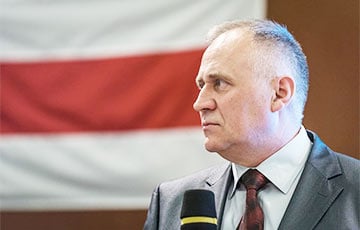
Belarusian opposition leader Nikolai Statkevich explained on Telegram how the army of independent Belarus was formed 35 years ago:
— Accurate political forecasts are extremely important. Not only because they satisfy our curiosity about the future. An accurate forecast also allows us to prepare to take advantage of the opportunities presented by future changes. Or to mitigate potential threats. This is extremely important right now for Belarus and the entire European region
For example, 35 years ago, the GKChP coup began in Moscow, with the goal of saving the USSR. But it ultimately led to its collapse. Therefore, today is a fitting occasion to reflect on the predictions made back then, since history itself has already shown whether they were correct or incorrect. At that time, some not only predicted the collapse of the Soviet empire itself, but even attempted to foresee the future of its constituent parts.
At that time, I was working on my doctoral dissertation on human-machine control systems, and I had to understand, in addition to technical issues, human motivation within these systems for effective control and for training in such control, which required studying the humanities as well.
From social psychology, I knew that a state not united by shared values inevitably collapses. The Soviet Union was united by communist ideology, which was completely discredited as a result of Gorbachev’s “glasnost”—the truth about the true cost of the communist experiment to the peoples of the USSR. The only other unifying ideology at that time could have been a nationalist one, which spelled the doom of the multinational empire.
Back then, as I predicted its collapse, I saw the greatest risk in the Soviet army unleashing a civil war in the national republics. After all, when an empire collapses under the weight of its own imperial army, that army’s almost reflexive reaction is to use force to prevent the collapse. This became clearly evident a few years later during the breakup of Yugoslavia.
Therefore, the issue of dividing the Soviet Army among the republics and the creation of their own armies within them became decisive. All the more so because the experience of the Russian Empire’s collapse in 1917 showed that, at that time, only those “peripheral regions” managed to achieve independence that had succeeded in creating and maintaining national military units by the time of the collapse. The Belarusians did not succeed in this.
Independence is neither gained nor defended by declarations and charters alone. I get the impression that this simple truth is still not understood by those who claim to offer an alternative form of state leadership
Therefore, through my initially anonymous articles in the Belarusian press of the time in 1990–1991, public opinion was being shaped in favor of creating our own army. It must be said that Belarusians liked this proposal, as for them it meant that their children would serve in the army close to home, rather than in Siberia or Central Asia. According to a sociological survey conducted in mid-1991, 60% of Belarusian residents supported it.
Furthermore, thanks to these publications and the correspondence they facilitated, a network of Belarusian officers who wanted to serve Belarus was established throughout the Soviet Union (including in Belarus).
The GKChP coup, as Nikolai Statkevich writes, forced us to act quickly:
— On August 20, 1991, during a broadcast on the “Belarusian Youth” radio station, thanks to its host Vitaly Semashko, I announced the creation of the Belarusian Military Union (BZV) and issued the BZV’s call to all military personnel not to carry out the GKChP’s orders. On the same day, this announcement and call were made at a BNF rally on Independence Square.
After the GKChP’s defeat, we immediately submitted a bill to the Supreme Soviet—through the BNF faction within it—on the creation of a Belarusian army. But this bill was derailed by the relentless opposition of a single deputy from the Shklov District, who wielded influence over many deputies—collective farm chairmen—and did everything in his power to prevent the creation of a Belarusian army. As a result, the law was passed on what was practically the fourth attempt, only in early 1992. All this time, the region was on the brink of civil war. Ukraine demanded that Moscow transfer all Soviet military units on its territory to its control.
A conspiracy was brewing within the General Staff of the Soviet Army, and an armed mutiny was being prepared in the Baltic Military District, where local authorities demanded the immediate withdrawal of Soviet troops. After Belarus finally joined Ukraine’s demands, Moscow yielded to them, and the threat of civil war was averted.
This story is important evidence of the significance of accurate political forecasting. On this channel, I have already written about the forecast made in 2018 by the People’s Community and the Belarusian National Congress regarding the brewing revolutionary situation in Belarus, which allowed us to prepare for future events.

Bank's name: Bank Millennium S.A.
Address: ul. Stanislawa Zaryna, 2A, 02-593, Warszawa
IBAN: PL97116022020000000216711123
SWIFT: BIGBPLPW
Name of the account holder: Fundacja “KARTA ‘97”
Purpose/title of payment: Donation for statuary aims
You can contact us by the e-mail charter97@gmail.com