


Lukashenko Is At War With Common Sense
- 22.08.2026, 8:21
- 3,730
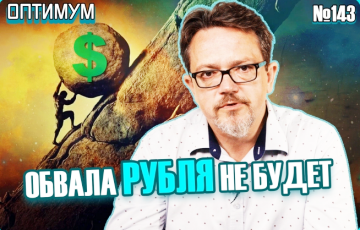
The authorities have decided to revive an industry that they themselves had destroyed.
The Belarusian authorities have always been known for their unique strategic planning abilities. On Wednesday, August 18, a decree on the development of agro-ecotourism was signed.
Find out how Alexander Lukashenko is now trying to revive an industry that he himself had been destroying for three years—in the latest episode of the “Optimum” program on the YouTube channel "Belarusians and the Market".
New and Old
The document provides for an extension of the terms for preferential loans, the option for owners to pay a special fee of 45 rubles instead of tax, and an expansion of the list of services that agricultural estates can provide. All in all, it’s a good decree—we should take advantage of it.
But there’s a catch. This decree wouldn’t have been necessary at all if, back in 2022, Lukashenko himself hadn’t signed a decree—also on the development of agroecotourism. Exactly the same as this one, but different.
Back then, the authorities limited the number of services that agritourism estates could provide, stipulated that the number of guest rooms must not exceed ten, and introduced a rule requiring owners to obtain permission from district executive committees. A mandatory requirement was maintaining a subsistence farm. In other words, commissions checked whether there was a vegetable garden, greenhouses, an orchard, and livestock. And to avoid having to go through the process twice, they carried out a complete re-registration of all agritourism estates.
And that was it. A business that had been thriving for many years simply collapsed. Of the 3,000 agritourism estates in operation, only 1,300 passed the re-registration process. In the years since then, their numbers have not even come close to recovering. As of early 2026, there were 1,441 registered agritourism estates in the country. The number of tourists who used their services fell from 560,000 in 2022 to 470,000 in 2025.
All this took place against a backdrop of talk about the need to revitalize the Belarusian countryside, calls to attract investment to rural areas, and promises to create conditions that would make people want to return on their own.
Who Was Troubled by the Agritourism Estates
At the same time, even the authorities themselves could not really explain why they were killing this thriving business. Alexander Lukashenko said that order needed to be restored in the industry. I think the reason, as always, was envy and greed.
“Pay taxes like all hotel complexes. Pay taxes like the entire restaurant industry,” Lukashenko said back in 2022.
The rules were tightened, but for some reason, tax revenue didn’t increase. That’s because most agritourism estates simply shut down. And this happened at a time when the number of tourists in Belarus was growing for objective reasons—due to visa issues and border crossings. Compared to 2022, the number of Russian tourists increased by one million, and the number of Belarusian tourists by seven hundred thousand.
In other words, if it weren’t for the authorities’ desire to “clean things up”—as they see it—the industry could be thriving right now. People would be earning money, paying taxes, and businesses would be expanding. But none of that happened.
And now the authorities are trying to revive what they themselves killed off. They’re trying once again to make people—whom they’ve already deceived—believe them.
There will surely be those willing to take a gamble with the government. But it took twenty years from the moment the first agritourism estates appeared in Belarus until their brief heyday. It’s unlikely things will move much faster now. Especially since there’s no guarantee that in a year or two, greed and envy won’t once again prevail over common sense.

Bank's name: Bank Millennium S.A.
Address: ul. Stanislawa Zaryna, 2A, 02-593, Warszawa
IBAN: PL97116022020000000216711123
SWIFT: BIGBPLPW
Name of the account holder: Fundacja “KARTA ‘97”
Purpose/title of payment: Donation for statuary aims
You can contact us by the e-mail charter97@gmail.com