"Lukashenko Has Passed The Crossroads And Is Heading Toward Disaster"
4- 26.08.2026, 20:36
- 2,378
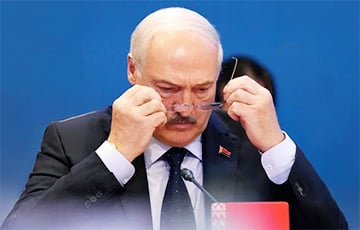
The dictator's projects are failing one after another.
Alexander Lukashenko has led the Belarusian economy to disaster. All of his grandiose and beloved projects—from the modernization of enterprises to the famous “Kupalovsky” agricultural holding—ended in an equally spectacular failure, according to economist Sergei Chaly.
“And these aren’t just isolated incidents,” the analyst emphasized on the air of “Ordinary Morning”— but the latest attempts to salvage at least something in the economy. The authorities have abandoned attempts to rescue the economy as a whole and have instead focused on individual projects to show that we’re doing something. But even these projects are falling apart.
Conceptually, it’s already just a scorched wasteland.
This is a long-standing issue; we’ve wasted a great deal of time. It has been dragging on since 2012, following the currency crisis and the collapse of the entire economic model, which relied on external “special effects” stemming from the fact that we had a fixed exchange rate that did not correspond to the market rate, with “GDP inflation using the Prokopovich method” through domestic investment.
Now they’re trying to revive this method, but it’s working much worse—the consequences of the modernization that began precisely in 2012 mean that these attempts only exacerbate the situation.
According to Sergei Chaly, Belarus faced a crossroads at that time, when it became clear that the old model wasn’t working and structural reforms were needed to address the problem of inefficiency in state-owned enterprises. But the authorities decided to pursue modernization—which was essentially a carbon copy of Gorbachev-style “accelerated” economic development.
“Roughly speaking, they decided: whatever we produced before—carriage axles or bast shoes—we’ll keep producing on new machinery. Instead of producing something new,” explains Chaly.
For example, in July of this year, Lukashenko visited the Brest Electric Lamp Plant and demanded that they step up their production of LEDs. The irony is that the plant underwent modernization—and purchased new machines for producing incandescent bulbs, which are now obsolete and hardly anyone needs.
“As it turns out,” the analyst points out, “the production of LED bulbs requires entirely different expertise and a different level of scientific and technical development. All the internal components are purchased from China. And the only expertise remaining in Brest is the production of the base and the bulb itself.
And if only it were just the Brest Electric Lamp Factory! Almost all of our new projects now involve simple assembly of Chinese components. This includes the auto industry, the Midea refrigerators that the Brest Regional Executive Committee boasts so much about, and much more.
The question is—why do this?
Why are you manufacturing light bulbs that automatically end up being 40% more expensive than Chinese ones—what’s the point?
And this is just one of the results of the refusal at that time to restructure the economy and the attempts to show: “Look, we can do something on our own.”
Compounding this is the realization that Lukashenko’s days are numbered (and his rule, it seems to me, is even more so)—and there’s a desire to achieve at least some kind of result as quickly as possible.
Let’s, for example, start farming trout—the profit margin is 30–40%. But it turns out that it doesn’t work that way: it requires huge investments, a massive amount of electricity for a closed-loop system, and feed that just isn’t available, for heaven’s sake.
Well, they forced the BNBK to produce this feed—and then it turned out that it’s actually made from imported ingredients, which ends up being more expensive than expected.
This is how it goes with everything, including Lukashenko’s beloved dairy industry. Here’s where this obsession with scale has led us: they built “palaces for cows,” but the problem with the cows hasn’t gone away. Nor has the issue with specialists. Veterinary care has remained at the same level it always was—and there you have it: mass deaths of both cows and pigs, whose herds still haven’t recovered.
The isolated successes that Lukashenko wants go only to those very close to him (such as the greenhouse farms in the Vitebsk region, which will be managed by Teterin and Baskov). We see a system of oligarchs in his inner circle. And let me just remind you: Lukashenko once came to power under the slogan of fighting corruption. And in the end—he ended up doing exactly what he had fought against.
Corruption has become completely systemic. And all of these people’s sources of income are located abroad.

Bank's name: Bank Millennium S.A.
Address: ul. Stanislawa Zaryna, 2A, 02-593, Warszawa
IBAN: PL97116022020000000216711123
SWIFT: BIGBPLPW
Name of the account holder: Fundacja “KARTA ‘97”
Purpose/title of payment: Donation for statuary aims
You can contact us by the e-mail charter97@gmail.com