


A Rare Visit By The CIA Director To Moscow: Five Reasons Cited
1- 27.08.2026, 8:02
- 2,878
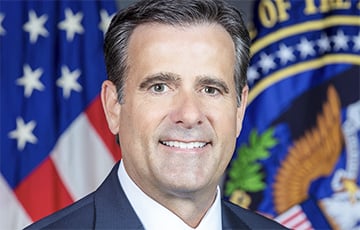
Photo: Wikipedia
Ratcliffe brought Putin several warnings from Washington.
CIA Director John Ratcliffe made an unannounced visit to Moscow that lasted only a few hours. The trip took place amid efforts by the Donald Trump administration to bring an end to Russia’s war against Ukraine and rising tensions between Moscow and the West.
This was reported by Newsweek, which analyzed the possible reasons for the CIA director’s trip.
Kremlin spokesman Dmitry Peskov stated that Ratcliffe met with representatives of Russian intelligence, not with Vladimir Putin. At the same time, he said, the Russian president had been informed of the talks.
Donald Trump himself confirmed that he was the one who sent Ratcliffe to Moscow. According to the U.S. president, the goal was to try to help end the war in Ukraine.
“Something might come of this. We’re working very hard to end this war,” Trump said.
John Forman, the former British defense attaché to Russia, emphasized that the CIA director’s trip to Moscow is an unusual event.
“The U.S. president doesn’t send the CIA director to Moscow unless it’s a serious matter,” he said.
Warning to Putin About a New Mobilization
One possible reason for the visit could have been an attempt by Washington to dissuade the Kremlin from carrying out a new mobilization.
The Wall Street Journal speculated that Ratcliffe may have conveyed a warning to Putin following reports from U.S. intelligence about an impending mobilization plan after the parliamentary elections scheduled for September 20.
Ukrainian President Volodymyr Zelenskyy also stated that Russia could draft up to 300,000 additional troops after the elections to replenish the losses the Russian army has suffered during the war.
In September 2022, Putin had already announced a partial mobilization. At that time, the process was accompanied by a significant exodus of Russians abroad.
At the same time, the Kremlin denied that it was preparing a new mobilization. Peskov, in particular, stated that such claims were being spread by the Ukrainian authorities.
Warning to Moscow About NATO
Another possible topic of discussion could have been the risks of Russian escalation against NATO countries.
U.S. media reports cite an intelligence assessment that outlines various scenarios for possible Russian actions against the Alliance—ranging from cyberattacks to a limited incursion, the purpose of which could be to test NATO’s unity and its readiness to fulfill its obligations under Article 5.
Russia’s military mobilization exercises in the Kaliningrad region were mentioned separately. This Russian exclave on the Baltic Sea could find itself at the center of a potential conflict between Moscow and NATO.
Forman speculated that Ratcliffe might have discussed the escalation of the war in Ukraine or a broader conflict in Europe.
An attempt to move the Ukraine negotiations forward
The visit may also have been linked to the Trump administration’s diplomatic efforts to end Russia’s war against Ukraine.
The trip took place against the backdrop of a stalemate in U.S. efforts to secure a peace agreement. Ratcliffe may therefore have been assessing the extent to which Moscow is prepared to engage seriously in negotiations.
Ratcliffe may serve as a tool for Trump to send a message to Moscow: if Russia does not soften its conditions for ending the war, the U.S. may step up its support for Ukraine, including in the areas of intelligence and long-range strikes.
A prisoner exchange is possible
Another possible topic could have been negotiations regarding American citizens held in Russian prisons.
The CIA has already played a role in arranging the release of Americans in Russia. Specifically, in 2024, as part of an exchange, Wall Street Journal reporter Evan Gershkovich and former U.S. Marine Paul Vilan were released.
Retcliffe also participated in negotiations for the release of Ksenia Karelina—a Russian and U.S. citizen who was convicted in Russia of treason for donating to a charity supporting Ukraine.
Earlier this month, Russia also expelled former U.S. Marine Robert Gilman.
Russian Support for Iran
Moscow’s relations with Tehran and Russia’s transfer of intelligence to Iran could have been a separate topic.
At a Senate Intelligence Committee hearing on March 18, Retcliffe stated that Iran is asking Russia to share intelligence on U.S. military assets in the Middle East.
This came after reports that Moscow may have provided Tehran with information on the locations of U.S. ships and aircraft in the region during the Iran War. Russia denies these reports.
RUSI research fellow Sari Archo Gavren suggested that Retcliffe’s visit might have been related to warning Moscow about a possible exchange of intelligence with Iran or potential hybrid activities in the Baltic states. She also believes that Washington may have sought to ascertain the Kremlin’s position regarding Ukraine and the detained Americans.

Bank's name: Bank Millennium S.A.
Address: ul. Stanislawa Zaryna, 2A, 02-593, Warszawa
IBAN: PL97116022020000000216711123
SWIFT: BIGBPLPW
Name of the account holder: Fundacja “KARTA ‘97”
Purpose/title of payment: Donation for statuary aims
You can contact us by the e-mail charter97@gmail.com