
How The BNR Forced Moscow To Recognize Belarus
- 13.11.2026, 11:36

Why March 25 is Freedom Day and a holiday celebrating Belarusian statehood.
The Belarusian People’s Republic, whose independence was proclaimed on March 25, 1918, lacked its own regular army, a stable budget, and full control over its claimed territory. Nine months later, Soviet Belarus emerged in Smolensk, a state that would last for more than 70 years. At first glance, it might seem that the BPR remained merely a symbolic project, while the Bolsheviks were the ones who established a genuine Belarusian state.
However, it was precisely the emergence of the BPR that forced Moscow to take the Belarusian national movement seriously and, to a large extent, prompted the Bolsheviks to create the Socialist Soviet Republic of Belarus—the future BSSR.
The host of the “Usy Skoriny” program, historian Timofey Akudovich, explains how this happened. The website Charter97.org publishes the full text version of this video.
Why Did the Bolsheviks Have No Intention of Creating Belarus?
In 1917, the Bolsheviks thought in terms of a world revolution. They regarded nation-states as relics of the past and products of the bourgeois system. It was assumed that after the victory of the proletariat, the significance of nations and national borders would gradually fade away.
Under this approach, Belarus was viewed not as an independent country, but rather as part of the former Russian Empire, which was to become part of the broader revolutionary space.
There are two opposing explanations for the emergence of the Byelorussian SSR. According to the Soviet version, the Belarusian people wanted to establish Soviet power; the Bolsheviks heeded their will, and on January 1, 1919, Soviet Belarus was proclaimed.
The other version attributes everything to Moscow’s cold calculation: the Bolsheviks allegedly decided to create a buffer republic on the border with Poland and hastily proclaimed it in Smolensk. This explanation is much closer to the truth, but even it does not provide the full picture. The idea of an independent Belarus could not have come out of nowhere for the Bolshevik leadership.
Who among the Bolsheviks advocated for Belarus?
The Belarusian question was a constant topic of discussion within the Bolshevik movement itself. There were Belarusian sections active within the RCP(b), and the Belarusian National Commissariat operated under the People’s Commissariat for Nationalities. Conventions of Belarusian workers, soldiers, and sailors were held in Petrograd and other cities, and newspapers, pamphlets, and books were published.
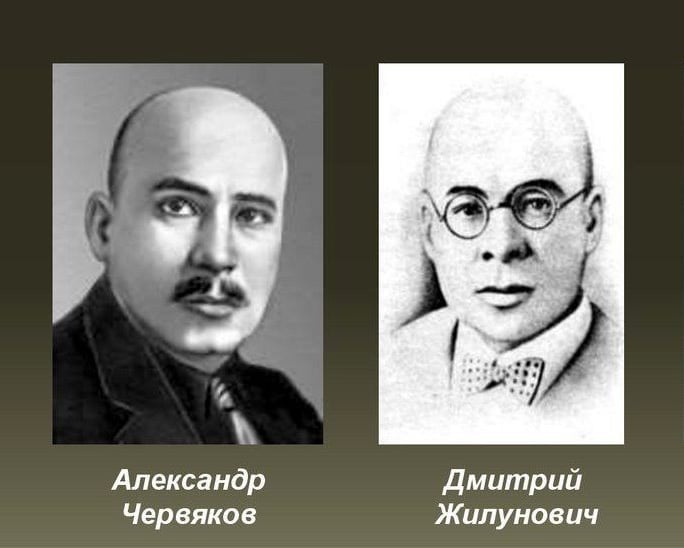
The main advocates for the creation of a Soviet Belarusian republic were the Belarusian communists Alexander Chervyakov and Dmitry Zhilunovich. They sought recognition of Belarus as a separate political entity and did not allow the leadership in Moscow to simply forget about the existence of the Belarusian people.
However, they faced a formidable opponent—the Regional Executive Committee of the Soviets of Workers’, Soldiers’, and Peasants’ Deputies of the Western Region and the Front, abbreviated as Oblispolkomzap.
What is Oblispolkomzap?
Oblispolkomzap grew out of the soldiers’ and revolutionary committees that emerged in Belarus in 1917. It gradually became the main Bolshevik force in the region. Its influential leaders, Wilhelm Knorin and Alexander Myasnikov, opposed the creation of a separate Belarusian republic. They did not want to share power with nationally oriented communists and, in effect, denied the existence of an independent Belarusian nation.
Supporters of the Oblispolkomzap argued that the region’s population was too ethnically mixed and that nation-building would only distract from the world revolution. After the withdrawal of German troops, they wanted to preserve the Western Region as an administrative unit of Soviet Russia.
Why, then, did the line championed by Zhilunovich and Chervyakov prevail in late 1918? The main argument was the BNR.
How did the proclamation of the BNR change the situation?
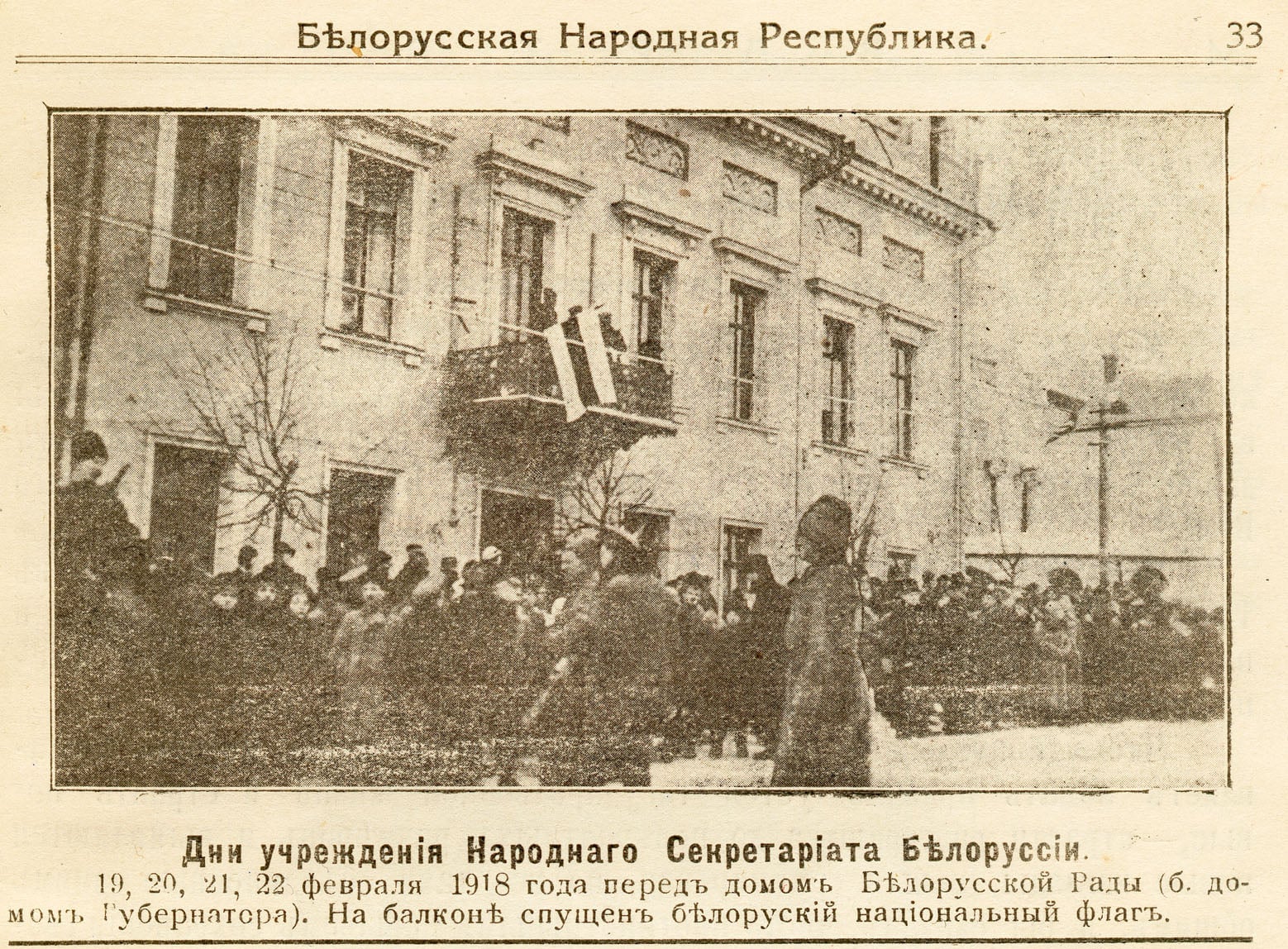
First, leaders of the Belarusian national movement announced the creation of the Belarusian People’s Republic, and on March 25, 1918, the Third Constitutional Charter proclaimed its independence. This was an official political act that demonstrated to the entire world: Belarusians were striving for their own statehood. The Bolsheviks could no longer turn a blind eye to the fact that an independent Belarusian political project—albeit a weak one that did not control the entire territory it claimed—had emerged right next to them.
The BPR’s diplomatic efforts proved particularly important. Its leadership established relations with the Ukrainian People’s Republic and the government of Lithuania. The Prime Minister of the BPR, Anton Lutskevich, met with the leaders of Poland, Józef Piłsudski and Ignacy Jan Paderewski.
The BPR maintained representative offices and missions in Germany, Estonia, Finland, Turkey, and other countries. The republic did not receive full international recognition, but its leaders did everything possible to ensure that the Belarusian issue remained on the European political agenda.
Did the BPR have its own army?
The BPR was unable to establish a unified regular army, but Belarusian military units emerged in various countries and political entities.
As early as 1917, the 1st Minsk Belarusian Infantry Regiment was formed in Minsk. In November 1918, the formation of the 1st Lithuanian-Belarusian Division began as part of the Polish Army. Belarusian activist Stepan Nekrashevich attempted to negotiate with the Anglo-French allies to create a Western Army—a Belarusian counterpart to the anti-Bolshevik Volunteer Army.
Belarusian units appeared as part of Ukrainian and Estonian forces. The army of Stanislav Bulak-Balakhovich, flying white-red-white flags, marched through Polesie to Mozyr.
After the collapse of the fronts in World War I, tens of thousands of armed Belarusians found themselves scattered across various countries and armies. They represented a significant force and could have joined whoever offered them a clear national goal. Leaders of the Belarusian People’s Republic (BNR) actively worked with these people, and the Bolsheviks could not ignore this.
Why Did the Bolsheviks Play the National Card?
Throughout 1918, the Bolsheviks’ situation remained extremely dire. In the spring, German troops occupied significant territories; then the White armies gained strength; and uprisings broke out within the territories controlled by the Bolsheviks. In such a situation, any additional support was of great importance. In theory, nationalist aspirations contradicted Bolshevik internationalism. In practice, Vladimir Lenin saw enormous political potential in the desire of hundreds of thousands of people to achieve national self-determination.
If Moscow had failed to address the Ukrainian and Belarusian issues, Poland, Germany, Great Britain, or other states might have taken advantage of the situation. The activity of national movements also benefited Joseph Stalin, who held the post of People’s Commissar for Nationalities and gained additional leverage in the intra-party struggle.
How was Soviet Belarus proclaimed?
In late December 1918, the leadership of the RCP(b) decided to establish the Soviet Belarusian Republic. On December 30, the Northwest Regional Conference of the Bolsheviks, held in Smolensk, declared itself the First Congress of the Communist Party (Bolsheviks) of Belarus.
On January 1, 1919, a manifesto was published announcing the establishment of the Socialist Soviet Republic of Belarus (SSRB). Its government was headed by Dmitry Zhilunovich. Later, the republic came to be known as the Byelorussian Soviet Socialist Republic (BSSR).
Soviet Belarus was not an independent state and was entirely dependent on Moscow. However, its emergence marked an important step toward establishing Belarus as a separate political and administrative-territorial unit. This path turned out to be tragic, bloody, and oppressive; however, the significance of the BPR’s role in the creation of the Soviet republic cannot be denied.
What do the BPR and the BSSR have in common?
The history can be traced even further back. Many leading figures of the BPR and Belarusian communists emerged from the same political milieu—the Belarusian Socialist Community, founded in the early 20th century by the brothers Ivan Lutskevich and Anton Lutskevich.
It was there that Belarusian politicians formulated their vision for the future country, debated its structure, and learned to fight for national interests. Therefore, both projects—the BPR and Soviet Belarus—largely shared common socialist roots, although there were differing political views among BPR leaders. The paths of the two movements ultimately diverged after the All-Belarusian Congress of 1917. But even after that, the boundary between them did not become impenetrable.
How did BPR leaders influence the BSSR?
In the mid-1920s, many representatives of the BPR moved to Soviet Belarus. Among them were Václav Lastovský, Arkady Smolich, and Alexander Tsvikevich.
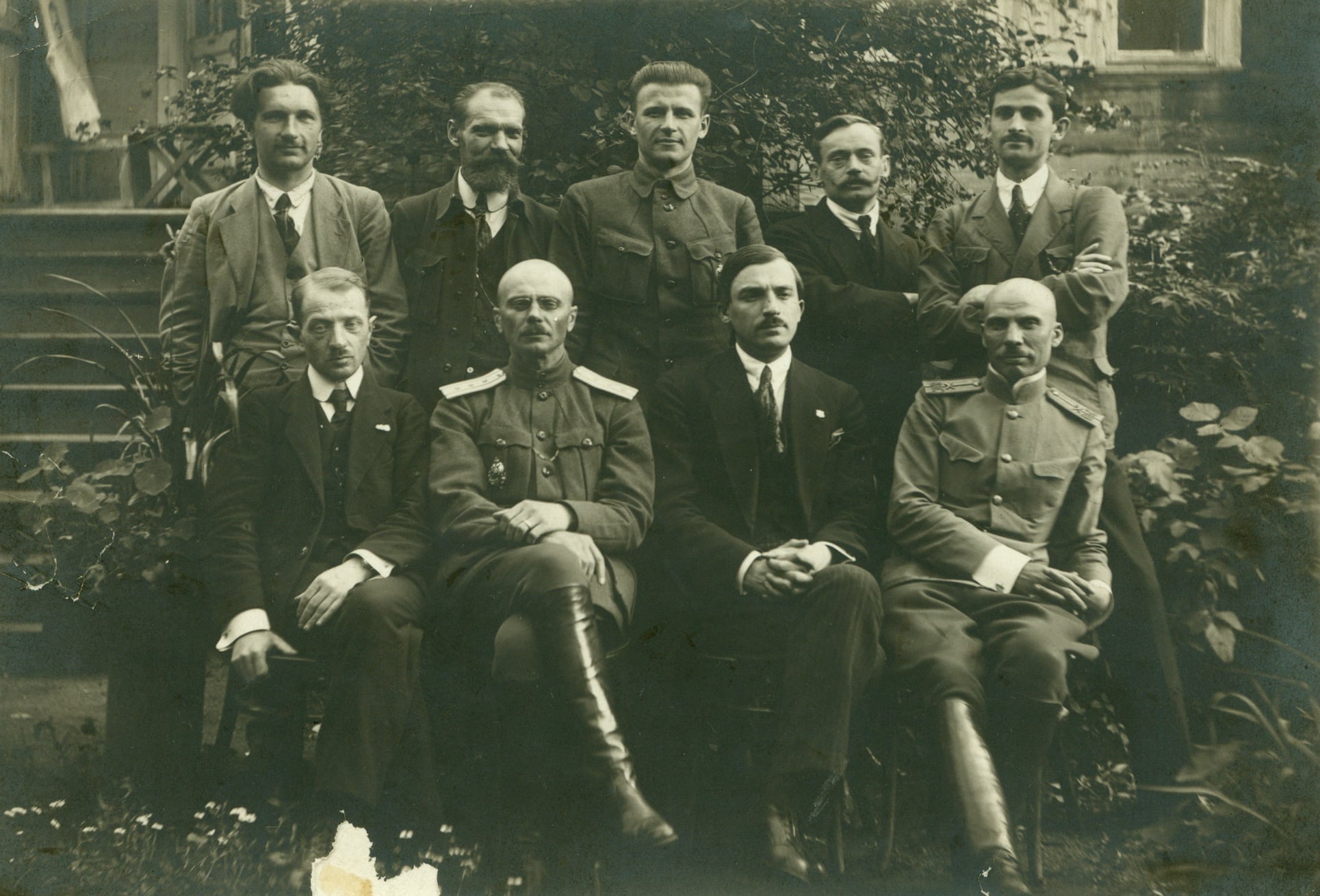
They participated in the republic’s scientific, educational, and cultural life, promoting the Belarusian language and national culture. Subsequently, they all fell victim to Stalinist repression, but before their deaths, they managed to significantly enrich Belarus.
Why does March 25 remain Freedom Day?
Soviet Belarus was proclaimed by the Bolsheviks because Belarus already existed as a political reality. It was made so by the leaders of the Belarusian People’s Republic (BPR), the Belarusian Socialist Community, and the entire national movement.
The BPR and the BSSR emerged not only from the ambitions of individual politicians or the short-term calculations of the great powers. At the heart of both projects lay the aspiration of thousands of Belarusians to determine the fate of their country independently.
In the BPR, this dream was expressed openly and naturally, but the young republic was unable to survive under extremely difficult geopolitical conditions. In the BSSR, the aspiration for independence was distorted and subjugated to the Soviet dictatorship. However, even in this broken form, Belarusian statehood survived and, seven decades later, helped the country regain its independence.
The BPR can be called a symbolic state or even a political “fiction.” But this “fiction” worked because it reflected reality—the willingness of Belarusians to follow the path to independence. That is precisely why March 25 is not just a commemorative date, but Freedom Day and a celebration of Belarusian statehood.

Bank's name: Bank Millennium S.A.
Address: ul. Stanislawa Zaryna, 2A, 02-593, Warszawa
IBAN: PL97116022020000000216711123
SWIFT: BIGBPLPW
Name of the account holder: Fundacja “KARTA ‘97”
Purpose/title of payment: Donation for statuary aims
You can contact us by the e-mail charter97@gmail.com