

The Gasoline Situation In Russia Is Becoming Very Serious
- 13.11.2026, 11:10
In the coming days, "arrivals" in Nizhnekamsk, Perm, and Tyumen are highly likely.
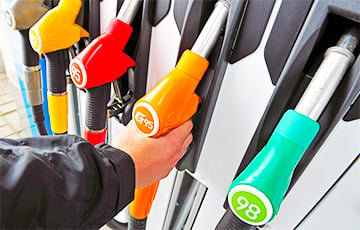
But now the gasoline situation in Russia is becoming very serious. Given the strikes on Omsk and Volgograd, facilities producing about 55% of Russia’s commercial gasoline—and accounting for roughly the same share of domestic market supply—have been targeted. We do not know to what extent production at each plant has been affected, whether refining operations there have been completely halted, which specific units were attacked, and so on. But given how massive the recent airstrikes have been, the assumption that production has been completely halted may well be valid.
November demand is about 5% lower than in July, so this will help, but not by much.
During the quiet month of October, some reserves were likely built up—perhaps enough to cover a week’s worth of national consumption.
Now everything depends on how badly the plants have been damaged and how quickly they can be restored.
And I think that in the coming days, attacks on Nizhnekamsk, Perm, and Tyumen are highly likely. If that happens, the share of attacked refineries in gasoline supplies to the domestic market will be almost exactly two-thirds. If we add Moscow to that, it’s already nearly three-quarters.
Moscow is a rather costly target to attack due to the density of air defense systems surrounding it. It is possible to strike an oil refinery, but it would require significantly more drones.
In Russia’s recent history, there was a time when gasoline consumption was about 30% of normal levels—April 2020, the peak of the COVID-19 pandemic. In the U.S., the figure was 37% at that time.
Imagine the traffic density back then; travel restrictions led to that level of consumption, even though there was plenty of gasoline available. If the scenario of reducing gasoline production by the amounts described above comes to pass, the government will have to introduce measures to bring demand into balance with the available supply of fuel. This can no longer be achieved through market mechanisms alone. The government will be forced to significantly restrict private gasoline consumption—practically to zero. As the COVID experience has shown, this is not fatal, and the country can function at that level of consumption. But this is already extremely far from any kind of normality.
In my 2024 articles on the gasoline crisis, I wrote that while attacks on refineries are currently merely inconveniences that incur costs, if the intensity of the attacks increases, they could create serious problems. In 2025, I wrote that, given the observed scale of the attacks, there should be no serious disruptions to gasoline supplies, but an increase in the intensity, frequency, and scope of strikes on refineries would lead to troubles and inconveniences on an entirely different scale. In June 2026, I noted that the country was rapidly approaching the threshold where troubles and inconveniences become major problems.
Apparently, in November 2026, this threshold was crossed. Even if this wave of attacks was a one-time operation for which Ukraine had to build up its strength and resources over a long period, the consequences could be quite significant. If, however, Ukraine is able to launch repeated strikes against Russian oil refineries with the same scope and intensity every two to three weeks over the course of several months, this will create a fundamentally new reality for the functioning of the Russian economy.
Sergey Vakulenko, an expert at the Carnegie Berlin Center, "Telegram"
context menu available

Bank's name: Bank Millennium S.A.
Address: ul. Stanislawa Zaryna, 2A, 02-593, Warszawa
IBAN: PL97116022020000000216711123
SWIFT: BIGBPLPW
Name of the account holder: Fundacja “KARTA ‘97”
Purpose/title of payment: Donation for statuary aims
You can contact us by the e-mail charter97@gmail.com