Germany Is Already Preparing Its Hospitals For War With Russia
3- 16.09.2026, 13:52
- 1,192
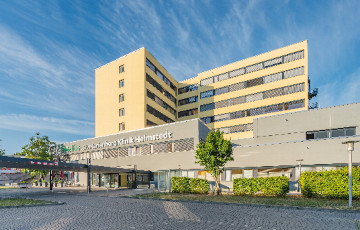
The country will play an important role in transporting military personnel and receiving the wounded.
Germany is increasingly preparing for a scenario in which it would have to join other NATO countries in mounting a military response against Russia. One of the key issues is the state of the country’s healthcare system.
This is reported by Bloomberg.
Across Germany, government agencies are assessing the state of the healthcare system and related infrastructure, seeking to determine how prepared they are for a potential military scenario.
German Defense Minister Boris Pistorius had previously warned that Russia could attack NATO territory by 2029. Should such a scenario unfold, Germany would be obligated to participate in the defense of the North Atlantic Alliance.
Due to its geographical location in the center of Europe, the country is likely to play an important role in transporting troops and receiving the wounded.
The Bundeswehr has analyzed possible scenarios for a Russian war against NATO and concluded that, at certain times, up to 1,000 wounded servicemembers could arrive in Germany daily.
The country’s five military hospitals will not be able to handle such an influx on their own. According to the law, civilian hospitals must be called upon to provide assistance in the event of war.
This could place an unprecedented strain on the healthcare system and force medical professionals to allocate resources between military and civilian patients.
“Is our healthcare system ready for this? The only answer is no,” said Benedikt Frimert, chief medical director and commander of the Military Hospital in Ulm.
According to him, Germany has a long way to go in terms of preparation. However, the issue is not just about the number of hospital beds. German authorities also need to strengthen the supply chains for medical supplies and establish more effective coordination between military and civilian medical facilities.
In the event of war, the Bundeswehr’s medical units will provide care to wounded service members directly near the combat zone. They will then be transported to Germany, where government agencies will distribute the patients among civilian hospitals.
Another problem cited is Germany’s dependence on imports of medical components. Like many other European countries, it relies heavily on China for supplies of key substances needed to produce antibiotics, painkillers, and other medications.

Bank's name: Bank Millennium S.A.
Address: ul. Stanislawa Zaryna, 2A, 02-593, Warszawa
IBAN: PL97116022020000000216711123
SWIFT: BIGBPLPW
Name of the account holder: Fundacja “KARTA ‘97”
Purpose/title of payment: Donation for statuary aims
You can contact us by the e-mail charter97@gmail.com