

The Ruble Is On A Roller Coaster Ride: What Should Belarusians Expect?
- 28.09.2026, 8:15
- 1,652
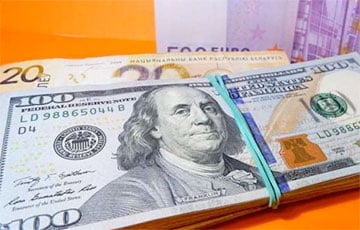
External factors and geopolitical challenges continue to influence the exchange rate.
The Belarusian ruble is ending September amid ongoing external uncertainty. The national currency’s exchange rate is influenced by the dynamics of the Russian ruble, the situation on the oil market, and other factors; in the short term, the Belarusian ruble is expected to show moderate fluctuations against the dollar, while the euro is expected to remain weaker.
From September 21 to 28, 2026, the following changes occurred in the exchange rates of foreign currencies and the currency basket against the Belarusian ruble:
The value of the currency basket remained unchanged at 0.175 (Belarusian rubles);
the U.S. dollar strengthened slightly against the ruble (+0.14%) and stood at 3.0276 (Belarusian rubles per 1 U.S. dollar);
the euro fell by 0.66% to 3.4487 (Belarusian rubles per 1 euro);
The Russian ruble depreciated by 0.12% to 3.5914 (Belarusian rubles per 100 Russian rubles);
The Chinese yuan fell by 0.1% to 4.5145 (Belarusian rubles per 10 yuan).
External Factors Determine the Ruble’s Dynamics
During the fourth week of September, the Belarusian ruble exhibited volatile dynamics. While the ruble strengthened against the dollar on September 22–23, it weakened on September 24–25. On September 28, the National Bank raised the ruble’s exchange rate against the U.S. dollar once again.
External factors and geopolitical challenges continue to influence the national currency’s exchange rate. To a large extent, this occurs indirectly through fluctuations in the Russian ruble. The Russian currency, in turn, is heavily dependent on the state of foreign trade and expected revenues from oil contracts. Although demand for foreign currency in Russia remains high, the persistence of high prices for November oil futures contracts—a result of the ongoing conflict in the Middle East—is supporting the ruble and preventing its accelerated weakening in the coming months.
Currently, the approaching tax season is also having a positive impact on the Russian currency’s exchange rate. Exporters are selling foreign currency more actively to pay taxes, increasing supply in the foreign exchange market.
In the medium term, the exchange rate is expected to decline
The Ministry of Economic Development published an updated forecast on the foreign exchange market as part of its socioeconomic development forecast for 2027 and the 2028–2029 planning period. It allows for an analysis of the expected dynamics of the Russian ruble exchange rate in the coming years. According to official data, the average exchange rate of the Russian ruble will gradually depreciate against the U.S. dollar. A more rapid depreciation of approximately 10% is projected for 2027.
The average annual exchange rate of the Russian ruble may fall from 79.5 rubles per U.S. dollar in 2026 to 87.4 rubles in 2027. The devaluation will then slow, and by 2029, the average exchange rate of the Russian ruble against the dollar will be 96 rubles. The nominal devaluation of the Russian ruble is expected to occur against the backdrop of a decline in average annual oil prices from $85–86 per barrel in 2026 to $66 per barrel in 2029. At the same time, the discount on Urals crude is projected to narrow from $25 per barrel in 2026 to $15 in 2029.
The nominal devaluation of the Russian ruble will drive a similar trend in the exchange rate against the U.S. dollar and the Belarusian ruble. At the same time, given sufficient supply of foreign currency in the domestic foreign exchange market, the rate of depreciation of the Belarusian ruble may be several percentage points less than that of the Russian ruble.
The Euro Under Pressure
The euro’s depreciation against the Belarusian ruble has been recorded for the third consecutive week amid the European currency’s decline against the dollar. Several factors are contributing to this. First, last week the price of diesel fuel in Europe reached record highs following a statement by U.S. President Donald Trump regarding a possible suspension of diesel exports. This is dampening investors’ expectations regarding the stability of the European economy.
Second, the tightening of U.S. monetary policy is maintaining the appeal of the U.S. dollar for investors. Third, Donald Trump’s statements regarding the possible imposition of large-scale tariffs on European goods or a complete halt to trade with the European Union should Canada be admitted as the EU’s first associated member have become an additional weakening factor for the European currency.
Short-term forecast: In the coming week (September 28–October 5), the exchange rate of the Belarusian ruble against the U.S. dollar may fluctuate within the range of 3–3.06 rubles per U.S. dollar.
Anastasia Luzgina, “Belsat”

Bank's name: Bank Millennium S.A.
Address: ul. Stanislawa Zaryna, 2A, 02-593, Warszawa
IBAN: PL97116022020000000216711123
SWIFT: BIGBPLPW
Name of the account holder: Fundacja “KARTA ‘97”
Purpose/title of payment: Donation for statuary aims
You can contact us by the e-mail charter97@gmail.com