

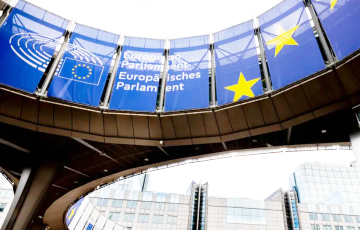
Members Of The European Parliament Have Joined The Call To Allocate 200 Billion Euros From Russian Reserves To Aid Ukraine
- 9.09.2026, 18:15
This move would send a strong message to Putin.
Members of the European Parliament have sent a letter to EU leaders in support of the idea of resuming work on a plan to use Russia’s frozen reserves to finance Ukraine. To address Belgium’s objections—which derailed the plan in December 2025—the lawmakers propose transferring Russian assets to an entity created specifically for this purpose. Currently, approximately 180 billion of the 200 billion euros in assets frozen in Europe are held in the Belgian depository Euroclear, according to The Moscow Times.
In late August, Sweden, the Netherlands, Spain, and Poland appealed to the European Commission to resume work on a “reparations loan” to Ukraine funded by Russian reserves. This initiative prompted Swedish Member of the European Parliament Karin Karlsbro to draft a letter from the legislative body, a copy of which was obtained by the Kyiv Independent. The appeal from the four countries led Karlsbro to believe that “we now have momentum” on this issue, while “Ukraine currently needs substantial long-term financing,” she explained to the publication.
The 122 lawmakers who signed the appeal called for the urgent use of 200 billion euros in frozen assets to “radically change Europe’s capacity to provide long-term financing to Ukraine.” This step would send a powerful signal to Vladimir Putin, making it clear “that time is not on Russia’s side,” the document states.
It emphasizes the need to use the assets in a way that protects against the risk of legal action and ensures that “Belgium does not have to bear sole responsibility for all of Europe”:
“Frozen Russian accounts should be transferred to a new EU instrument, which will act as a depositary and assume all legal obligations toward the Central Bank of Russia. By placing these assets under EU control, we will collectively share the risks. This will remove a major obstacle and should be our first step.”
Karlsbro and a group of European Parliament members are also set to meet with Emmanuel Macron to discuss the fate of €19 billion in Russian assets frozen in France.
Ukrainian Finance Minister Serhiy Marchenko also voiced the idea last week of transferring the assets to a separate EU entity. According to him, this would introduce “entirely new elements” into the plan, aimed at reducing legal risks for Belgium and Euroclear.
“We want to discuss this; such a plan creates new conditions under which the responsibility for resolving legal disputes with Russia falls not on Belgium, but on all 27 [EU] countries,” Marchenko said in an interview with Euronews.
The reparations loan proposed by the EU last year stipulates that funds transferred to Ukraine from frozen reserves can be returned to Russia only after it pays Kyiv reparations for the damage caused during the war it unleashed.

Bank's name: Bank Millennium S.A.
Address: ul. Stanislawa Zaryna, 2A, 02-593, Warszawa
IBAN: PL97116022020000000216711123
SWIFT: BIGBPLPW
Name of the account holder: Fundacja “KARTA ‘97”
Purpose/title of payment: Donation for statuary aims
You can contact us by the e-mail charter97@gmail.com