


‘I'll Throw Uniform Shirt In Trash’: Ex-Border Guard Speaks About Degradation Of Border Service Of Belarus
18- 23.11.2021, 13:06
- 11,058
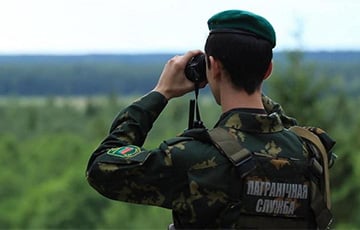
The current situation is disgraceful, nothing has remained of the prestige of the border troops.
The ongoing crisis on the border of Belarus with the EU leaves many questions to the authorities of our country. Was this possible before?
On condition of anonymity, zerkalo.io journalists talked with Belarusians who served as border guards in different parts of the country. They spoke about the attitude towards illegal migration, and the methods of combating it that were used during their service, and also commented on the current situation at the border.
“Any entry of a violator became a scandal and state of emergency”
Andrei (hereinafter - the speaker's name has been changed) performed military service at the Lithuanian border in 2011. Among his duties were serving in the squads (on patrols and "secrets" - in other words, ambushes in secret places), as well as at control posts - checking the documents of people entering the country.
“We came across the phenomenon of illegal migration, although I would not say that it was very often,” the source said. - Basically, it was about people from the Caucasus who tried to move to the EU. The caught violators were thoroughly interrogated to see if taxi drivers and someone else helped them to get to the border. So, in my memory, once they caught two Chechens - I was guarding one while the other was being interrogated.”
Andrei assures that the current situation with migrants during his service was simply impossible.
“In general, I would say that the most active measures were taken to counteract illegal migration,” he says. - There was a case when foreigners (immigrants from the country of the former USSR) just arrived at the railway station in Hrodna - and only because of this fact they transferred us to increased duty, because theoretically they could decide to cross the border in the area under our jurisdiction. We constantly examined the exclusion zone, and in case of finding traces of crossing, or receiving information from local residents that strangers were seen in the border area, an operative team was immediately raised by the alarm, and went to the site with a service dog. If the violators had already left for Lithuania by that time, our officers immediately informed the authorities of the neighboring country and also came to the site where the traces were found. The dog and I would look for a place where the violator crossed the border, and the Lithuanians - where he went next. And God forbid, if the offender will pass when you are on duty! For this it was possible to go to the disciplinary cell. It was very strict with this. Any passage of an intruder - a scandal, emergency, and so on. But during the year of service we had only a couple of such cases, normally everything was suppressed.”
The interlocutor has no doubts that the crisis on the border was organized by the Belarusian authorities.
“On the border with Poland, a signaling complex has been preserved since Soviet times, which starts from the border strip (this is the territory adjacent to the border to a depth of 10 kilometers, where a mere mortal needs a special pass to go through, and at night the passage is generally prohibited). So: if in the Lithuanian section in our time, at least theoretically, it was possible to get lost in the forest without noticing the signs and get to the border strip, then in the Polish section it is simply impossible to do this without passing the signaling complex. It turns out that illegal immigrants are either escorted to the border through special gates, or they damage this alarm and climb on their own, and our so-called border guards do not pay attention to this. The first option seems to me much more likely,” explains the former border guard.
Andrei reacts very emotionally to what is happening at the border today. And he even admits that he regrets having served in the border troops.
“The current situation is disgraceful!’ he says. “I have not contacted our officers yet, although I congratulated some of them annually on the Day of the Border Guard on May 28. But my fellow conscripts and I unanimously decided not to celebrate this date again. I'll throw the uniform shirt in the trash. I will only note that I cannot say unequivocally that only the State Border Committee is to blame for the current situation. Judging by the uniform, it may be that there are not only border guards among the servicemen helping illegal migrants (I'm not completely sure, because the uniform has recently changed). What I saw for sure was the video in which the officer I served with was provoking the Polish soldiers.”
“It was an honor to catch the intruder”
Another former border guard, Vadzim, also served on the border with Lithuania - he arrived at the outpost, where he spent the most time, in 2018. Basically, he carried out patrols to check the exclusion zone and the territory adjacent to it.
“In the area of responsibility of our outpost, the Voron signaling complex was installed (probably, it is about the same system as on the border with Poland, which was mentioned by the previous interlocutor - Zerkalo.io). The fence is located in the depths of our territory, so that when the alarm is triggered, an alarming group leaves for the place and has time to detain the intruder,” says the man. - But in general, our direction was calm, and there was practically no illegal migration. I remember only a couple of cases when local residents went to Lithuania - “to have a drink” or “to visit relatives”. There was a serious case during the European Games, when two Russian citizens tried to get to Lithuania. So, on alarm, they raised the entire personnel and the composition of neighboring units, notified the commandant's office, which, in turn, reported to the unit (in case additional forces were needed). As a result, the violators were even detained with the use of force.”
Vadzim, just like the previous speaker, assures that such a situation as now was simply impossible during his service.
“I think you understood that serious measures were taken,” he says. - Every day, during the round-up call, we were given information on illegal migration: attempts to cross, the number of arrests, information about groups of foreigners who arrived in the country and had intentions to cross the border. When, for example, a group of “tourists” flew to the National Airport, say, from Iran, the concerned services immediately had suspicions (how they determined the intention to cross the border, I do not know) - and information about them was immediately transmitted to all border groups. It was an honor to catch a violator, but if they were still able to illegally cross the border in your area, the officers are unlikely to be patted on the head.”
Like the previous interlocutor, Vadzim is sure that the entire responsibility for the migration crisis rests on the shoulders of the Belarusian authorities and security officials.
“I have seen many videos of provocations from the border, filmed by the Poles, and I am confident in their authenticity,” says the man. - I just hope that there are no conscripts there, and all the “dirty work” is done by officers. Plus, you can see from the uniform that soldiers from other units are involved in all this - probably the internal troops. I can't even imagine what awaits the migrants. I think the answer lies exclusively in the plane of politics.”
“They ran after the violators at any time of the day”
Our next interlocutor also guarded the border with Lithuania. Valer arrived at his duty station as a conscript in 2017, his duties included the same as those of the previous speakers: control of persons entering the country and into the border strip, patrols and response to alarms, repair of border infrastructure.
“There are sections on the border that are considered the most likely to detect violators (most often they are located near checkpoints, since it is more convenient to get to them),” explains Valer. “Everyone knows what chaos is now going on near the Bruzgi checkpoint. But even during my service, the most “juicy” reports on the caught violators came from the frontier post guarding this area. It was not easy for the guys to serve there, they were constantly called by alarm. There is also such a concept as an enhanced regime of border protection - most often it is used on holidays (yes, everyone usually spends New Year's Eve at the border) or some events in Belarus or neighboring countries. For example, when I served, Russia hosted the FIFA World Cup - because of this, we had an enhanced regime for almost a month. It means more border guarding brigades and more hours in the woods.”
As for the section of the border where the man served, there were also violators.
“More often we encountered cases of smuggling, but we also met with migrants - and even from the EU to Belarus,” recalls the interlocutor. - We had moderate violations (at some outposts there weren't any for years at all), but I remember a couple of striking cases. So, once a violator helped our guys push a car - you yourself understand what kind of equipment is in the army. A couple of times the locals brought the violators right to our porch when they asked them to drive us closer to the border. Some nimble old ladies plied migrants with alcohol, and when they fell asleep, they called in a border guarding brigade. I mentioned that they also crossed the border from the EU side - and so, there was a Belarusian who got drunk and decided to return home illegally. There were both naked migrants and families with children - for many we were really sorry. I would like to note that they were far from always citizens of Arab countries: they detained Africans, Asians, and Russians.”
The interlocutor emphasizes that the issue of illegal migration at the border was taken very seriously. On alarm, they got up “under arms” in three minutes, and were already on the site in 15 minutes.
“Nobody went on foot - they ran after the violators at any time of the day. I will clarify that the dog instructor was the first to go with the dog, and try to keep up with the dog! - recalls the interlocutor. - In addition, neighboring posts or outposts were raised on alarm, the duty officer reported on all cases to the unit. To summarize, there was no such ***** [slovenliness] as it is now. It's just funny to watch what is happening now. Unfortunately, I share the EU's opinion that the border troops are involved in the migration crisis from head to toe, and I am a little ashamed of the current border guards. I was glad that they did not take part in dispersing the protests last year, but now they too are mired in a routine of endless lies. The only thing is that I would not blame the conscripts: I know what pressure there is, and how they can be deprived of information from the outside. They just wait a year and a half to return home. I don’t even know what I would do in their place now. ”
At the same time, Valer admits that employees of other services and departments can also be involved in assisting migrants, dressing them in the uniform of border guards.
“But I can also assume that ordinary conscripts are forced to do all this. An order is an order, and if you do not follow it, it will only get worse,” he says. “I have no doubt that the videos of the Polish special services are not staged.”
“There is nothing left of the prestige of the border troops”
Our other interlocutor, Aliaksei, served on the western part of the border with Ukraine since 2017. His main duty was to patrol with the border guarding brigade.
“The Ukrainian direction is not the most attractive place for migrants, so the phenomenon was rare,” said the interlocutor. - Violators were most often reported by locals. Most migrants went to Poland to then enter the European Union. Most often they were citizens of Afghanistan, Iraq and African countries. If they were detained, they were sent to a special remand prison until deportation. In those years, migrants were caught because it was part of an agreement between the border services of the EU and Belarus, the European Union allocated money to build infrastructure in our country through special programs. Work has also been carried out with the local population of the border regions to report suspicious people. But personally, I will not remember the bright episodes with migrants - I repeat, the Ukrainian side is not the most attractive for them.”
In the current situation at the border, Aliaksei blames the Belarusian side, and is sure that everything is happening with her willful connivance.
“I think that most of the border guards are involved in this,” the man shared. - After all, Belarusian officers are brought up in the ideology of the “Russian world” and will somehow want to do something bad to the Poles. In addition, the officers do not have the will to go against the orders of the authorities - even when the latter are not very legal after all. I therefore agree that such [facilitation of illegal migration] takes place. In one of the videos I saw someone in a uniform breaking a fence at night, and when Polish border guards approached the guy, he started swearing at them in Polish with a Russian accent. Some of those guarding the migrants in this video look like conscripts. Accordingly, I believe that various services were involved in the provocation with migrants. And that the materials of the same Poles in this regard are true. I do not see any way out of this crisis, except for the return of migrants to their home countries. But what infuriates me most is the attention to this situation of the Belarusian state and Western media and public organizations, while the coronavirus epidemic in pre-trial detention centers, detention centers and prisons is completely ignored.”
Another former border guard, Siarhei, confirms that the problem with migrants was not urgent on the Ukrainian border. He entered military service in 2018.
“At that time, among the conscripts, there was an opinion that the border troops were a prestigious place for service on a par with the Airborne Forces and special forces, because in fact only these units were left with some kind of selection: psychological, physical. Even the employees of the military registration and enlistment offices “advertised” the service at the border as the most prestigious. I didn't have a special purposeful desire to get exactly to the border, but after completing the service, a kind of “patriotism” towards it appeared. Unfortunately, this year has changed everything - I think nothing has remained of the prestige of the border troops.”
Siarhei served as a service dog instructor. His duties included, in particular, working with a dog to search for violators in border patrols.
“Almost all border violations that happened during my service were accidental,” recalls the interlocutor. - When the locals, relatively speaking, went to the forest for wild plants and did not notice the border signs. Smuggling was also common. We didn’t come across migrants at all.”
Siarhei also shares the opinion that the Belarusian border guards are involved in organizing illegal migration.
“From what I see, our border guards, if they do not directly facilitate this, then at least do not interfere. When officials declare that migrants have not violated a single law, I am simply devastated: we were taught that there are three main articles of the [old] Administrative Code, which I still remember by heart: 23.29, 23.30, 23.31 (Illegal crossing of the state border; Violation of the border regime; Violation of the state border regime - Zerkalo.io) - they are all violated. And also illegal logging and a bunch of other articles,” the interlocutor shares.
“I left the service inspired, with pride for the border troops. I was glad to have my own professional holiday on May 28, - says the interlocutor. - I thought I would go out into the city in a uniform without shame. During the presidential elections, I stayed away from all events, but I was glad that the border guards did not tarnish themselves in everything that happened: they did not go anywhere, did not detain anyone, but continued to do their job - guarding the border. At least I did not see the border guards in the photos. Now, for the first time in the past year, it hurt me a lot. All this feeling of “elite” with training, hiking 30 kilometers a day through the swamps at one moment just disappeared.”