ISW: Medvedev's Statement Is An Important Signal
7- 14.10.2025, 10:36
- 15,502
The Kremlin appears to be changing tactics.
The Kremlin appears to be changing tactics in its efforts to deter the United States from supplying Ukraine with Tomahawk missiles, the Institute for the Study of War (ISW) wrote in a report.
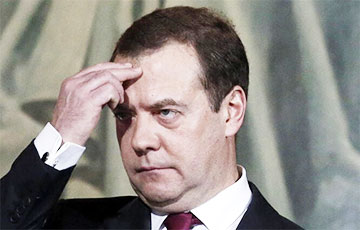
The ISW analysts drew attention to a new statement by Russian Deputy Secretary of the Security Council Dmitry Medvedev. On October 13, Medvedev actually threatened the U.S. with nuclear conflict, claiming that Russia allegedly would not be able to distinguish whether the Tomahawk missiles launched were armed with nuclear or conventional warheads - and it would be the U.S., not Ukraine, that would launch the missiles.
So Medvedev hinted that Russia would have to respond to such a scenario, and threateningly stated that supplying U.S. Tomahawk missiles to Ukraine "would not be beneficial to anyone." Kremlin spokesman Dmitri Peskov responded to a request for clarification of Medvedev's words by saying that U.S. experts would allegedly certainly have to participate in Ukrainian strikes with Tomahawk missiles, and that any expert knows the consequences of such a decision.
Commenting on these statements, ISW stated that the Kremlin appears to be changing the tactics of its reflexive control campaign aimed at keeping the United States from supplying Tomahawk missiles to Ukraine. Previously, Moscow had voiced boilerplate statements about U.S. involvement in the strikes, the threat of supplying such missiles to U.S.-Russian relations, and the alleged inability of the Tomahawk to make a difference on the battlefield. However, Russia has now changed a key argument and threatened difficulties with the distinction between nuclear and conventional versions of the missiles, marking a "turning point" in this Russian Federation information campaign, ISW emphasized.
Analysts speculate that Russia may have changed its rhetoric due to recent reports that the United States is sharing intelligence to help Ukraine launch long-range strikes against Russian energy infrastructure, including oil refineries (refineries). Specifically, the Financial Times reported the details in its October 12 edition, including the refineries. Kremlin officials have largely failed to respond to the FT article, ISW states. They suggest that Moscow was forced into silence because the publication undermined a narrative that the Kremlin had repeatedly propagated previously - that U.S. involvement in potential Ukrainian Tomahawk strikes would be a new stage of escalation that threatened a Russian response.
U.S. President Donald Trump warned on October 12 that he would inform Vladimir Putin that the United States was ready to provide Ukraine with Tomahawk missiles if Russia refused to negotiate an end to the war in Ukraine.

Bank's name: Bank Millennium S.A.
Address: ul. Stanislawa Zaryna, 2A, 02-593, Warszawa
IBAN: PL97116022020000000216711123
SWIFT: BIGBPLPW
Name of the account holder: Fundacja “KARTA ‘97”
Purpose/title of payment: Donation for statuary aims
You can contact us by the e-mail charter97@gmail.com