"The Train Has Left The Station": Why The Diesel Deal With Putin Won't Save Trump
- 13.10.2026, 15:52
- 1,350
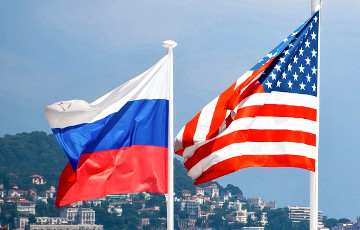
The agreement with the Kremlin did not halt the decline in the Republicans' approval ratings.
Polls show that the U.S. president’s attempt to shift the blame for fuel prices onto Ukraine is unlikely to help Republicans in the midterm elections.
Donald Trump's decision to lift the ban on Russian diesel fuel imports into the U.S. has become one of his administration’s most controversial foreign policy initiatives in recent weeks. The publication The Atlantic called this deal a de facto surrender of Ukraine’s interests and a gift to Putin.
Clearly, for Trump, this was an attempt to boost the Republican Party’s approval ratings ahead of the U.S. midterm elections on November 3. However, recent polls show that the crisis in support for Trump and his party is unlikely to be reversed before Election Day.
“This isn’t about Ukraine and Russia. It’s about the U.S. election,” said John Bolton, former U.S. National Security Advisor, explaining Trump’s agreement with Putin.
He called the diesel fuel agreement “staggering and outrageous” and emphasized that Trump is trying to show voters that he is supposedly capable of quickly lowering fuel prices.
Trump himself is shifting the blame for the rise in diesel prices onto Kyiv and Ukraine’s strikes on Russian oil refineries. But as early as late September, the AP noted that diesel prices had become one of the key issues in the U.S. election campaign and had risen primarily amid the escalation of the war in the Middle East.
According to U.S. media reports, the average price of diesel fuel in the U.S. reached record highs. This was caused not only by strikes on Russian oil refineries but also by a crisis in the supply of petroleum products through the Strait of Hormuz and other logistics routes in the Middle East.
Now, with less than three weeks left until the election, the agreement with Putin looks like an attempt by Trump to halt the decline in Republican support at the expense of Ukraine.
“When it’s already difficult to change the situation, all that’s left is to try to control the narrative. For example, by blaming Ukraine. On the one hand, this is an attempt to redirect discontent toward an external culprit and somehow win over a portion of the electorate. On the other hand, if the Republicans do end up losing in November, Trump will be able to say that it’s because of Zelenskyy, who set him up to help the Democrats,” noted Ostap Yarysh , a Ukrainian journalist in Washington and media advisor to the Razom for Ukraine Foundation .
MAGA conservatives are already actively promoting this narrative. They claim that Ukraine continues to strike Russian oil refineries allegedly to harm Trump and help the Democrats in the election.
However, polls show that even a sharp drop in fuel prices is unlikely to save the Republicans. According to The Independent, only 10% of undecided voters said they would be more likely to vote for Republicans if gas prices dropped by a dollar per gallon.
Even more alarming for Trump are the figures provided by Silver Bulletin—a poll aggregator and analytical platform run by American statistician Nate Silver. According to the FLIPR forecast, the Democrats’ chances of regaining control of the House of Representatives have risen to about 93%, and their chances of taking the Senate are approaching 74%.
Furthermore, according to Silver Bulletin, Democrats currently lead Republicans by an average of nearly nine points in a nationwide poll on the congressional elections.
This means that the diesel deal with Putin may not only fail to help Trump but also reinforce accusations that he is willing to sacrifice Ukrainian interests for his own political gain.
The deal has already sparked a sharp reaction in Washington. U.S. media are reporting resistance even among some Republicans, who believe that importing Russian fuel undermines U.S. sanctions policy and effectively helps the Kremlin finance the war against Ukraine.
Thus, Trump is trying to portray the agreement with Putin as a move to protect American consumers. But to his critics, it looks different: like an attempt to find an external scapegoat ahead of the election while simultaneously giving Moscow some economic breathing room.
The problem for Trump is that the electoral momentum has already shifted against him. And even if fuel prices drop slightly, the political train for the Republicans seems to have already left the station.

Bank's name: Bank Millennium S.A.
Address: ul. Stanislawa Zaryna, 2A, 02-593, Warszawa
IBAN: PL97116022020000000216711123
SWIFT: BIGBPLPW
Name of the account holder: Fundacja “KARTA ‘97”
Purpose/title of payment: Donation for statuary aims
You can contact us by the e-mail charter97@gmail.com