
Evgeny Afnagel: The Belarusian Revolution Could Begin As Early As Tomorrow
1- 30.10.2026, 11:15
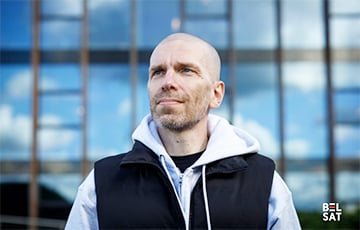
Photo: Belsat
Any failure on the part of the regime could bring down the dictatorship in a matter of days.
In Serbia, historic events took place. After nearly two years of protests, pro-Russian politician Aleksandar Vučić lost the parliamentary election to the “Student List.” Police began to withdraw from downtown Belgrade, and journalists from the regional public television station RTV apologized for years of one-sided reporting.
Can the events in Serbia be called a “Velvet Revolution” and a victory for nonviolent resistance?
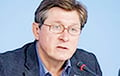
The website Charter97.org discussed this with former political prisoner and coordinator of the “European Belarus” civic campaign Yevgeny Afnagel:
— This is an example of the victory of a nonviolent velvet revolution, especially considering the information that emerged after the elections. Let me remind you that several Serbian and European sources reported that Vucic was planning a military coup. Additional troops were deployed to Belgrade.
The Serbian opposition prevented this scenario by demonstrating strength and resolve. Had this not happened, the authoritarian regime in Serbia would have turned into a dictatorship; Vučić would have staged a military coup with the support of Russia and the military, many of whom were on his side. The situation would have been completely different then.
— What was the main factor behind the protests’ success?
— The protests didn’t start yesterday or the day before. The October 25 election marked the culmination of a long campaign of nonviolent resistance that began two years ago, following the tragedy in Novi Sad. Back then, as you may recall, the roof of the train station collapsed, killing people. Corruption and the authorities’ irresponsibility were among the causes of the tragedy. This trigger transformed latent discontent and kitchen-table conversations into a powerful and organized force.
This was followed by university blockades and street protests. It became clear that the government was incapable of handling crisis situations. In March 2025, Belgrade saw one of the largest protest marches, with hundreds of thousands of people taking to the streets.
It was clear that the opposition leaders were well-versed in the history of resistance over the past decades. They drew on the experience of “Otpor” and employed tools of nonviolent resistance that had proven effective in other countries.
The second factor: the opposition consistently demonstrated strength, determination, and principle; it changed tactics when necessary but never wavered from its main demand: “Vucic must go.”
The third factor: the leaders. Note that the “Student List” is made up of very different people. Ilija Srdanović—a professor at the medical school and a cardiologist, Deyan Šoškić—an economist and former head of the National Bank; actor Tihomir Stanić; and Yugoslav basketball legend Deyan Bodiroga. These are not politicians, but ordinary citizens of the country, representing various social groups. Something similar happened in Belarus in 2020.
And, of course, one cannot fail to mention an important point: after all, Serbia does not share a border with the main sponsor and defender of dictatorial regimes—Russia.
— What tactics of nonviolent resistance by the Serbian opposition and the student movement proved decisive for victory? How did they manage to unite society and turn the protest into a political outcome?
— Over the past two years, a wide range of nonviolent resistance methods has been used in Serbia. I would say the key ones were the university blockades and sit-in strikes in 2025. Students or factory workers don’t just call a strike. They turn their workplace or university into a “territory of freedom” and prevent the opposition from entering.
At one point, there were so many such centers in Serbia that the authorities simply didn’t know what to do with them. It’s one thing when people go on strike, don’t show up for work, and stay at home. It’s quite another when opposition symbols and flags fly over universities and factories, appear in the city center, and everyone sees them.
Dozens of other methods were used: boycotts, peaceful street protests and performances, moments of silence, symbolic 15-minute traffic stoppages, blockades of bridges and state-owned enterprises, marches between cities, and refusal to cooperate. In this way, every supporter of change found a place for themselves and an opportunity to contribute to the common cause.
— What can Belarusians learn from Serbia’s experience to achieve future victory over Lukashenko’s dictatorship?
— This isn’t the first time Belarusians have drawn on Serbia’s experience. Twenty-six years ago, after the victory over Milošević, the leaders of “Otpor” came to Minsk. We met with them, talked about how they managed to overthrow the dictator, and discussed the prospects for change in our country.
It was then that the idea arose to create the Belarusian resistance movement ZUBR. By adopting the methods of “Otpor” and other nonviolent resistance movements, ZUBR became the most prominent and popular youth organization in Belarus in just a few months.
Revolutions and changes in power in authoritarian countries cannot be viewed in isolation. They always have a huge impact on neighboring countries. The first Ukrainian Maidan served as a model for Minsk’s 2006 Square, and the Belarusian protests of 2010 influenced the Arab Spring. Now Belarusians are looking with hope toward Hungary, Serbia, and, of course, Ukraine.
I am confident that the successes of the forces of good in these countries will also influence what is happening in Belarus, and Europe will become a continent free of dictatorships.
But I’d like to return to where it all began in Serbia. On the surface, everything seems calm in the country; the economy appears to be functioning; wages are higher than in some neighboring countries; and state-run and some independent media outlets claim that things aren’t really that bad and try to convince people of the opposition’s weakness. But then some event occurs, and the illusion of stability crumbles.
All the discontent that has been building up in kitchens, student dorms, and factory break rooms spills out onto the streets in a matter of just a few days or weeks and ends in a change of government.
That’s what happened in Belarus in 2017, when protests against the “Parasite Decree” began. It happened again in 2020. Recall the words of some independent political analysts and the dictator’s “useful idiots” about the “strong Lukashenko” and how we were in for “the most boring elections.” They’re saying the same thing now, having forgotten how badly they were proven wrong in 2020.
We know that Belarusians hate Lukashenko, talk among themselves about change, and remember 2020. Any minor incident, any failure by the authorities, could be the trigger that sets off the Belarusian revolution. It could happen as early as tomorrow. We all need to be ready for this so we don’t miss our chance again.

Bank's name: Bank Millennium S.A.
Address: ul. Stanislawa Zaryna, 2A, 02-593, Warszawa
IBAN: PL97116022020000000216711123
SWIFT: BIGBPLPW
Name of the account holder: Fundacja “KARTA ‘97”
Purpose/title of payment: Donation for statuary aims
You can contact us by the e-mail charter97@gmail.com