
Captured Occupying Forces Revealed Shocking Details About Daily Life In The Russian Military
1- 5.10.2026, 7:52
- 2,550
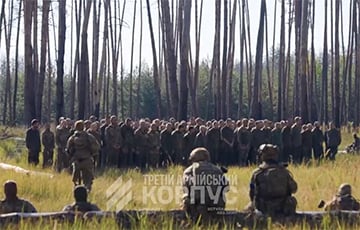
Many Russians are celebrating the capture.
Medical personnel from the Third Army Corps of the Armed Forces of Ukraine reported NV why Russian soldiers are glad to be captured, what their injuries reveal, and what it’s like to save enemies.
“Russian prisoners of war are very surprised that they receive medical care, that they are treated humanely, that they are not tortured, and that they are not beaten,” - explained to NV Margarita Burkovskaya, head of the media service for Medics of the Troika, with the call sign “Miller.”
She has ample material for such observations.
Over the course of three “seasons” of Operation “Vivaldi,” fighters from the Third Army Corps not only liberated 176 square kilometers of Ukrainian territory in the north of Donetsk Oblast and killed or wounded more than 5,000 occupiers, but also captured about 250 enemy soldiers and officers.
According to a representative of the medical service, such a significant increase in the number of prisoners available for exchange was made possible by unexpected attacks by Ukrainian assault troops on enemy positions, as well as by the low morale of Putin’s soldiers. “Miller” mentioned one demoralized and disoriented occupier: he found a pipe, hid inside it, and waited for an opportunity to surrender.
Captured by fighters from Andriy Biletsky’s near Lyman, Russian Captain 3rd Rank Alexander Manankov said that he and his subordinates had no medical supplies, not even for the wounded, and were facing a catastrophic shortage of food and water. As a result, the Russians had to drink from puddles and quench their thirst in more extreme ways—with their own urine.
“One of us died of dehydration. This is the first time in a month and a half that I’ve had a proper meal here, for f*ck’s sake. In captivity, I mean,” another occupier added to his account.
Rescue on the Other Side of the Front Line
Nearly 90% of the prisoners have already been examined at the Third Army Corps. As the medics who examined them told NV, most of the Russians were emaciated and dehydrated, and many had chronic limb injuries.
One such patient was a 24-year-old officer. The commander of the medical company of the 4th Separate Medical Battalion of the “Troika,” with the call sign “Tourist,” who treated this prisoner, said that they communicated in writing. The Russian had both eardrums ruptured and will most likely remain deaf for the rest of his life. Despite this, the captured officer turned out to be “talkative”—he wrote extensively on a piece of paper about his condition. It turned out that he had spent two weeks in a trench with an injured leg. “In fact, they were sent to that position for half a year. During that time, they were brought water and some kind of stewed meat just once,” the “Tourist” company commander recounted the prisoner’s words. “There was no medic in their platoon. And to all questions—‘When is the rotation? When are the supplies coming?’—they replied, ‘Wait.’”
When the Ukrainian soldiers reached the position, the occupiers voluntarily surrendered. Medical personnel discovered that the officer had an acute purulent infection in his right lower leg, numerous minor wounds, perforated eardrums, and burns to his face. “If the Russians hadn’t surrendered and had continued to hold those positions, he might have lived a few more days,” “Tourist” assured.
But what about “denazification”?
Most of the Russians interviewed by Ukrainian medics told similar stories: they went to fight against Ukraine to make money. Some said they “didn’t think there would be a war,” while others chose war over prison.
Even a resident of Mariupol ended up seeing the trauma surgeon of the 4th Separate Medical Battalion, whose call sign is “Lyuer”; he explained that the occupying authorities had forced him into the Russian army.
“Everyone has their own reasons, but I’ve never once heard anything about denazification,” assured “Tourist,” the company commander. “I personally have never, in all this time, met a single ideological prisoner who came here to liberate anyone or anything like that.”
And Burkovskaya hadn’t encountered any prisoners who showed particular hostility toward Ukraine either. Some even understood the language. However, according to NV’s interviewee, when in captivity, a person finds themselves in an extremely vulnerable position and may conceal their true motives.
Traumatologist “Luer” is also convinced that after the exchange, all these occupiers will spin tales about how badly they were treated while in captivity. Although right now, some of them are even thanking Ukrainian doctors: “He spent some time in the field without food or water and nearly died. But then he was taken prisoner, and they’re giving him food, drink, cigarettes, a place to sleep, and so on.”
A severe shock
For the most part, Russian prisoners of war are behaving with restraint. “For all the prisoners of war whom we filmed [on video] and to whom we provided medical care, it came as a great shock that they were being treated like human beings and that people were trying to make them more comfortable,” Miller said.
At the same time, the commander of the “Tourist” company noted that he had never seen a prisoner of war who was “of normal build”: they were all skin and bones.
“These are dehydrated people who tell stories of spending two months at their positions without supplies, without food, and without water,” he noted. “People surrender knowing that they’ll be treated humanely here. For many Russians and foreigners fighting on the side of our enemies, this is a chance to save themselves.”
Ukrainian medical personnel noted another trait common to many Russian prisoners: the majority suffer from physical ailments caused by damp conditions in the dugouts and poor hygiene. There are also many people with arthritis, sciatica, and joint problems.
“You look at someone like that and think: How did this old man end up in the army? And then it turns out he’s 35 years old,” marvels the company commander with the call sign “Tourist.” From conversations with Russian patients, he realized that the Russian military pays virtually no attention to the health of those mobilized and does not prepare them for combat.
At the same time, there are a great many wounded among the prisoners.
Ukrainian doctors treat these Russians just like any other patients. The trauma surgeon “Luer” even had to perform several complex surgeries.
“Ordinary ‘Ivan the Stormtroopers’”
“I can’t say that treating wounded enemies comes easily to our military doctors. But this is their conscious choice as Ukrainian servicemen,” Burkovska explained to NV. “They understand—and we all understand—that the more Russian soldiers are taken prisoner, the more opportunities there are to bring back Ukrainian soldiers held captive in Russia, particularly our comrades.”
The “Luer” trauma surgeon tries to distance himself from the situation. “I don’t feel anything—after all, they’re just ordinary ‘Ivan’ soldiers who managed to survive. What can you expect from them?” he assured. “I have no use for emotions here. If you think about what each of them might have done out there, or start questioning them about it, you’ll only make things worse for yourself.”
Likewise, Company Commander “Tourist” thinks first and foremost about the fact that he is a doctor and must behave like a professional. “We provide comprehensive care, hoping that someone will provide the same kind of care to our guys—high-quality, skilled care, using sterile instruments, medications with valid expiration dates, in accordance with modern standards, and utilizing antiseptics, antibiotics, and modern pain management methods,” he explained.
“Everyone we treat and prepare for an exchange will be exchanged for one of our own,” “Luer” concluded the conversation about the prisoners. “Besides, we’re a modern army; we have certain rules, humanity, and all that. On the international stage, we have to look like human beings, not barbarians.”

Bank's name: Bank Millennium S.A.
Address: ul. Stanislawa Zaryna, 2A, 02-593, Warszawa
IBAN: PL97116022020000000216711123
SWIFT: BIGBPLPW
Name of the account holder: Fundacja “KARTA ‘97”
Purpose/title of payment: Donation for statuary aims
You can contact us by the e-mail charter97@gmail.com