
A Venezuelan-style Scenario Is Brewing In Russia
1- 6.10.2026, 14:13
- 1,466
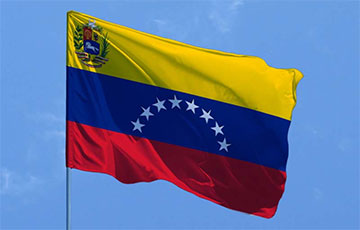
Will they come to pick up Putin by helicopter?
There used to be a bank card commercial where a girl in a very revealing bikini walks up to a beach bar, and the bartender says, “I’m just wondering where you’re going to get the money from.” That’s roughly the same question I’d like to ask the Russian Ministry of Finance right now.
Back in July, I wrote that the Ministry of Finance was having trouble placing government debt: demand was so low that the ministry announced a six-month moratorium on auctions. At the time, economists I know speculated that the Ministry would play a game of “staring contest” with the banks (which are the main buyers of OFZs) for about a month, after which the banks would “blink.” The moratorium didn’t last long: as early as September 2, the Ministry of Finance placed floating-rate bonds (bonds with a coupon indexed to the official inflation rate) on the market—and quite successfully: 1 trillion rubles worth of bonds were sold, with demand totaling 1.42 trillion. But the ministry isn’t particularly fond of floating-rate bonds: the interest rate increases by the rate of inflation, and the debt grows. That’s why, just a week later, an auction was held for standard OFZs, which offer a fixed yield. The difference was striking: demand totaled only 164.5 billion rubles, and the ministry managed to place just 86.7 billion rubles. But the process seemed to be underway, and it was possible to breathe a sigh of relief: the banks had, after all, “bowed to pressure.” Another week later, the ministry placed standard OFZs worth 116.7 billion rubles.
However, the banks charged a high price for their concession: at the first auction for fixed-coupon OFZs, five-year bonds were priced at 15.45% per annum and thirty-year bonds at 15.97%. At the next auction, the ministry had to offer investors 16.3%. At the September 23 auction, the rate was already 16.86%. And on September 30, the auction was declared a failure—as the Ministry of Finance stated, “due to a lack of bids at acceptable price levels.” At that moment, government debt was trading at just under 17% on the market—and that was for bonds maturing in three and a half years.
Insatiable Appetite
Of course, investors were largely spooked by the Ministry of Finance’s plans to borrow an additional 2.45 trillion rubles in the fourth quarter, although due to the large number of holidays, there are only 11 auction days during that period. But investors’ concerns have been growing for some time: in the third quarter, the ministry was able to borrow less than half of that amount on the market, and for next year, it plans to borrow an additional approximately 7.72 trillion rubles, up from the previously projected 5.39 trillion rubles. When the supply of a certain commodity on the market increases (this also applies to securities), its price falls—unless, of course, an increase in the value of that commodity is expected in the future. A cut in the Central Bank’s key rate could have boosted the value of OFZs, but at its last meeting, the rate remained unchanged—and even that was a compromise on the part of the regulator: inflation has begun to rise again.
The Ministry of Finance has nowhere to turn: the deficit for the current year has already nearly doubled, from 3.8 trillion to 7.34 trillion, the deficit for 2027 is expected to reach 5.44 trillion rubles, and there is no doubt that it, too, will have to be increased—if not exactly doubled. Both the current deficit and the projected one are historic records.
The source of this financial hole has also been clear for a long time: the authorities—and more specifically, Putin—are operating according to the old gangster principle: if the “business community” managed to come up with the required amount, then it can come up with even more, so the pressure must be kept up. Judging by Putin’s latest speech at the Valdai Forum (the Valdai Forum has moved from Sochi to the Moscow region), he has no intention of ending the war; on the contrary, he is ready to intensify strikes on civilian targets in Ukraine and is even threatening European countries. This means he’ll need more money for missiles, drones, and manpower—possibly far more than planned; such upward adjustments to budget expenditures throughout the year have become the norm.
And there isn’t really anywhere else to get the money.
The Ministry of Finance has only three sources for increasing budget revenue: taxes (and quasi-taxes like the scrap metal fee), devaluation of the national currency, and loans. Taxes were raised last year—killing off half of the “legitimate” small businesses—but it still wasn’t enough. This year, as soon as the elections were over, new ideas for filling the budget emerged—but they won’t bring in all that much: for example, raising the personal income tax on deposits—up to 1.1 trillion rubles—and that’s the biggest “windfall.” And the Ministry of Finance needs to find at least an additional 5.5 trillion rubles, and at most—nearly 10 trillion rubles.
Devaluation has already taken place, but it was completely insufficient; moreover, it’s harder to control, the Central Bank isn’t very fond of it because it fuels inflation, and it has only a one-time effect: today you can pay budget recipients with rubles that have lost value, but tomorrow they’ll demand more, in line with the new prices.
Borrowing is the simplest, most reliable, and hassle-free way. But, as we can see, there are already serious problems with it.
Tomorrow, but five each
Putin and his finance minister Anton Siluanov like to repeat that Russia’s debt is very small: just 17% of GDP. Even if the Ministry of Finance continues to borrow at the planned rate, public debt is unlikely to exceed 20% in the coming years.
Everything changes, however, when public debt is measured relative to budget revenues and expenditures. Already this year, domestic debt (Russia’s external debt is negligible) will amount to 91.3% of planned annual revenue and 77.4% of annual budget expenditures. And in 2027—110.9% of revenue and 98.5% of budget expenditures—assuming current revenue and expenditure plans are met.
Even more importantly, servicing debt is expensive—it’s no wonder the Ministry of Finance is so frugal at auctions. Already this year, debt service (coupon payments only, excluding principal repayment) will account for 9.5% of revenue—that’s 8% of total expenditures. Next year, it will be 10.6% of revenue and 9.4% of expenditures. And this is despite the fact that, for now, a significant portion of the Ministry of Finance’s payments consists of coupon payments on older OFZ issues, which were placed at much lower interest rates than in September. The longer the high key rate persists, the more the Ministry of Finance will need to borrow—and the faster debt service costs will rise. And even if the war ends, the Central Bank’s rate falls, and money pours into the budget, the cost of servicing existing debt will still continue to rise in absolute terms due to the repayment of old, cheap loans and the increasing share of current, expensive ones.
This is already worrying experts. “I’m afraid there are only two possible outcomes: a sharp devaluation of the ruble along the lines of the Turkish scenario—or ruthless budget cuts,” says one economist I know. Another is more cautious: “The trend is troubling, but as long as the budget deficit stays below 3% of GDP, there’s nothing to worry about.” However, both agree: the risks of fiscal dominance—where the Central Bank’s monetary policy shifts from responding to macroeconomic indicators to fulfilling the government’s whims—are growing.
Everywhere you look, there’s a problem
The Central Bank is under intense pressure; I’ve written about this more than once. I’ve also written about how Central Bank Chair Elvira Nabiullina has so far resisted this pressure—though she’s already starting to give in. However, if the Ministry of Finance starts having problems with rising public debt, no amount of Putin’s intervention (which the market is confident in) will help—the interest rate will have to be cut regardless of any inflation indicators.
What are the risks? The most obvious ones are a surge in inflation and a devaluation of the ruble. Under current conditions, it would be incredibly easy for the Russian economy to enter an inflationary spiral. A less obvious but no less serious consequence is the destabilization of the financial system. Given the penchant for statistical manipulation, it is not out of the question that Rosstat could artificially underreport inflation—it wouldn’t necessarily have to lie; simply changing the methodology again would suffice. Distorting macroeconomic signals is a direct path to what happened to the Soviet economy in its final years.
There’s no point in hoping that economic growth will accelerate. Initially, there may indeed be some recovery. But we do understand that all the additional budget funds will be funneled into the war, don’t we? That the civilian sector will continue to be fleeced just as it has been—and with even greater intensity? That consumer spending, given the gap between official and actual inflation, won’t pick up at all? So, even if interest rates are cut, the best we can hope for is a “dead cat bounce,” as stock market traders say. And then—hello, stagflation, just as predicted.
But the option of harsh budget cuts, amid the war’s growing demands, isn’t much sweeter either. A sharp drop in household incomes—especially among those dependent on government payments—and rising unemployment could, of course, help recruit impoverished and desperate people under contract. But beyond that—it’s a dead end. Either way—rising prices, currency devaluation—we end up with the same result.
And most importantly, as long as the main destabilizing factor—the war—remains, the problems will only get worse. In a few years, we may no longer be talking about a “Turkish scenario,” but rather a “Venezuelan one.” It’s a shame no one will come flying in by helicopter to rescue Putin.
Tatyana Rybakova, The Moscow Times

Bank's name: Bank Millennium S.A.
Address: ul. Stanislawa Zaryna, 2A, 02-593, Warszawa
IBAN: PL97116022020000000216711123
SWIFT: BIGBPLPW
Name of the account holder: Fundacja “KARTA ‘97”
Purpose/title of payment: Donation for statuary aims
You can contact us by the e-mail charter97@gmail.com