
Moscow "raised A Fuss" Over Estonia's Redeployment Of Troops Closer To The Border With Russia
1- 6.10.2026, 13:49
- 1,548
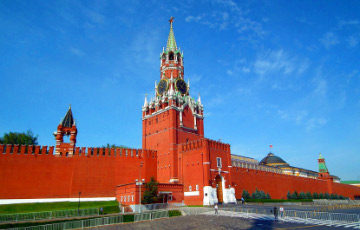
The Kremlin is waging cognitive warfare.
In the State Duma of Russia, the aggressor nation, information about Estonia’s reinforcement of its border with Russia was used as a tool of cognitive warfare, portraying NATO as the party that is “escalating” the situation and provoking conflict
This is stated in a report by analysts at the Institute for the Study of War (ISW) dated October 5.
In particular, the experts drew attention to remarks made by Alexander Asafov, a State Duma deputy from the “United Russia” party. Commenting on a Financial Times article about the redeployment of Estonian troops closer to the border with Russia, he stated that this demonstrates the leading role of the Baltic states in the “escalation” of the conflict with Moscow.
ISW analysts also took note of a statement by Andrei Kolesnik , a member of the State Duma’s Defense Committee , who called the deployment of Estonian and Finnish troops near the borders with Russia “provocative actions.” He also threatened to take countermeasures.
Russian officials are waging cognitive warfare, seeking to portray NATO’s legitimate defensive actions in response to Moscow’s aggression as evidence of an unprovoked escalation by the Alliance, the ISW emphasized. In reality, however, it is the Russian Federation that is waging a full-scale war against Ukraine and threatening European states, specifically with nuclear weapons.
To achieve its goals, Moscow is taking action against Europe, employing a wide range of kinetic and cognitive measures that go beyond conventional military operations, the analysts concluded.
Earlier, the Financial Times reported that Estonia is constantly moving troops closer to the border with Russia and purchasing weapons capable of striking deep into the aggressor country’s territory, preparing for a possible attack.
Estonia’s military leadership does not believe that Russia is seeking a full-scale war with NATO, but is convinced that Moscow is preparing for a conflict with this Baltic country. Among the possible scenarios is a limited ground invasion aimed at testing how NATO’s mutual defense clause works in practice.
According to Western intelligence assessments, Moscow may launch a limited attack on NATO countries in the near future amid a slowdown in its advance in Ukraine. Another contributing factor is a shortage of critical Western ammunition caused by shipments to Ukraine and the war in Iran.
Russian dictator Vladimir Putin, for his part, claims that Moscow is “not preparing” for war against European countries. At the same time, he accused the Baltic states—Lithuania, Latvia, and Estonia—of “violating the rights of the Russian-speaking population.”

Bank's name: Bank Millennium S.A.
Address: ul. Stanislawa Zaryna, 2A, 02-593, Warszawa
IBAN: PL97116022020000000216711123
SWIFT: BIGBPLPW
Name of the account holder: Fundacja “KARTA ‘97”
Purpose/title of payment: Donation for statuary aims
You can contact us by the e-mail charter97@gmail.com