

Putin Is Losing His "Safe Havens"
- 27.11.2026, 10:27

Which of Ukraine's strikes could prove most damaging to Russia?
Russia can no longer feel safe even thousands of kilometers away from Ukraine. Ukrainian drones are reaching military airfields and oil refineries deep inside Russia, Russian ships are becoming targets in the open ocean, and the Crimean Bridge remains under threat of new strikes.
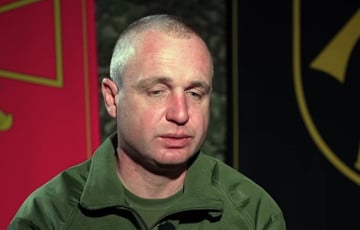
Journalist Roman Tsimbalyuk in an interview “Channel 24” why Ukraine is expanding the geographic scope of its attacks, which Russian targets might be next, and why the West is still afraid to take more decisive action against Moscow. He also assessed the prospects for destroying the Crimean Bridge and the impact of Ukrainian operations on Russia’s military capabilities.
The End of the Era of “Safe Territories” for the Occupiers
For years, Russia has cultivated the image of a state that is impossible to reach, with its deep rear supposedly protected from any attacks. However, recent events suggest otherwise.
Ukrainian strikes (on the “Savasleika” military airfield https://charter97.org/ru/news/2026/11/25/706796/), where “Kinzhal” missile carriers MiG-31K missile carriers, and Russian oil refineries in the Samara Region demonstrate that even strategic targets hundreds and thousands of kilometers from Ukraine remain vulnerable.
As journalist Roman Tsimbalyuk notes, these attacks have not only military but also psychological significance. Russians, who for a long time viewed the war as something distant, are increasingly facing its consequences in their own regions.
Fires at industrial facilities, disruptions to business operations, and constant reports of attacks are shattering the perception that Russia’s home front is secure. This is also causing local residents to question the effectiveness of Russia’s air defense, which propaganda has for years touted as one of the best in the world.
During the strike on November 25, the Defense Forces struck a military airfield in the Nizhny Novgorod region, where MiG-31K fighter jets—carriers of “Kinzhal” missiles—are based. According to preliminary data from the General Staff of the Armed Forces of Ukraine, five Russian aircraft were damaged. That same night, Ukrainian forces carried out an attack on two oil refineries in the Samara region.
The Global Hunt for the Russian Fleet
Ukraine is expanding the scope of its strikes not only within Russia but also across the world’s oceans. Russian ships can no longer count on safety even far from the Black Sea.
Operations against Russian vessels in the Mediterranean and Baltic Seas have been particularly telling. Among the targets struck were the corvette “Mercury,” the dry cargo ship MV ANGARA near Libya, and the vessel Sparta II in the Baltic Sea.
Tsymbalyuk emphasizes that Ukrainian forces are ready to target Russian military targets regardless of where they are located. Such operations may cause concern among Western partners, who fear an expansion of the war’s geographical scope and a possible escalation.
However, the logic behind Ukraine’s actions is to increase pressure on Moscow. The longer Vladimir Putin refuses to end the aggression, the more Russian military and economic assets are put at risk.
In this way, Ukraine is demonstrating that Russia cannot use its ships with impunity for military and logistical operations outside its own territory.
The Crimean Bridge: Destruction Is Inevitable
Combating Russian logistics in southern Ukraine remains a separate front. One of the key targets for the occupiers is the Crimean Bridge, which connects Russia to the temporarily occupied Crimea.
According to Ukrainian intelligence estimates, fully restoring the structure this winter will be extremely difficult due to storms and adverse weather conditions. Furthermore, repair work will be carried out within range of Ukrainian weapons, which poses additional risks to Russian repair crews and equipment.
In this context, Tsymbalyuk proposes adopting a principle of mirror response: any Russian strike on bridges across the Dnieper should be met with a strike on the railway section of the Kerch Bridge.
In his view, such an approach would help establish a clear mechanism for deterring Russia. After all, the Crimean Bridge remains a vital part of the occupiers’ military logistics, and damage to it would hinder the transport of military equipment and cargo to southern Ukraine.
Incidentally, Russia will not be able to fully restore the Crimean Bridge this winter, Kirill Budanov stated that winter storms and harsh weather conditions will prevent Russia from beginning full-scale restoration work on the Crimean Bridge. Following Ukrainian strikes in November, both the road and rail sections of the bridge were damaged, and debris from the structures has hampered shipping through the Kerch Strait.
Western Caution and Nuclear Blackmail
Against the backdrop of Ukrainian operations, NATO’s position remains at odds. Despite regular violations of Alliance countries’ airspace—particularly Poland’s—by Russian missiles and drones, the allies have yet to reach a joint decision on intercepting Russian targets over Ukraine.
Tsymbalyuk believes that such caution stems primarily from Western politicians’ reluctance to allow a direct military confrontation with Russia. One of the main factors remains the Kremlin’s nuclear blackmail and the risk of further escalation.
Western countries are trying to avoid a scenario of direct war with Russia, which is why they prefer to support Ukraine with weapons, financial aid, and intelligence. At the same time, this stance does not mean that Ukraine should refrain from taking its own countermeasures against Russian aggression.
While its partners cautiously assess the risks, Kyiv continues to develop long-range capabilities and strike at the enemy’s military and industrial targets. Destroying Russian aircraft and striking the navy and the oil refining industry are part of a strategy designed to weaken the Kremlin’s ability to continue the war.

Bank's name: Bank Millennium S.A.
Address: ul. Stanislawa Zaryna, 2A, 02-593, Warszawa
IBAN: PL97116022020000000216711123
SWIFT: BIGBPLPW
Name of the account holder: Fundacja “KARTA ‘97”
Purpose/title of payment: Donation for statuary aims
You can contact us by the e-mail charter97@gmail.com