
More Than 460 Drones Were Flying Toward Moscow: Air Traffic Chaos Broke Out In Six Russian Cities
- 28.11.2026, 11:25
Passengers on the flight to Vladivostok were kept on the plane for three hours.
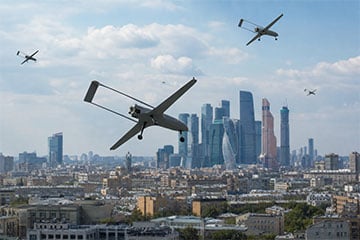
On the night of November 28, 462 drones were flying toward the Moscow region of the aggressor country, Russia; according to Russian authorities, 123 of them were shot down as they approached the Russian capital. Due to the attack Moscow’s Vnukovo and Domodedovo airports restricted the arrival and departure of flights, and passengers on one of the flights from Sheremetyevo were stuck on board for several hours, according to "Glavred".
“Between 11:00 p.m. on November 27 and 7:00 a.m. on November 28, 462 UAVs were flying toward the Moscow region. Most were neutralized by the Ministry of Defense’s air defense forces at a distance. 123 drones were destroyed as they approached Moscow,” wrote Moscow Mayor Sergey Sobyanin on Telegram.
Throughout the night, the mayor released the data in increments: at 10:09 p.m. Moscow time, he reported 11 drones shot down; as of 1:28 a.m., 48; and by 4:04 a.m., 69. Each time, Sobyanin noted that emergency services were working at the crash sites, but he did not mention any possible hits, damage, or casualties.
Which Russian airports restricted operations
Restrictions on aircraft arrivals and departures were imposed at Moscow’s Vnukovo and Domodedovo airports. In addition to Moscow, such measures were in effect at airports in Kaluga, Penza, Saratov, and Tambov, according to the publication Astra.
No official announcement was made regarding restrictions at Sheremetyevo. However, according to the Russian publication “Ostrozhno, Novosti,” Rossiya Airlines flight SU6259 from Moscow to Vladivostok never took off on the evening of November 27.
What Happened to the Flight to Vladivostok
Passengers waited nearly three hours for departure inside the cabin, after which the captain announced that the flight was delayed indefinitely. Airline staff were unable to explain the reason for the delay.
Around midnight, passengers were disembarked and promised they would be flown to Vladivostok on another flight; the departure was later rescheduled for 10:00 a.m. Passengers were informed via text message that the flight would include an additional stop, but the message left a blank space where the city name should have been.
What is known about the aftermath in the Kaluga Region
The governor of the Kaluga Region, Vladislav Shapsh, reported that 120 drones had been shot down over the region, according to the publication Astra. According to him, the drones were shot down over the Borovsk, Dzerzhinsk, Zhukovsky, Maloyaroslavets, and Sukhinitsy districts.
“According to preliminary information, on the outskirts of Kaluga, the roof and windows of a summer home were partially damaged by falling UAV debris. No one was injured. Operational teams are working at the sites,” Shapsh wrote.
Disruptions at Russian airports due to the drone threat have become a regular occurrence. According to The Moscow Times, between November 16 and 22 alone, restrictions were imposed 73 times at 28 airports in Russia—nearly twice as often as during the same period last year.
Why Russia’s Air Defense Can’t Cope with Drone Attacks: An Expert’s Opinion
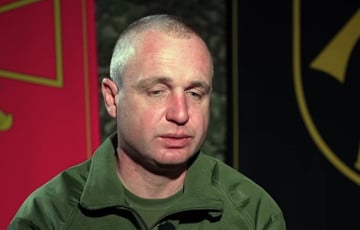
Military expert Oleg Zhdanov noted in an interview with “Glavred” that it is difficult for Russia to rebuild its air defense, since it does not manufacture most of its air defense systems itself.
“It is difficult for Russia to rebuild its air defense capabilities because it does not manufacture most of its air defense systems. This is especially true for radar systems, which rely on Western components,” the expert emphasized.
According to the expert, the situation has changed because Ukraine is now launching drones en masse and has found the threshold beyond which Russian defenses can no longer cope.
“Our capabilities have changed: we are now launching drones by the hundreds. In this way, we have identified the threshold—that is, the number of drones required to overwhelm Russia’s air defense system,” Zhdanov explained.

Bank's name: Bank Millennium S.A.
Address: ul. Stanislawa Zaryna, 2A, 02-593, Warszawa
IBAN: PL97116022020000000216711123
SWIFT: BIGBPLPW
Name of the account holder: Fundacja “KARTA ‘97”
Purpose/title of payment: Donation for statuary aims
You can contact us by the e-mail charter97@gmail.com