

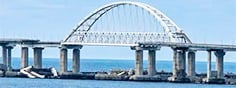
British Intelligence Has Revealed What Remains Of The Crimean Bridge After Three Ukrainian Strikes
- 28.11.2026, 13:53
The sea routes to the Sea of Azov are blocked.
British intelligence assessed the consequences of three strikes on the Crimean Bridge. After one of the attacks, an arch collapsed, and maritime traffic between the seas was threatened.
This was reported by RBC-Ukraine citing British intelligence data.
According to British intelligence, Ukrainian forces attacked the Crimean Bridge three times between November 16 and 19, 2026. Missiles and unmanned aerial vehicles were used in the attacks.
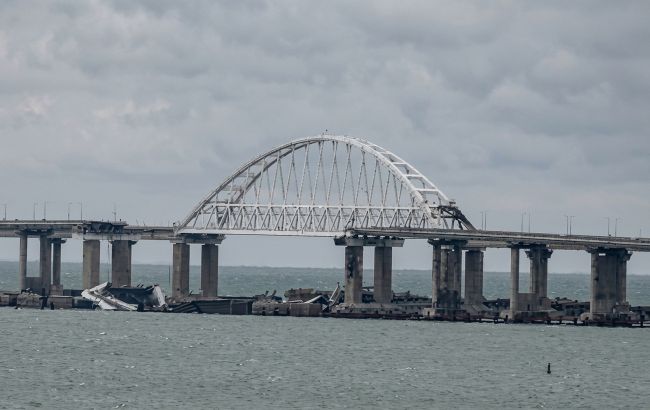
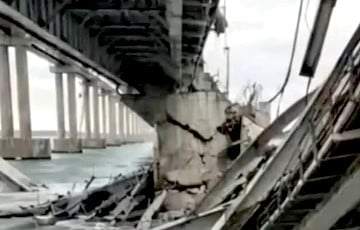
The road section of the bridge sustained the most damage during the second strike — on November 17. At that time, its arch section collapsed, rendering the bridge unusable for vehicular traffic.
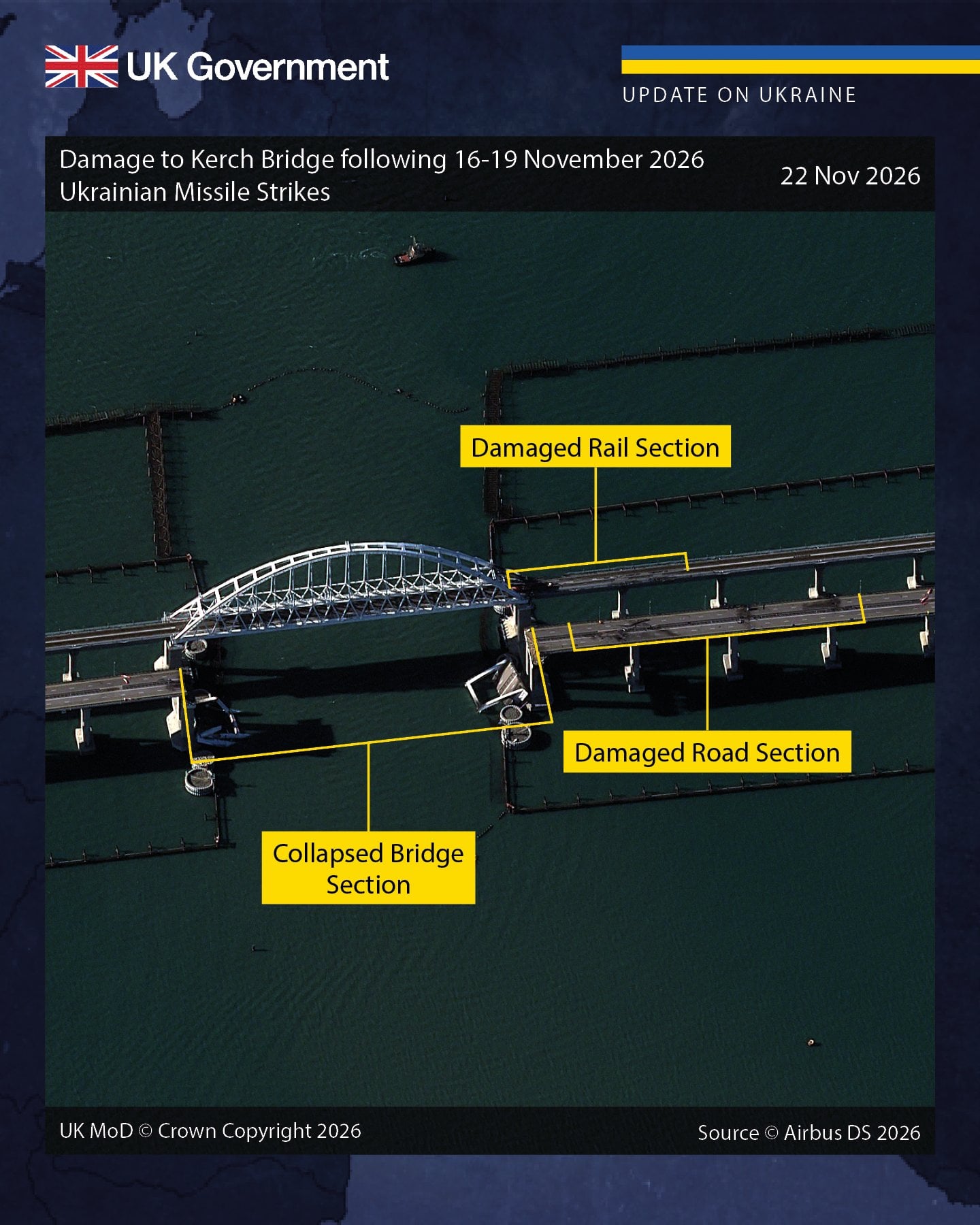
Crater-like damage was also discovered along a 200-meter section of the vehicular crossing. According to intelligence assessments, the collapse of the arch also blocked the passage of ships transiting between the Azov and Black Seas.
The third strike occurred at midnight on November 19. This time, the railway section of the bridge was targeted. Damage was recorded near the arch: guardrails were damaged, and burn marks remained on the structure itself.
At the same time, British intelligence believes that one of the railroad tracks is likely still in operation.
Why Didn’t Russian Air Defense Protect the Bridge?
Despite the measures Russia took to protect the crossing, its air defense was unable to prevent the Ukrainian strikes.
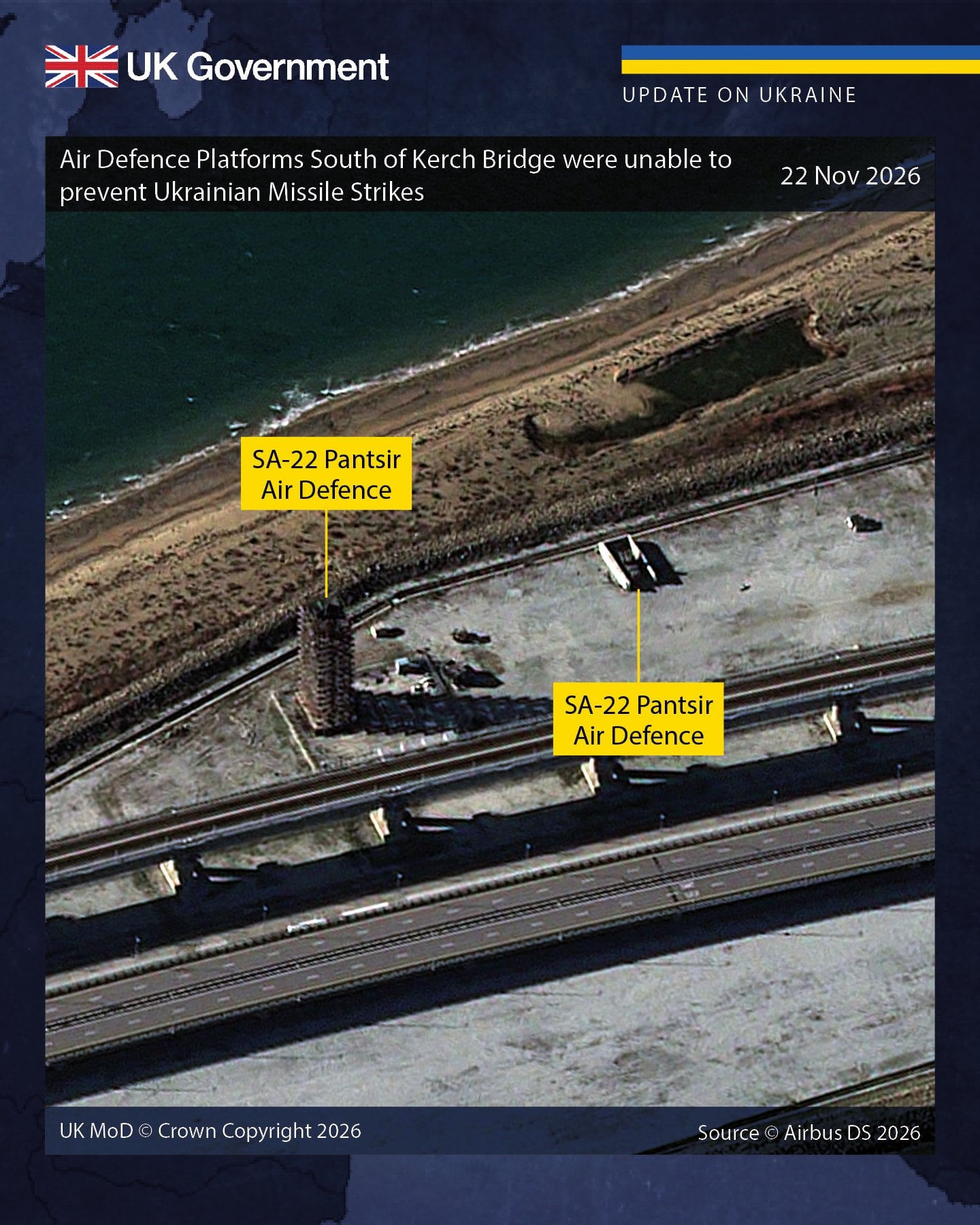
According to British intelligence, two “Pantsir” (SA-22) anti-aircraft missile and gun systems were deployed approximately 2.4 km south of the collapsed section of the road bridge. However, they were unable to stop the attack.
How the Strikes Affected Russian Maritime Logistics
The attacks also impacted Russian maritime logistics operations. According to British intelligence, the port of Azov has reportedly ceased operations due to Ukrainian strikes on the bridges.
Specifically, this refers to the Crimean city, as well as the crossing in Rostov-on-Don, which was struck on October 10, 2026.
“The blockade of sea routes to the Sea of Azov has restricted Russian maritime logistics. It is likely that ships in the Sea of Azov will not be able to transit directly to the Black Sea until the waterways are cleared,” intelligence sources noted.

Bank's name: Bank Millennium S.A.
Address: ul. Stanislawa Zaryna, 2A, 02-593, Warszawa
IBAN: PL97116022020000000216711123
SWIFT: BIGBPLPW
Name of the account holder: Fundacja “KARTA ‘97”
Purpose/title of payment: Donation for statuary aims
You can contact us by the e-mail charter97@gmail.com