

Trump Was Soundly Defeated On His Home Turf
4- 4.11.2026, 15:40
- 1,284

Five Key Takeaways on the Democrats' Historic Victory in the U.S. Congress.
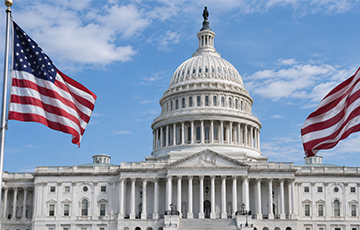
The U.S. midterm elections, in which experts cautiously predicted a Democratic victory in at least one chamber of Congress, turned out to be a real political upheaval for America. The Republicans lost their majorities in both the Senate and the House of Representatives, suffering a crushing defeat even in their traditional “stronghold” states.
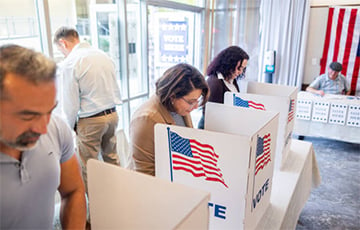
The American press is already noting that American voters viewed this election exactly as U.S. President Donald Trump had asked them to—as a referendum on him and his policies. However, instead of supporting Trump’s party, Americans demonstrated their disappointment with the sharp rise in the cost of living and other domestic problems in the U.S. against the backdrop of the war that the White House unleashed against Iran.
CNN reports that voters delivered a “decisive rebuke” to Trump, The New York Times notes that “Democrats crushed the Republicans,” and that “angry voters heralded the beginning of the end of the Trump era.” The Wall Street Journal sums up the election as a “stunning rebuke” to Trump, while The Washington Post writes that “voters punished Trump with a historic shift toward the Democrats.”
NV has compiled the key takeaways from the initial results of the U.S. midterm elections.
1 The Democrats’ victory in Congress is one of the strongest in decades
Since World War II, there have been only three instances in the U.S. when control of the entire Congress—both the House of Representatives and the Senate—shifted from one party to another during a single midterm election. This happened in 1946, 1994, and 2006, according to the American public broadcaster PBS.
In the November 3, 2026, elections, the Democrats repeated this feat, taking the majority in both chambers of Congress from the Republicans at once. At the time of this article’s publication, it was known that the Democrats had secured at least 54 of the 100 seats in the Senate (7 more) and at least 228 of the 435 seats in the House of Representatives (25 more than in the previous Congress).
Since the beginning of the 21st century, the Democrats had their strongest majority in the House of Representatives following the election of Barack Obama in 2008, when they won 257 seats. Now the Democrats have come very close to their successes in the 2006 and 2018 elections, when they won 233 and 235 seats in the House of Representatives, respectively.
2 A Blue Wave in Red States: A Devastating Defeat for Trump and the Republicans on Their Home Turf
The Democrats not only held onto their seats in competitive races such as the Senate contests in Georgia and Michigan. They gained control of Congress thanks to “a widespread rejection [by voters] of Donald Trump and the Republican Party—a rout that reached deep into staunchly Republican territory,” the Associated Press emphasizes.
Democrats won at least seven additional Senate seats in staunchly “red”—that is, Republican—states. Among them are Kansas, which had not elected a Democratic senator since 1932, and Texas, where Democrats last won a Senate race in 1988, as well as the states of Iowa, Ohio, Maine, North Carolina, and South Carolina.
In the House of Representatives, Democrats managed to win seats from Republicans in some districts where, in 2024, Trump’s lead over Democratic candidate Kamala Harris reached double digits (up to 18%).
In addition, following the election results, Democrats will control a majority of governorships for the first time since 2010 (at the time of publication, Democrats held 28 seats and Republicans 20, including those who were not up for re-election this year). Democratic candidates Keisha Lance Bottoms in Georgia, Amy Acton in Ohio, Rob Sand in Iowa, and Gina Hinohosa in Texas won their gubernatorial races, taking seats previously held by Republicans.
It was also significant that the candidates personally endorsed by Trump—even against the wishes of local Republicans—lost their races, causing the party to lose ground in races where it had expected to win, Reuters notes. Among these unsuccessful candidates were Republicans Michael Watley in North Carolina, Darlene Graham, the sister of Lindsey Graham in South Carolina, and Ken Paxton in Texas, all of whom suffered significant defeats.
A series of Democratic victories, including in the race for Senate seats, left politicians from Trump’s inner circle out of Congress and brought an end to decades of Republican dominance.
In Texas, 37-year-old Democrat James Talalico defeated Republican Ken Paxton — the state’s attorney general and a close ally of Trump, who has been implicated in numerous political scandals and faced a state-level impeachment attempt in 2023. This marks the Democrats’ first victory in a Senate race in 38 years. The New York Times has already called the Texas election result an “earthquake” for the state.
In Ohio, another controversial Trump ally Vivek Ramaswamy, who ran in the 2024 presidential primaries, lost the election. Ramaswamy’s campaign found itself at the center of a scandal over a political ad in which the mother of his Democratic opponent, Amy Acton, accused her daughter of lying and urged voters not to vote for her. However, the ad failed to mention that Acton’s stepfather had once been accused of raping Amy Acton while she was still a minor, after which she and her brother were taken away from their mother. No Democrat has won a statewide election in Ohio since 2008—that is, for 18 years.
In Kansas, Republican Senator Roger Marshall—whom Trump had personally come to support—was defeated. Adam Hamilton—founder of the United Methodist Church, the largest church of that denomination in the U.S.—won the seat for the Democrats. This is the Democrats’ first Senate victory in Kansas in 94 years.
In North Carolina, former Governor Roy Cooper will become the first Democrat to represent the state in the Senate in 10 years. He defeated Michael Watley, the former chair of the Republican National Committee.
In South Carolina, Democrat Annie Andrews—a pediatrician—won, becoming the first Democratic representative in 28 years to represent the state in the U.S. Senate. She defeated Darlene Graham, the sister of the late Republican Lindsey Graham.
3 Disappointment among the Republican “base” and the likely “beginning of the end of the Trump era”
Following the election results, the American and international press are speculating that the Democrats’ decisive victory could signal “the beginning of the end of the Trump era,” as noted by PBS. The U.S. public broadcaster states that the Republican Party has “hit a new low” two years before the end of Trump’s final presidential term.
The Guardian columnist Moira Donegan noted that the election results sounded like “the death knell for Trumpism.” She emphasized that the election results showed that even Republican voters were outraged by “staggering gas prices, consumer powerlessness, persistent unemployment, and blatant, glaring inequality”—that is, problems that have only worsened during the first half of Trump’s second term, in part due to the war he unleashed against Iran.
A voter survey conducted by the AP confirmed deep dissatisfaction with the incumbent president’s administration: approximately 6 out of 10 respondents said they disapprove of his performance and stated that the price spike is “more related to Trump’s policies” than “to factors beyond Trump’s control.”
About 70% of respondents expressed a desire for Congress to ensure greater effectiveness of the system of checks and balances on the presidential administration. Also, about 6 in 10 voters said that Trump prioritizes his personal interests over those of the country.
Trump was banking on the fact that his key electoral base could save the Republicans in this election — white voters from the working class and agricultural sectors of American society, as well as some young people and Latino voters who helped secure his victory in the 2024 presidential election, PBS adds.
However, an AP voter survey showed that Trump was wrong, and the sentiments of these voters have shifted significantly since then. While in 2024 the preferences of voters under 30 were roughly split evenly between Donald Trump and Kamala Harris, in this election, about 7 out of 10 voters of the same age nationwide said they supported the Democratic candidate for the U.S. House of Representatives in their district.
In addition, only about one-third of Latino voters told the AP that they supported a Republican candidate for the U.S. House of Representatives in local elections, whereas two years ago, about 4 in 10 voted for Trump.
These changes will also influence the campaign leading up to the 2028 presidential election, the early trends of which are set by the midterm elections.
4 A Series of Historic Milestones: A Black Governor, a Muslim Senator
The 2026 midterm elections have already brought a number of new historic milestones to the American political establishment, CNN notes. Here are just a few of them:
The first potential Black Speaker of the U.S. House of Representatives: now that Democrats have secured a majority in the House, 56-year-old Democrat Hakim Jeffries could take over the position from Republican Mike Johnson. He was elected to Congress from New York’s 8th congressional district and could become the first African American to serve as Speaker of the House if confirmed for the position.
First Muslim senator: Democratic Party representative Abdul El-Saed made history by winning the U.S. Senate election in Michigan, where the incumbent Democratic senator Gary Peters did not seek re-election. The 42-year-old epidemiologist will become the first Muslim to serve in the Senate.
The first Black female governor in U.S. history: Democrat Keisha Lance Bottoms will become Georgia’s first female governor and, at the same time, the first Black female governor in U.S. history. She served as mayor of Atlanta from 2018 to 2022 and was among the women whom President Joe Biden considered as potential vice-presidential candidates for the 2020 election. She later joined his administration.
Florida’s first Black governor will be Republican Byron Donalds, who was supported by Trump in the election.
The first Latino governors in Texas and California: in Texas, Democrat Gina Hinojosa will, following her historic victory, replace Republican Governor Greg Abbott, who led the state for nearly 12 years. In California, Democrat Xavier Becerra maintained his party’s control over the nation’s largest state, becoming its first elected Latino governor and succeeding Gavin Newsom.
The first woman to serve as governor of Ohio: Democratic physician Amy Acton defeated Republican Vivek Ramaswamy amid a campaign scandal surrounding his political ad. In the ad, he pitted Acton’s mother against her opponent, though he concealed the fact that the woman had not been in contact with her daughter for a long time and had covered up sexual advances made by Amy Acton’s stepfather toward the children.
5 The departure or defeat of a number of pro-Ukrainian congressmen and senators
The U.S. midterm elections are significantly changing the political landscape not only in Washington but will also have repercussions far beyond America’s borders.
Thus, starting in January 2027, when the newly elected Congress is sworn in, many of the members of the Senate and House of Representatives from both parties—who were previously the most active supporters of Ukraine and participants in the bipartisan pro-Ukrainian coalition in the U.S. Congress—will no longer serve.
In particular, the following did not seek re-election and are therefore leaving Congress: Mitch McConnell (Republican senator from Kentucky), Tom Tillis (Republican senator from North Carolina), Dick Durbin (Democratic senator from Illinois), Jean Shaheen (Democratic senator from New Hampshire), Nancy Pelosi (Democrat, former Speaker of the House and member of the House of Representatives).
In addition, a number of Republicans who supported providing aid to Ukraine even in defiance of Trump’s position lost their seats in the U.S. midterm elections. Among them was Congressman Brian Fitzpatrick of Pennsylvania, one of the leaders of the pro-Ukraine caucus in Congress. Republican Congressmen Mike Lawler (New York), Rob Bresnagan (Pennsylvania) and Mike Carey (Ohio), Senator Susan Collins (Maine), and potential Senator Darlene Graham, sister of Lindsey Graham, (South Carolina), all of whom have traditionally been considered allies of Ukraine.

Bank's name: Bank Millennium S.A.
Address: ul. Stanislawa Zaryna, 2A, 02-593, Warszawa
IBAN: PL97116022020000000216711123
SWIFT: BIGBPLPW
Name of the account holder: Fundacja “KARTA ‘97”
Purpose/title of payment: Donation for statuary aims
You can contact us by the e-mail charter97@gmail.com