

Hats For Russian Heads
- 25.06.2026, 15:17
- 2,336
How Ukraine Obtained New Weapons in the War Against Russia.
In mid-June, Ukrainian forces launched a counterattack and liberated Ivanivka in the Dnipropetrovsk region in southeastern Ukraine. Russian forces responded with a devastating barrage of high-precision KAB glide bombs.
One cartographer recorded 70 bomb strikes along a ridge approximately one mile long, stretching east of the town. On a broader scale—along a 700-mile front line as part of Russia’s larger war against Ukraine—the Russians are dropping about 7,000 KAB-type bombs per month. Each weighs more than 500 pounds.
The scale and destructiveness of the KAB campaign have stunned the Ukrainians, and they are struggling to find a response. “Ukraine’s main task for the next few months is to counter a massive campaign involving guided aerial bombs (KAB),” wrote OSINT analyst Clément Molen in May.
Only significantly tougher air defense measures can deter airstrikes using guided aerial bombs, but the Ukrainian Air Force is facing a severe shortage of long-range ground-based air defense systems and, to an equal extent, long-range air-to-air missiles for its small fleet of modern fighter jets. Next year, Ukraine is set to receive sixteen former Swedish Saab JAS-39 Gripen fighters. Until then, the Ukrainians can do little to stop the barrage of glide bombs.
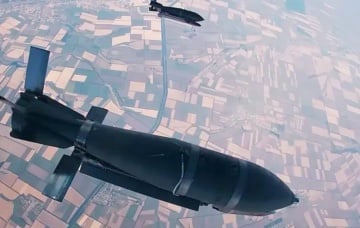
But they can strike back using their own glide bombs. Last month, the Ukrainian government announced that, after 17 months of development, it was ready to deploy domestically produced glide bombs for the first time. And on Tuesday, a Ukrainian Air Force MiG-29 fighter jet may have used the so-called “UkroKAB” in combat for the first time.
“The day has finally come!” — exclaimed columnist Sonya Hab, as two 550-pound guided bombs exploded over suspected Russian positions at the edge of the forest.
David Axe, trenchart.us

Bank's name: Bank Millennium S.A.
Address: ul. Stanislawa Zaryna, 2A, 02-593, Warszawa
IBAN: PL97116022020000000216711123
SWIFT: BIGBPLPW
Name of the account holder: Fundacja “KARTA ‘97”
Purpose/title of payment: Donation for statuary aims
You can contact us by the e-mail charter97@gmail.com