
“There Are People In A Critical Situation”: A Political Prisoner’s Cry From The Heart
6- 10.07.2026, 22:44
- 19,342
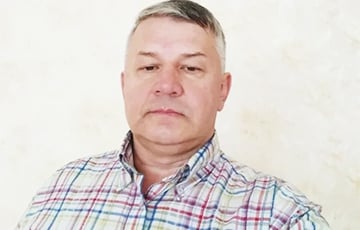
Alexander Kravchuk spent years battling bureaucrats, and now he is seeking justice from charitable foundations.
The story of entrepreneur Alexander Kravchuk from Kobrin made headlines throughout Belarus in 2016.
The tragedy was preceded by the following events: the Belarusian man purchased a Volkswagen Touran with natural gas equipment in Germany. In January 2014, the “Atlant-M” dealership informed him that the gas cylinders needed to be replaced—due to a manufacturer defect, several such cylinders had exploded in Europe. The rear pair was replaced immediately, but Alexander had to wait more than two years for the front ones to be replaced.
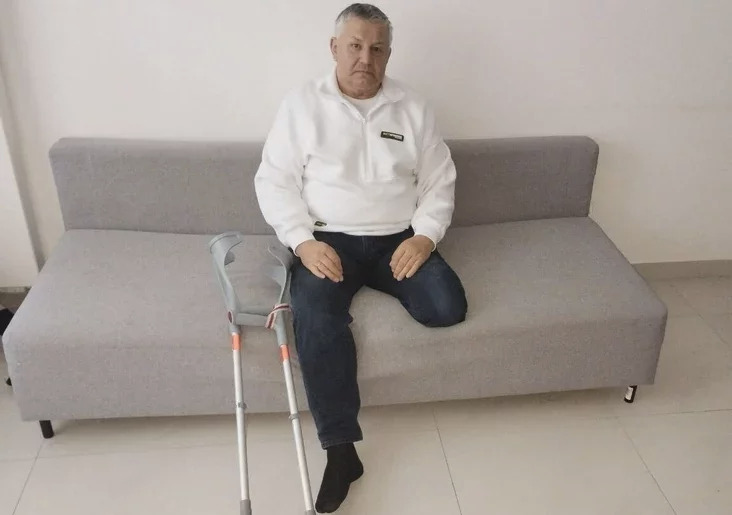
When the dealer finally called in August 2016, Alexander drove to Minsk with his children. On the way, he stopped at a “Gazprom Transgaz Belarus” gas station—and at that moment, the gas equipment exploded. The children were virtually unharmed, but the explosion tore off Alexander’s leg below the knee.
After the tragedy, he spent years trying to secure compensation, sued government agencies, clashed with officials, and claimed he had faced negligence and injustice; in 2024, he was arrested for contacting journalists.
After his release and deportation from Belarus, Alexander Kravchuk told his story to the website Charter97.org. He currently lives in Poland.
First Attempts to Secure an Investigation
After the tragedy in 2016, Alexander realized that they wanted to sweep his case under the rug:
“An investigator came to my hospital room and started asking questions. The first thing I asked him was: ‘Did you check the pressure in the cylinders?’ He said: ‘No, we released the pressure from the cylinders’ (‘to release’—to forcibly let out excess air to bring the readings back to normal—Note by Charter97.org). I said: ‘How is that possible? You were required to do that.’ “Well, we didn’t know,” he said, pretending he didn’t understand the technical details.
As I later learned, the investigation didn’t begin collecting evidence until late the next day after the tragedy. In fact, even while I was still in the hospital, I realized that they were going to let the case fizzle out”.
And that’s exactly what happened: after reviewing the documents, Alexander learned that the request to open a criminal case had been denied.
The former political prisoner says he met with the Brest Region prosecutor several times, but realized he wouldn’t achieve anything at the local level, so in 2017 he reached out to Ivan Noskevich, then-chairman of the Investigative Committee of Belarus.
“Noskevich asked the supervising prosecutor how the investigation had been conducted. Specifically, an ‘investigation,’ because there was no criminal case. And I clearly remember the supervisor’s words: ‘The investigation was conducted superficially.’ Noskevich gave the order to open a criminal case.
Well, naturally, everything was just made up from there on out. Noskevich issued reprimands to Poluyanchik, the so-called investigator, and his superior. I pushed for a criminal case to be opened against them, but I kept running into roadblocks everywhere”.
Lost Time and the Trial
The most crucial investigative steps, as Alexander explains, were overlooked right from the start:
“The cameras suddenly weren’t working; the logs and evidence were most likely tampered with. Right at the start, there was an investigator who told my wife, ‘Don’t worry, we found a lot of things there; everything will be fine.’ But then it turned out there was nothing.”
The case was transferred to the Brest Investigative Committee. The investigator did what he could: he sent requests to the Volkswagen plant in Germany and sent the gas cylinders to Russia for analysis—but it was no longer possible to gather solid evidence. As the statute of limitations was about to expire, Alexander met with the former head of Lukashenko’s administration Igor Sergeenko, and shortly after that conversation, the case broke the deadlock and was transferred to the Kobrin City Court:
“Since I was politically active at the time, a ruling on the lawsuit was issued in 2021. As part of the criminal case, a verdict was handed down against the person who had inspected my cylinders. But I wasn’t particularly interested in what the punishment would be. I was interested in receiving some amount of compensation so that I could purchase a prosthesis. And the cost of the prosthesis was substantial. I then provided them with the contract and invoice from Germany. But they paid no attention to them. There were no questions regarding any of my expenses; they were all approved. As for the claim for emotional distress, Judge Tatyana Koberskaya awarded 10,000 rubles. At the time, that was somewhere around 3,000 dollars. In other words, practically nothing.”
Alexander filed a supervisory appeal with the General Prosecutor’s Office and unexpectedly received a response in his favor:
“They were all in shock, of course. A response arrived at the Brest Court stating that the court’s decision must be overturned, the case remanded for a new trial, and that ‘Gazprom Transgaz Belarus is also a defendant in this case.’
What do they do next? Just so you understand, the prosecutor’s office’s response is not binding on the court. The presiding judge of the Brest Court convened a panel of judges—all the judges—and sent the case for a second appeal. ‘Gazprom Transgaz Belarus’ appeared at the hearing, and the court simply overturned the ruling—that is, it dismissed the case.”
Arrest and Pretrial Detention
About half a year later, Alexander filed another supervisory appeal—this time on his own—and then, together with his wife, left for Poland to be with his son. On April 23, 2024, they returned to Belarus:
“In the morning, investigators from the Kobrin District Police Department arrived, along with a second investigator from the Brest District Police Department. My wife and I had just gotten up early. She had already gone downstairs; I was still on the second floor. I looked out the window, and there was already this ‘mask show’ going on with the security forces. My wife said, ‘Look, the police are here.’ I already had a feeling that they were probably going to arrest me.”.
The security forces threatened to tear down the former political prisoner’s house “log by log” and demanded his phone. As Alexander was later told in prison, the security forces needed the cell phone to add to the case a conversation they had intercepted via the home router without a VPN.
Recalling the arrest, he mentioned another detail: the mail that arrived that day contained the very same supervisory complaint that his wife had paid for and resubmitted at his request.
“In response, Kirill Gnatyev, an officer with the Brest City Internal Affairs Directorate, said: ‘I don’t advise you to do this, because you’ll end up in jail too, and your daughter will be sent to a shelter.’”
His daughter, who had completed ninth grade, was taken to her brother in Poland that same year and has not been home since.
Alexandra was charged under Article 361-4, Parts 1 and 2 (“facilitating extremist activity”). All because the man had told journalists from “Racyja Radio” about all his attempts to seek justice regarding the situation with his leg.
First, he was taken to the District Internal Affairs Department, allegedly to give a statement, and a couple of days later—to Pretrial Detention Center No. 7 in Brest.
“There, as far as I understand, orders were given to pressure me into confessing. I was shuffled from cell to cell countless times. I was in some cells as many as four or five times. Everyone in the detention center knew me by then. But I never admitted guilt.
Due to my physical condition and my second-group disability status, I was supposed to be on bed rest. But there was this doctor there, Lyudmila Shchetko—that was her name—a real bitch, of course. Apparently, on their orders, she revoked my bed rest. Of course, it was hard. But they realized it didn’t affect me”.
One of the most difficult incidents involved the head of the investigative unit, Ilya Kolennik. During an inspection in the hallway, Alexander complained about the lack of crutches, and this provoked aggression from the security officer:
“He didn’t like that. He came over: ‘Who’s that over there?’ I introduced myself. He was holding some kind of folder, and he hit me on the head. I said, ‘Do you realize what you’re doing?’
That made him very angry. He shouted, ‘Bring him to my office!’ In his office, as I understand it, he wanted to provoke me. When I walked in, they took my crutches away. I sat down immediately. He started yelling, “Stand up!” I stood up. He rushed at me, grabbed me by the throat, and started choking me.
But I didn’t react. I realized he wanted me to hit him. I just stood there. Then he let go, ran to the desk, and started yelling something: “These Zmagars are bitches!” Basically, he was spewing a torrent of abuse. When he calmed down, I told him, “Talk to your kids like that. You shouldn’t talk to me like that.” He ran up to me, grabbed my shirt, and ripped it right off me.”.
Unable to get a reaction with words, Kolennik resorted to blows:
“They hit with their wrists so as not to leave any bruises. At first, he hit me six times like that—on the cheekbones, on the chin. I didn’t flinch; I just stood there. Then I noticed his face had turned red, and his eyes were bulging. He saw that I wasn’t reacting at all, that I was just standing there. So he hit me three more times like that. The last time he hit me, it was as if he’d blown air into my ear, and my eardrum burst. I fell and lost consciousness. Then they ran over and took me to the basement”.
Alexander describes the conditions in the basement cells, where he was repeatedly held afterward, as follows:
“Of course, there were plenty of bedbugs there, concrete floors, and dampness. To give you an idea: if you leave matches on the table, you won’t be able to light them in the morning. Not only that, but there wasn’t even street lighting. There weren’t any proper toilets either”.
This treatment continued for about seven months. The situation temporarily improved after his lawyer intervened, but the pressure soon resumed. Two of Alexander’s lawyers were subsequently disbarred. Later, his wife filed a complaint against the actions of the security forces, and for the last month and a half, he was transferred to more tolerable conditions.
In February 2025, he ended up at Penal Colony No. 2 in Bobruisk, in a special unit for people with disabilities and retirees called the “Vikings.”
“Of course, I saw it all there. There were people with epilepsy, people who were completely out of their minds—you name it. But the most interesting thing was that in this unit there was this ‘jerk,’ the ‘boss,’ or whatever you call him, the unit foreman. He was bald. The whole system was set up to extort pensions from the retirees. In other words, if you paid, you were treated more or less fairly. If you didn’t pay, you were treated—let’s just say—badly.”.
Release and Deportation
Early in the morning on November 13, 2025, Aleksandra was woken up without explanation:
“I immediately realized it was about my release. When they brought me to IK-2, there were already other political prisoners from different units there. The strangest thing was that they gave me back the documents related to my criminal case—the verdicts and everything. They didn’t take them away. Though, there were some expensive medications there; they didn’t give those to me”.
After that, the political prisoners were put on a bus:
“They pulled winter prison hats over our eyes. They wrapped our hands in duct tape. For some, they even wrapped their legs. But they figured I wouldn’t be able to go anywhere on my prosthetic leg, so they didn’t wrap my legs.
The ride took a long time. Then we pulled into some kind of forest near the highway. I was already starting to have dark thoughts. Maybe I’d never see anyone again. To tell the truth, the whole thing was dragging on for so long that the thought really did take root in my mind”.
After a long wait on the buses—which, according to Alexander’s observations, were bringing political prisoners from various colonies—they were finally taken to the border with Ukraine.
“Toward evening, they gave us some dry rations because we hadn’t been fed all day. They gave me the money that was left in my account at the penal colony. And they took us to the Ukrainian customs office. There, everyone got off the buses, transferred to other ones, and headed to Chernihiv”.
Alexander took the deportation hard—his wife was left alone in Belarus, and there were many unfinished matters at home.
Life in Exile and the Conflict with Tikhanovskaya’s Office
Some time later, Alexander moved to Poland, where his relatives live. The former political prisoner faced, in his words, a systemic lack of support for Belarusian political emigrants, especially the elderly and people with disabilities:
“Today, people abroad are being ignored. I’ve fallen out with everyone—including Svetlana Tikhanovskaya.
Our group of political prisoners who came here made quite a splash. In other words, there was a lot of buzz around us. That’s why we received at least some financial assistance. But the people who come to Poland on their own to escape persecution—I’ve spoken with some of them—have no access to medical care, no proper assistance, nothing.
At first, we were welcomed warmly—I can’t say otherwise. But what surprises me most is that the aid we received actually came from money that people had raised themselves. But where is the aid allocated by the European Union? I believe substantial sums were announced there as well. Both the U.S. and the European Union provided aid—somewhere in the range of half a billion euros. Where is that money? Where did it go?”
A sharp conflict arose between Alexander and Elena Nedvetskaya from the Belarusian Solidarity Center—over the issue of paying for language courses for his daughter:
“My daughter is currently taking B2-level language courses. I asked Elena: Could the foundation cover the cost of my daughter’s courses? She said, ‘Sure, we’ll do it—but how much does it cost?’ I said, ‘I asked my daughter, and she said 460 zlotys.’ She said, ‘Okay, no problem.’ I didn’t realize she wouldn’t understand that it was per month. It’s actually 2,720 zlotys for the entire course. Then she said, “Okay, I’ll figure something out.” A month passed, then another, and it all dragged on. I tried to get in touch with her. After all, I wasn’t asking her for money—I was just asking for a yes or no. She avoided getting in touch.”
When the conflict became public, Nedvetskaya allegedly began threatening to file a police report. An attempt to publicize the story through an interview with “Radye Racy” was also unsuccessful—Nedvetskaya refused to speak with journalists, and the interview with Alexander disappeared from the website:
“The article stayed on their website for about 30–40 minutes, then disappeared. Later, the journalist said she was reprimanded for preparing this piece unilaterally... You see, this, apparently, is what the ‘independent press’ turns out to be”.
Separately, Alexander spoke about a conversation he had with Svetlana Tikhanovskaya on March 2, 2026, during her “live broadcast”:
“I said, ‘That’s not how it’s done—sort this out. People came here, and you couldn’t even properly organize medical care.” To which she replied, “What, haven’t we done enough?” I said, ‘But in five years, you haven’t done anything here. You’ve just surrounded yourselves with mysterious people like Anatoly Lebedko and Franak Vechorka and been busy with nonsense.’”.
According to Alexander, Tikhanovskaya took offense and asked him to email her a description of the problem. He did so, raising the issue of Belarusians who were forced to flee to Poland:
“I wrote that people of retirement age and people with disabilities are arriving, and in reality, they have no social support whatsoever. These people are in a critical situation. Okay, my son won’t let me starve to death. But there are grandmothers in their 70s who have arrived. Where is she going to find work? I have absolutely no idea how they plan to support them. There’s no program whatsoever”.
Neither Tikhanovskaya nor the “Coordination Council”—to which he sent an identical letter—ever responded.
Medical Care: Promises Without Results
Since arriving in Poland, Alexander has had serious problems with his stumps, and he has been diagnosed as needing a hip replacement:
“Right from the start, when I arrived here, my entire stump was covered in blood because the ligature had started to break down. I sent the information to the “PADAROZHNIK” aid fund. Then I sent it to other aid funds. I told them, ‘Do something.’ In the end, no one did anything until my son took me to the surgeon.
And this has been dragging on ever since. By the way, I have medical records from prison that specify a hip replacement. At first, “PADAROZHNIK” promised, “We’ll take care of everything for you.” Then they referred me to the “LEKAVIT” aid foundation. “LEKAVIT” is still making all kinds of promises, too. In the end, I was excluded from the program, even though they had promised to perform the hip replacement. I was excluded because I said on blogger Sergey Petrukhin’s channel that “no assistance has been provided to date”.
After the story went public, “PADAROZHNIK” began treating the political prisoner’s teeth, but demanded that I sign a non-disclosure agreement:
“I said: Half the treatment is already over—two months—and you’re slipping this document to me in the middle of the treatment? No, I said, I won’t sign it. And they disappeared too. Not a peep from them”.
Alexander now lives with his family in Minsk-Mazowiecki, mainly supported by his son and small disability benefits from Polish social services.
“So, here in the town of Minsk-Mazowiecki, I mostly just stay in my apartment. It’s very difficult for me to go out. I have problems with my stumps, and my prosthesis has already been repaired here. And, as they say, there’s a problem with my hip joint... I just don’t want to deal with the hassle of support funds anymore. So, to be honest, we’ve been here for half a year, and I haven’t actually received any medical care”.
A fundraiser for Alexander Kravchuk’s new prosthesis has been announced on the BySol website.

Bank's name: Bank Millennium S.A.
Address: ul. Stanislawa Zaryna, 2A, 02-593, Warszawa
IBAN: PL97116022020000000216711123
SWIFT: BIGBPLPW
Name of the account holder: Fundacja “KARTA ‘97”
Purpose/title of payment: Donation for statuary aims
You can contact us by the e-mail charter97@gmail.com