

Trump Didn't Want To Go To The NATO Summit — But As He Was Leaving, He Confessed His Love
6- 10.07.2026, 14:11
- 1,700
How did the allies achieve this?
Europe awaited the NATO summit in Ankara, held on July 7–8, with great anxiety. In recent months, the leader of the Alliance’s largest member, U.S. President Donald Trump, has repeatedly questioned NATO’s value to the United States, calling it a “paper tiger,” insulted allies, laid claim to other countries’ territories, and, ultimately, put his words into action by beginning to reduce the U.S. troop presence in Europe. Analysts predicted a tense atmosphere at the summit, the media wrote about the Alliance’s “deepest crisis,” and Trump himself openly stated that he did not want to attend. But unexpectedly, it all ended with a happy ending: smiles, praise, hugs, and assurances of unity. Find out how it happened in the article "Gordon".
An atmosphere of love and unity
On the eve of the summit, the American media reported that Trump was heading to Turkey “in a gloomy mood.” Right before the event, he continued to criticize his allies and noted that he was flying to Ankara solely out of respect for President Recep Erdogan, whom he considers a friend. If the meeting in Ankara does not lead to new crises for the Alliance, that alone can be considered a victory, noted Trump’s former adviser John Bolton.
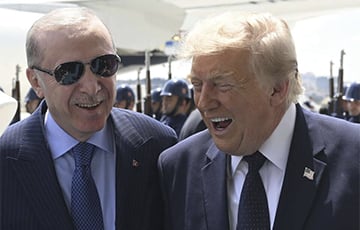
Trump received a warm welcome in Turkey. Erdogan personally came to the airport to greet the American leader and walked arm-in-arm with him. At the airport, a grand air show in red, white, and blue was staged for Trump.
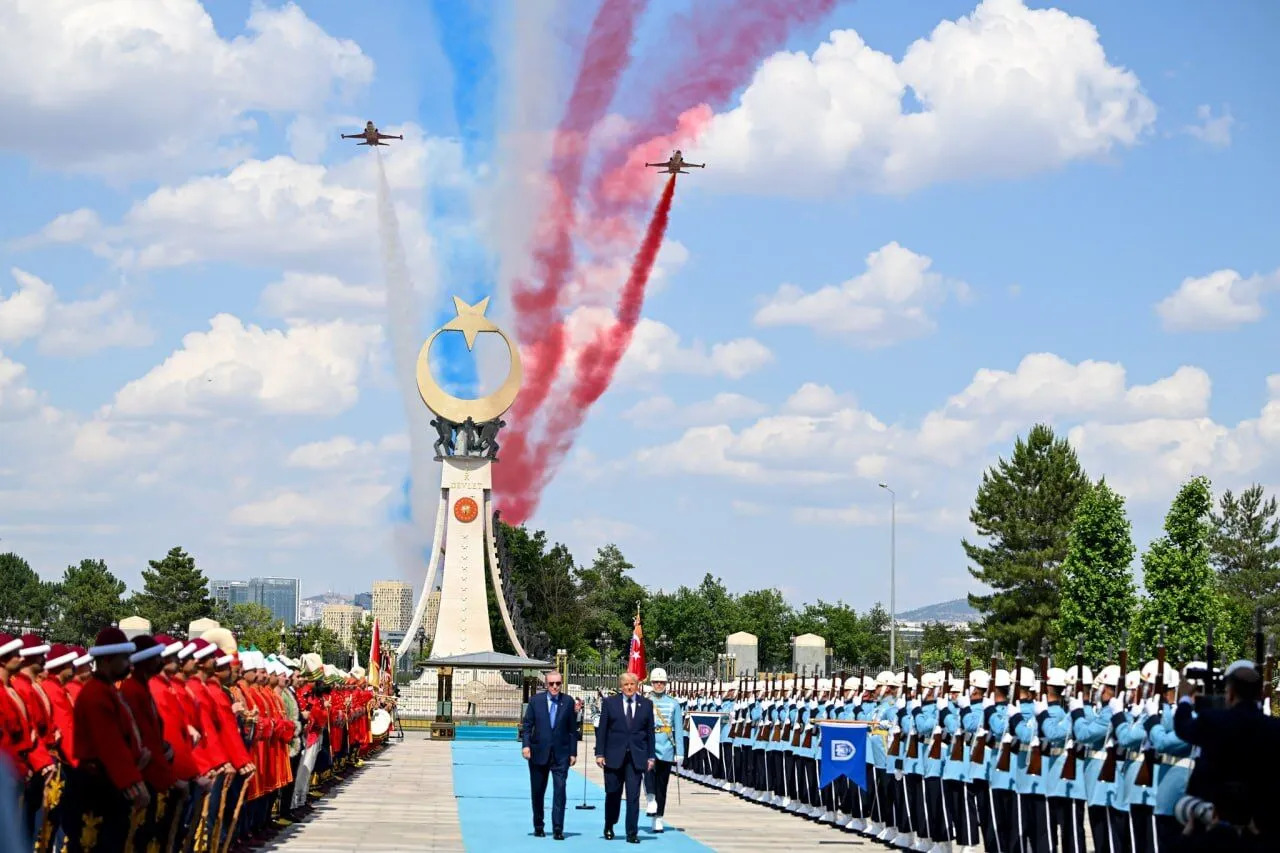
Overall, according to Reuters, Trump’s visit was a success—if not for NATO, then certainly for Erdogan. Trump repeatedly praised him, promised to lift sanctions on Turkey, and to sell it F-35 fighter jets (though this is still uncertain).
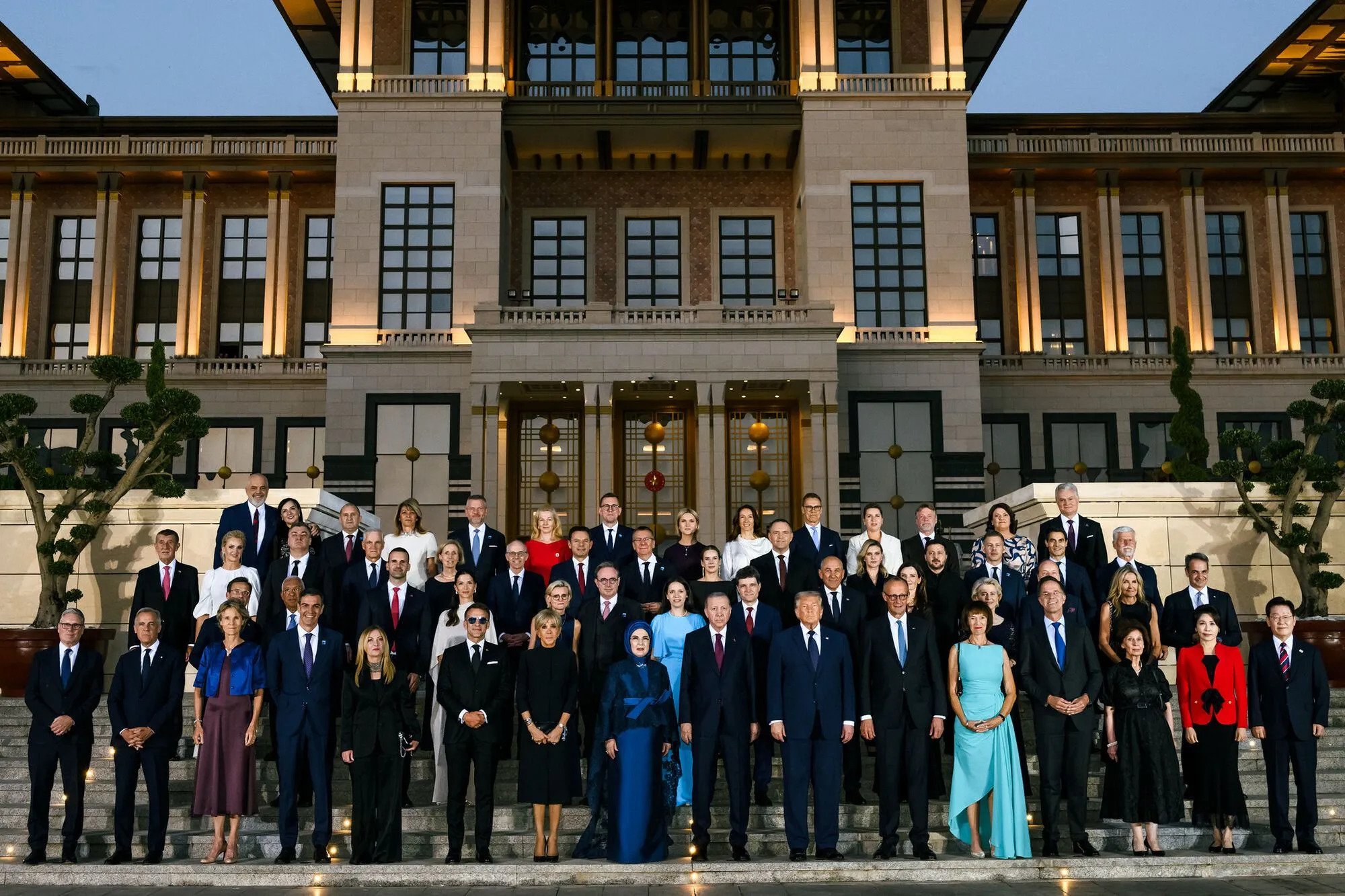
Trump continued to criticize other allies at the summit, but in the end, everything ended on a positive note. After a closed-door meeting of the leaders, the U.S. president stated that the atmosphere in that room was one of “immense love” and “great unity.” According to Reuters, behind closed doors, Trump did not repeat his criticism and instead expressed a desire to maintain U.S. membership in NATO, stating, “We want to stay with you.”
A Warm Meeting with Zelenskyy
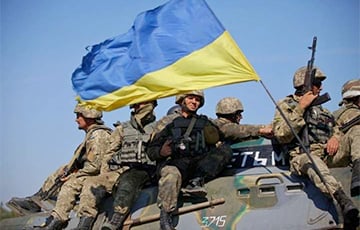
Trump’s sharp turnaround on Ukraine—from the scandal in the Oval Office and open criticism of Volodymyr Zelenskyy to the authorization to produce American weapons—became, according to the FT, “the highlight of the NATO leaders’ summit in Turkey, which at times threatened to descend into absurdity.” The new tone has instilled cautious optimism in European allies—they hope that Trump’s behavior in Ankara signals a lasting shift in the U.S. position in favor of Kyiv and increased pressure on Moscow.
At a joint press conference, Trump announced a significant improvement in relations with the Ukrainian president. “Since our time in the Oval Office, we’ve established a good relationship with Zelenskyy,” the White House chief said, to which the Ukrainian president replied: “And this is not the end.”
The U.S. president also announced that Ukraine would be granted licenses to manufacture interceptor missiles for the Patriot air defense systems. He also stated that the U.S. could close the airspace over Ukraine in the event of a renewed attack by Russia following the potential conclusion of a peace agreement. In addition, he said that the United States wants to purchase Ukrainian drones.
First Deputy Head of the Office of the President Serhiy Kislitsa called the conversation between Zelenskyy and Trump “one of the best, and perhaps the very best, meetings.”
According to FT sources, during a closed-door meeting with Zelenskyy following the briefing, Trump “made it clear” that the U.S. supports Ukraine and was considering additional steps to help Kyiv achieve a breakthrough on the battlefield. During the talks, “he conducted himself with dignity and seriousness,” the sources said. Zelenskyy himself later also emphasized that Trump “was very constructive.”
“It’s all quite simple,” explained one NATO diplomat. “Trump likes winners. And Ukraine has recently started winning.”
Off-Limits Topics
Trump’s threats to withdraw troops from Europe, his desire to seize allied territories, his dissatisfaction with low defense spending, and his anger over some NATO countries’ refusal to allow their bases and airspace to be used for attacks on Iran—these are “well-worn tirades,” writes the FT. European leaders have learned to brush them off.
And they have informally agreed not to bring up certain topics at all in Trump’s presence, so as not to irritate him. For example, the World Cup. On the eve of the summit, the U.S. national team suffered a crushing 4–1 defeat to Belgium.
Belgian Prime Minister Bart De Wever told reporters that he intends to “show sensitivity” toward the U.S. president, since the latter “sometimes reacts quite irritably to things he doesn’t like.”
“Everyone is talking about one thing, and that is congratulations on the well-deserved victory of the ‘Red Devils,’” de Wever said. “Of course, there is also the losing side. And it is, moreover, NATO’s largest partner.”
He couldn’t resist another dig, alluding to the recent scandal over FIFA’s decision to lift a player’s suspension at Trump’s request. Saying that NATO is ready to provide Ukraine with €70 billion in military aid, de Wever added: “This is a very strong red card for Putin. You can’t just take a red card back. You know that.”
Unexpected gifts
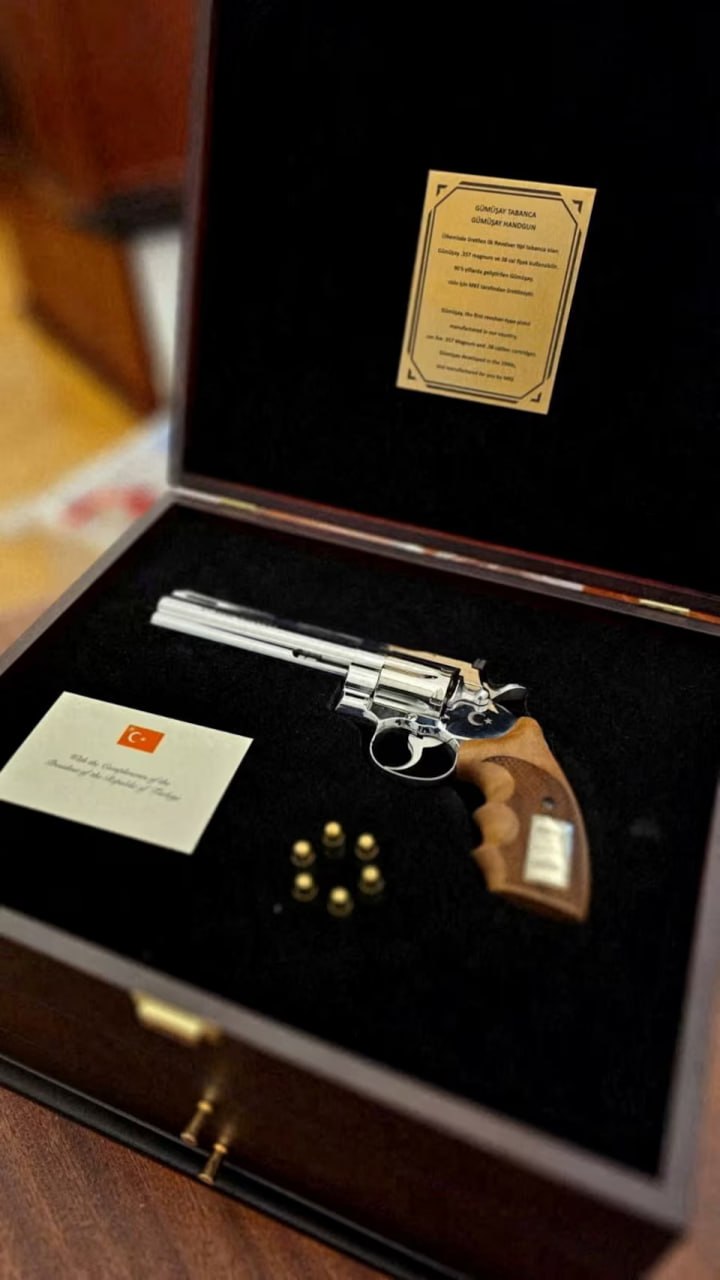
Erdogan “did everything he could to help” his NATO allies improve Trump’s mood, the FT notes. In particular, at a closed-door meeting of all the leaders, the Turkish president presented those present with revolvers bearing their monograms, ammunition for them, and cleaning kits. Before the summit concluded, Erdogan presented identical gifts to European Commission President Ursula von der Leyen and European Council President António Costa.
Rutte’s Approach Is Working
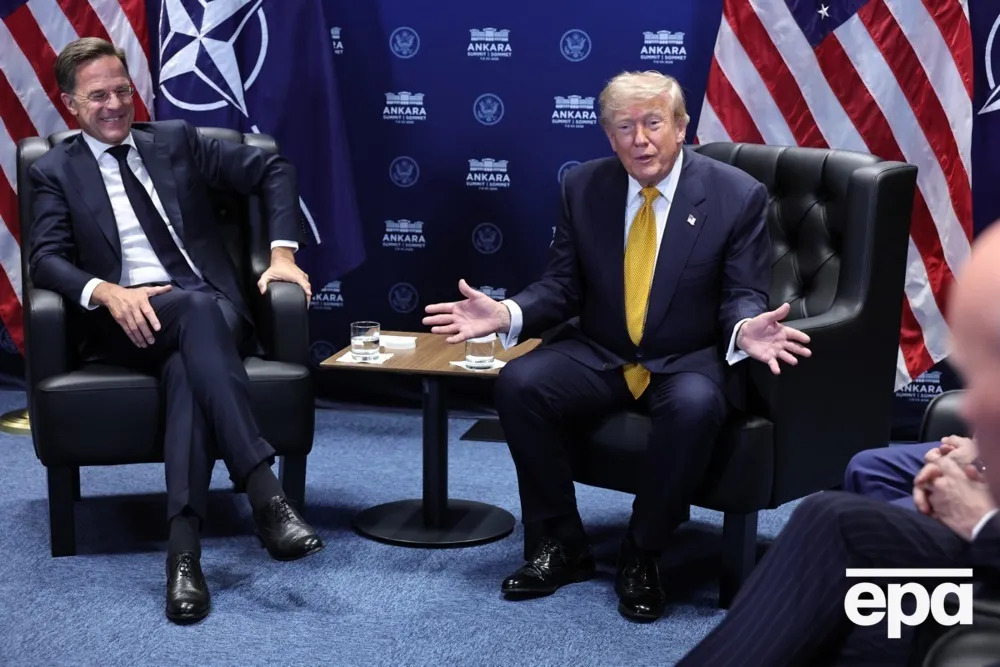
“I just like him. I think what he’s doing for NATO is great news,” NATO Secretary General Mark Rutte said ahead of the summit.
Trump, for his part, used the meeting with him to lash out at Spain (“a terrible partner” and “hopeless, bad people”), to remind everyone that Greenland “is needed by the U.S., but Denmark doesn’t,” and to criticize the United Kingdom, Germany, and Italy for failing to support his war against Iran.
But the U.S. president’s mood quickly shifted under the influence of Rutte’s praise that “his leadership is transforming this alliance.” Throughout the summit, he compared Trump to Eisenhower several times, praised his “extraordinary tenacity” in boosting NATO members’ defense capabilities, and in all his public remarks clearly said exactly what the guest of honor wanted to hear.
Rutte is often criticized for lavishing praise on Trump and failing to counter his attacks on allies.
Rutte himself responds to these criticisms by saying he will not change. “They knew who they were getting when they hired me. I am who I am. If people do something good, I’ll say so. If I disagree, I’ll say that too, but probably not openly—I’ll try to preserve the unity of the Alliance,” he said.
Rutte also believes that the disagreements among partners that surfaced at the summit demonstrated NATO’s democratic strength and should serve as a lesson for Putin. In his view, the ability to debate openly and then unite around a common goal is what “distinguishes democracies” from countries such as Russia, China, and Iran.
What’s Next
At least on paper, the summit concluded with a message of solidarity: in the summit declaration, NATO allies, including Trump, reaffirmed their “unwavering commitment” to collective defense in accordance with Article 5 of the Washington Treaty.
At the same time, the declaration states that “European allies and Canada, working with the United States, are taking on greater responsibility for the Alliance’s defense.” So, no matter how great the love and unity may be, the transition to “NATO 3.0” is inevitable. It would be good if Trump allowed this transition to be gradual and predictable—rather than, after taking a deadly offense at one of the allies, initiating another sudden troop withdrawal.
“In The Hague, European allies, led by Trump’s then-chief ‘secret advisor’ Mark Rutte, rallied around a sweeping pledge on [defense] spending that earned them… one good day in the press. This was followed by a disastrous year. Last year, the Europeans were still hoping to prevent this administration from scaling back its role in Europe. This year, they hope to work with it to minimize the damage from the transition period,” says Sofia Besh, a senior fellow in the Carnegie Endowment’s European Program .
The extent of the cuts will become clear by the end of 2026, when the Pentagon completes its six-month review and analysis. Trump himself, according to CNN, advocated for reducing the number of troops by a third. In Ankara, he did not give clear answers to journalists’ questions, limiting himself to saying, “We’ll see.”
He later added that he would consider withdrawing troops if a “very favorable deal in Greenland” were not concluded.

Bank's name: Bank Millennium S.A.
Address: ul. Stanislawa Zaryna, 2A, 02-593, Warszawa
IBAN: PL97116022020000000216711123
SWIFT: BIGBPLPW
Name of the account holder: Fundacja “KARTA ‘97”
Purpose/title of payment: Donation for statuary aims
You can contact us by the e-mail charter97@gmail.com