

The Story Of The Most Unusual Escape From The USSR
11- 21.07.2026, 11:30
- 16,864
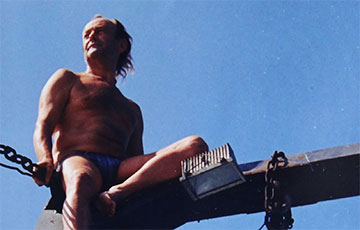
Stanislav Kurilov's swim remains a mystery to this day.
Soviet oceanographer Stanislav Kurilov was invited to participate in joint research by Jacques Yves Cousteau himself. However, he gained worldwide fame not because of his scientific work, but due to his extraordinary escape from the USSR. He jumped off a cruise ship and swam nonstop across the Pacific Ocean for three days. After swimming about 100 kilometers, Kurilov reached Siargao Island, located in the southern part of the Philippine archipelago. It remains a mystery to this day how he managed to cover such a significant distance without food or sleep. July 17 marked the 90th anniversary of Kurilov’s birth. "Gazeta.Ru" recalls how he managed to make a daring escape from the USSR.
Why Kurilov Wanted to Escape
On December 13, 1974, oceanographer Stanislav Kurilov carried out one of the most extreme escapes in the history of the USSR. He jumped from the deck of a cruise ship into the ocean, managed to swim about 100 km across the Pacific Ocean to Siargao Island in the southern Philippines, and requested political asylum. A long-held dream eventually led him to Canada.
Kurilov, a representative of a thoroughly civilian profession—neither a government official nor a secret service agent—was driven to take this desperate step by a sense of grievance. He was not an anti-Soviet by conviction and, as far as can be judged from indirect evidence, was not particularly involved in politics. However, he suffered because he was not allowed to leave the country as a potential non-returnee. The authorities’ rationale for this decision was Kurilov’s “disreputable” family ties.
After marrying an Indian citizen, his sister had been living in Canada.
A graduate of the Leningrad Hydrometeorological Institute with a degree in “Oceanology,” Kurilov worked at the local branch of the Institute of Oceanology of the USSR Academy of Sciences, as well as serving as a deep-sea diving instructor at the Institute of Marine Biology in Vladivostok. But he was drawn to foreign lands and warm oceans. His status as a person prohibited from traveling abroad hindered his career advancement in his chosen field.
By all accounts, he was in very good health and excellent physical shape, thanks in part to his practice of yoga—a practice unknown to most Soviet citizens—likely influenced by a foreign relative. Unable to legally leave the USSR, Kurilov devised an escape plan. It was as daring as it was insane: after jumping from a Soviet ship into the open ocean—at night, no less—he planned to swim an ultra-long distance into the unknown.
To carry out his plan, Kurilov booked a “From Winter to Summer” cruise and boarded the liner “Soviet Union,” which was scheduled to take tourists from Vladivostok to the equator and back before New Year’s, without calling at any ports. Since there would be no contact with the “outside world” during the trip, an exit visa was not required to board the ship. Kurilov realized this was a once-in-a-lifetime opportunity.
The trip was expensive, and wealthy Soviet citizens were eager not to miss the opportunity to party hard. Some didn’t leave their cabins for the entire duration of the voyage—they simply sent messengers out for alcohol and snacks.
“Behind the door of every cabin—music, drunken shouts, moans of love… The tourists indulged in revelry every precious day of their vacation,” Kurilov recalled.
For appearances’ sake, he took part in the group gatherings, but he spent most of his time gazing out at the ocean, watching the stars, and exploring the ship.
“‘All I had was a map and binoculars’
After analyzing the liner’s approximate route, Kurilov pinpointed the spot where it would come closest to land. The 38-year-old oceanographer had no doubts about his own abilities. He had been an excellent swimmer since childhood and had even swum across the Irtysh River when he was very young. Although, of course, the width of the river within the city limits could not be compared to the raging ocean.
Years later, having long since settled abroad—reserved and taciturn, as people described him—Kurilov wrote the book *Alone in the Ocean: A Story of Escape*, which became a bestseller.
“On the day I was denied a visa—yet again—to work on long-range oceanographic vessels, my patience ran out. Usually, I was denied without any explanation. This time, my personal file contained a note that amounted to a verdict: ‘Comrade Kurilov—we consider visits to capitalist states inappropriate.’ It was as if I’d been stung. Everything inside me reared up. This was, of course, hopeless! “A life sentence without the slightest hope of freedom!”—he wrote, recounting the defining moment of his life.
If Kurilov is to be believed, after that incident, he lost all fear. He no longer felt bound to the country by patriotic obligations and refused to accept that, “having been born on this wonderful blue planet,” he was “locked up for life in a communist state for the sake of some foolish ideas.”
Not wanting to be exposed prematurely, Kurilov carefully prepared for his escape. He arranged for vacation time at work and traveled from Leningrad to Vladivostok, where he had been on business many times before. The decision of this grown man was, of course, well thought out. He was consciously taking a huge risk.
“I went to say goodbye to my friends,” Kurilov wrote in his book. “I had a ticket for the steamship, but I couldn’t tell them about it. I knew I might not return, and I wanted to see them one last time. It seemed to me that, by saying goodbye, I was condemning all my close friends to death. The three of us sat together one last time over a bottle of vodka.
At the time, it was hard for them to imagine that in a couple of weeks they would receive news that I had gone missing off the coast of the Philippines.”
On the way to Vladivostok, the flight Kurilov was on made stops in Irkutsk, Krasnoyarsk, and Khabarovsk. The Far East was gripped by bitter cold. The thermometer dropped below 40 degrees. According to Kurilov’s recollections, what he saw in those cities only reinforced his belief that he had made the right choice. It seemed to him that people there did not live for years, but merely survived “after some kind of catastrophe, when this planet was subjected to an ice age.” Having dreamed his whole life of the tropics, the sun, and the ocean, Kurilov had been preparing for his journey on Lake Baikal a little earlier, even before he had a precise plan of action: he did special exercises, swam in icy water, and rubbed himself down with snow.
The Leningrad oceanographer’s arrival in Vladivostok roughly coincided with a visit by U.S. President Gerald Ford, which, as the fugitive noted, led to the city being cleaned up and spruced up. The liner’s departure was scheduled for December 8. Kurilov saw a certain symbolism in the fact that the ship “Soviet Union” was built in the 1930s in Nazi Germany and, according to legend, was originally named “Adolf Hitler,” serving as something of a personal yacht for the Führer. During the war, it was sunk, but after the war ended, it was raised from the seabed by Soviet specialists.
In reality, Kurilov either mixed up some facts or deliberately misled his readers for the sake of a compelling story. In reality, the steamship was built in the first half of the 1920s and was called the “Albert Ballin” during the Weimar Republic. Since this businessman was Jewish, the Nazis renamed the ship the “Gansa.” The steamship had no direct connection to Hitler; during World War II, it transported military cargo and Wehrmacht personnel. In March 1945, the “Gansa” struck a mine. Four years later, the ship was salvaged and restored in the GDR.
“All I had was a small-scale map of the Pacific Ocean, a star chart, and a pair of binoculars,” the hero recalled. “I planned to determine the ship’s course by calculation and by the visible contours of the land. To my great joy, on the third day of the voyage, our mysterious route was revealed.”
100 kilometers instead of 18
So, on December 13, 1974, Kurilov, seizing the moment under cover of darkness, jumped from the stern from a height of over 12 meters and narrowly avoided being caught in the ship’s propellers.
He made it: he put on his fins, mask, and snorkel and set off on his main swim. In today’s competitive open-water swimming events for men, medals are contested over a 25-kilometer distance. They wear warm wetsuits, and the water is thoughtfully cleared of jellyfish for their comfort.
Kurilov had nothing but extraordinary endurance and swimming skill. Most likely, with that level of training, he could compete for an Olympic gold medal today—especially since the race there is only 10 km.
The swimmer was stung by a jellyfish only once, and the sharks showed no interest in him.
According to Kurilov’s calculations, he was supposed to swim only about 18 km. However, errors in navigation and currents increased the distance more than fivefold. He swam for nearly three days, and when he made it ashore, he was detained by Philippine law enforcement for violating the national border.
“He accomplished his greatest feat at the age of 38—at the height of his physical and spiritual maturity,” noted Doctor of Philosophy, Professor, head of the Department of Philosophy and Socio-Political Disciplines at Amur State Pedagogical University Rudolf Livshits. “Here he describes how, having overcome countless dangers, he reached the longed-for shore. And then he suddenly realizes that he didn’t bring any documents, no money—absolutely nothing necessary for survival.
In other words, when he decided to jump overboard into the stormy ocean, he didn’t even think about what would happen afterward, once he reached some destination.
Where would he live? What would he do for a living? How would he support himself? Vague dreams flit through his mind of living on a deserted island, of subsisting, like Robinson Crusoe, on the bounty of the sea. Such daydreams are acceptable for a child who knows nothing of real life, but an adult is an adult precisely because he understands the difference between fantasy and reality.
On the Philippine island where Kurilov ended up, the police naturally took an interest in him. And there’s nothing surprising about that: a man appears out of nowhere, speaking an unfamiliar language and unable to produce any identification. It’s necessary to establish the stranger’s identity and determine what to do with him.
Slava, however, is stunned: “Where, he wondered, would the police be on a tropical island?”
If we accept the theory that Kurilov decided on his reckless act out of a desire to see tropical countries, then we must conclude that he was driven by a whim. But then again—that’s not a trait of an adult. At a certain stage in life, a child begins to realize that not every desire can be fulfilled, and takes another step toward adulthood. Kurilov never took that step, which is why he remained “Slava” forever.”
“He knew how to overcome fear like no one else”
Kurilov spent half a year in the Philippines, awaiting the authorities’ decision on his fate. After making his way from a Philippine prison to safe Canada, to his sister’s home, the oceanographer initially got by doing odd jobs at a pizzeria. Later, through a referral, a company specializing in marine research off the Hawaiian Islands learned of his skills and expertise. Kurilov stayed in North America for just over 10 years. The wanderer’s final destination was Israel, where he found a position at the Haifa Oceanographic Institute. It was there that Kurilov married Elena Gendeleva.
““We met at my friend’s birthday party—she was an artist in Jaffa—in a huge Arab house,” she told The Epoch Times in 2014. “It was June 1985, warm, sunny days. It was June 25. I’d heard about Slava and read an excerpt from *The Escape* in the magazine *22*. He had come to Israel for consultations regarding the filming of a movie about his escape. Slava was also invited to this “get-together.”
He was so wonderful, so charming! We exchanged phone numbers. The film project stalled, and Slava left for Canada.
Sometime in March, Slava showed up in Israel again. And exactly one year later, to the day, on June 25, I ran into him at a bus stop near my house. We struck up a conversation; our talk lasted six hours—and then another twelve years.”
In his new homeland, Kurilov died tragically on January 29, 1998. While diving in Lake Tiberias, the elderly man—in his 60s—became entangled in fishing nets on the lake bottom and, having used up all the air in his tank, suffocated. According to one account, the oceanographer was trying to free his partner from a trap.
“He knew how to overcome fear like no one else,” Kurilov’s widow recalled. “His words still strike me to the very core: ‘The struggle for survival could have greatly distracted me from my observations. I wanted to see and understand everything that had always been hidden from human eyes and attention. I lost my composure only for a brief moment.”
In the Soviet Union, Stanislav Kurilov was sentenced in absentia to ten years in prison for treason against the Motherland.

Bank's name: Bank Millennium S.A.
Address: ul. Stanislawa Zaryna, 2A, 02-593, Warszawa
IBAN: PL97116022020000000216711123
SWIFT: BIGBPLPW
Name of the account holder: Fundacja “KARTA ‘97”
Purpose/title of payment: Donation for statuary aims
You can contact us by the e-mail charter97@gmail.com