
Russian Troops On The Front Lines Have Begun To Suffer From A Fuel Crisis
1- 22.07.2026, 20:49
- 1,632
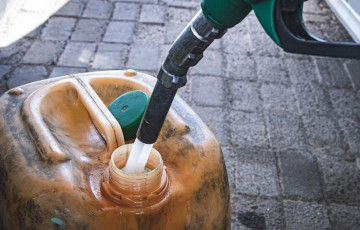
Strikes by the Ukrainian Armed Forces have put Russia's largest oil refineries out of commission.
The fuel crisis caused by Ukrainian strikes on oil refineries has now reached the front lines. Russian military personnel told "Verstka" about this. They are having trouble refueling their personal vehicles and generators—they often have to buy gasoline for them at their own expense at prices inflated by the crisis. Some soldiers complain about the introduction of fuel limits even for military vehicles.
The names of the interviewees have been changed at their request.
“It’s getting worse by the day”
“Yeah, the gasoline situation is a total mess,” says Nikita, a soldier. “Everyone gets very little; there’s a catastrophic shortage of gasoline.” Whereas before they could take as much fuel as was needed to carry out their missions, the limit is now no more than 20 liters per vehicle per day, he laments. At the same time, the army allocates fuel exclusively to vehicles with “black license plates” carrying out combat missions, the soldier added.
Several other interviewees from “Verska” also noted a reduction in fuel supplies. Petr, a conscript, estimated this reduction at 30%. It has affected both combat vehicles and those delivering ammunition and food, the soldier noted.
Mikhail, from the Zaporizhzhia sector, has faced even more severe consequences of the fuel crisis. “Whereas they used to deliver about 20 liters of gasoline to our position, now—‘sometimes 15, sometimes 10—they bring next to nothing,’” he complains. As a result, he and his fellow soldiers have to walk 11 kilometers to fetch supplies—whether it’s food, gasoline, or water. He doesn’t understand how they can continue fighting under these conditions. “It just keeps getting worse,” Mikhail laments.
Soldier Oleg has also faced disruptions in fuel supplies. “Sometimes they can’t deliver it, sometimes it’s run out, it takes a long time for new supplies to arrive, and so on,” he said, adding that he doesn’t refuel the vehicles himself.
Only three out of ten soldiers surveyed mentioned any problems with departmental fuel supplies. Andrei, a soldier, assured us that everything is “normal” with gasoline at the front. “They supply us based on our requests—whatever we order… The guys standing nearby say everything’s fine, too,” he noted.
Maksim, a soldier, described the fuel situation as completely stable: every two days, they receive 20 liters of gasoline for a two-person unit—enough to refuel both motorcycles and generators. Only occasionally do they have to buy fuel themselves. Maxim wasn’t satisfied with one other thing—the quality of the gasoline from the Ministry of Defense. It’s “kind of yellow, not as clean as at a gas station,” the soldier explained.
“Yes, there’s plenty. But only for military vehicles. You can’t buy any for your own use,” said Ivan, a serviceman, to “Verstka” regarding the fuel situation for military vehicles. They borrow fuel from one another and sell it to local residents at a price starting at 350 rubles (almost 13 Belarusian rubles) per liter. However, as Ivan relayed from his fellow soldiers, “fuel used to be stolen by the ton,” but now the situation has changed—they’re driving less.

Bank's name: Bank Millennium S.A.
Address: ul. Stanislawa Zaryna, 2A, 02-593, Warszawa
IBAN: PL97116022020000000216711123
SWIFT: BIGBPLPW
Name of the account holder: Fundacja “KARTA ‘97”
Purpose/title of payment: Donation for statuary aims
You can contact us by the e-mail charter97@gmail.com