

An Army General Revealed What The Ukrainian Armed Forces Are Planning In Crimea
3- 8.07.2026, 15:14
- 4,118
The loss of Crimea could mark the beginning of the end for Putin's regime.
The Ukrainian Defense Forces are systematically depriving occupied Crimea of its role as a secure rear base for the Russian army. Strikes on logistics, energy infrastructure, airfields, warehouses, and air defense systems are intended to transform the peninsula from a military stronghold into an isolated trap for the occupiers.
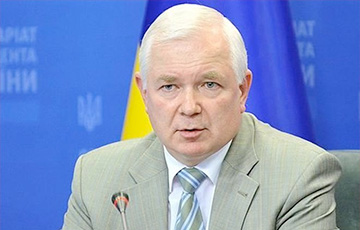
Army General Nikolai Malomuzh on the air “Channel 24” explained the strategic objective of Ukrainian operations in Crimea. According to him, losing control of the peninsula could set in motion processes that would undermine not only Russia’s military capabilities but also the stability of Putin’s regime.
The strategic objective of the Ukrainian Defense Forces is to establish complete fire control over occupied Crimea. To achieve this, it is necessary to systematically strike Russian command posts, logistics routes, the Kerch Bridge, ammunition depots, troops, and air defense systems.
- The strategic concept today is to turn Crimea into an area under our complete fire control. This involves destroying all resources related to troop command and logistics, specifically the Kerch Bridge, five airfields, the S-400 and S-500 systems, drones, troops, and ammunition depots,” Malomuzh explained.
A separate objective is to cut off the supply of petroleum products needed by the Russian Air Force, strike groups, and military units. The isolation must cover all sectors so that the peninsula can no longer serve as a base for the buildup of forces and further attacks on Ukraine.
“The area that Russia called a springboard for troop deployments, the accumulation of resources, and its military-political outpost must be turned into a trap—strategic, military, economic, and energy-related,” the Army General emphasized.
Once the bridges, ferry crossings, and supply routes are destroyed, the occupiers will lose the ability to regularly receive equipment, weapons, ammunition, and fuel. Russian ships will also be under constant fire from Ukrainian forces, which will further limit the group’s ability to evacuate and receive reinforcements.
The loss of Crimea could mark the beginning of the end for Putin’s regime
The isolation of the peninsula should create conditions for a broader operation by the Ukrainian Defense Forces. If the Russian force loses a stable supply line, it will be unable to fully utilize heavy weapons, replenish ammunition stocks, or support its personnel.
“The enemy will lack the resources to support its troops, deploy heavy firepower, and supply them with ammunition and fuel. Troop morale will be crushed, and panic will create opportunities for our forces to act more effectively,” Malomuzh explained.
The loss of the ability to use the peninsula as a military outpost will undermine the Russian dictator’s authority among his inner circle and the population. The victories, new territories, and strengthening of Russia promised by Putin will increasingly contradict the reality on the ground.
“Crimea could become an extremely effective strategic springboard for changing the situation on the front lines and weakening support for Putin’s regime. This would be a factor capable of dismantling not only the model of warfare but also the entire regime directed against Ukraine, Europe, and other countries around the world,” the Army General emphasized.
Successful Ukrainian operations on the peninsula could trigger internal destabilization in Russia and mark the beginning of the rapid collapse of a regime that Putin has largely built on the myth of Crimea’s “return.”
For the Kremlin, Crimea is significant not only as a military base. Putin has made the occupation of the peninsula a symbol of the supposed revival of the empire, so losing control over it would be a personal and political blow to the Russian dictator.
“For Putin, Crimea is not just a military sector or a piece of occupied land. He has made it a symbol of the revival of a great empire, so the loss of this symbol would undermine his authority and effectively mark the beginning of the end of his regime,” Malomuzh explained.
Russia will attempt to redeploy aircraft, drones, and missile systems to Crimea and restore damaged supply routes. At the same time, the Kremlin may intensify attacks on other sectors of the front and on Ukrainian cities to force Kyiv to halt operations against the occupiers on the peninsula.
Moscow will be counting on heavy civilian casualties and public pressure on Ukraine’s military and political leadership. In this way, Putin will attempt to impose a trade-off: a cessation of Russian attacks in exchange for Ukraine’s refusal to further weaken the occupying forces in Crimea.
- Putin will not give up Crimea so easily. He is more likely to retreat from a specific sector of the Donetsk or Zaporizhzhia regions, but he will hold on to the peninsula by any military means necessary, launch attacks on the civilian population, and issue ultimatums—in particular, threatening to use tactical nuclear weapons, – Malomuzh emphasized.
Ukraine will have to go through a difficult phase of military confrontation, as the Kremlin will perceive the loss of military control over Crimea as a threat to the very existence of the regime. However, the weaker the Russian presence on the peninsula becomes, the fewer opportunities Putin will have to pressure Kyiv and impose negotiations on his own terms.

Bank's name: Bank Millennium S.A.
Address: ul. Stanislawa Zaryna, 2A, 02-593, Warszawa
IBAN: PL97116022020000000216711123
SWIFT: BIGBPLPW
Name of the account holder: Fundacja “KARTA ‘97”
Purpose/title of payment: Donation for statuary aims
You can contact us by the e-mail charter97@gmail.com