
Russia Faces The Risk Of Losing Its Grain Harvest Due To A Diesel Shortage
13- 9.07.2026, 20:27
- 8,038
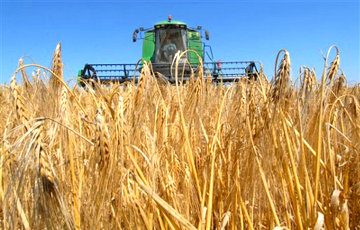
The situation is critical.
The 2026 harvest season is turning into a nightmare for Russian farmers, who are facing a diesel fuel shortage, restrictions on its sale, and rising prices.
The shortage of diesel fuel for combine harvesters and other machinery is particularly acute in key southern regions—the Rostov Region, Krasnodar and Stavropol Krais, which account for one-fifth of the total grain harvest, according to Forbes citing market participants.
In the Kuban region, diesel fuel can be found along the M4 federal highway, and people are forced to spend the night at gas stations while waiting for fuel tankers, a farmer working in the region told the publication. At the same time, gas stations have imposed limits—100 or 200 liters per person—while a single combine harvester consumes up to 300 liters of fuel per shift. “Many don’t risk heading out to harvest without being sure that fuel will be delivered to the field,” the Forbes source said.
In Crimea, which has become the epicenter of the fuel crisis, machinery “is just sitting idle,” reported a representative of an organization operating on the peninsula. In the Rostov Region, which harvests about 10 million metric tons of grain annually, farmers are already talking about a potential loss of up to 15% of the harvest, says Vladimir Poklad, director of the management consulting practice at the “Delovoy Profil” group.
Due to attacks on oil refineries—all of the top 10 largest refineries have been targeted over the past two months—diesel fuel production in Russia has plummeted by nearly 40%, and refinery utilization rates have fallen to their lowest levels since the early 2000s. The situation in the Sverdlovsk Region is critical, an employee of a regional agricultural enterprise told Forbes. “We have enough fuel to last a month; after that—no one knows. So far, officials have only been compiling an endless number of tables with charts showing fuel needs and availability, and that’s it,” he laments. “Everyone understands that if we don’t harvest the crops, it will be a nightmare. But no one understands exactly how to help.”
In Yakutia, restrictions are in place—up to 200 liters of diesel per person. But the republic’s vast territory makes it impossible for producers to drive tractors and other equipment 200–300 km just to get a supply of fuel that’s barely enough for a day’s work, complains Maya Gulyayeva, executive director of the “Sakha People’s Farmer” Association Maya Gulyayeva.
For small and medium-sized farms that do not have their own fuel reserves, the situation is even worse. “Diesel reserves cover only 14 days of field work, forcing us to buy fuel on the spot market at inflated prices,” says Poklad.
The fuel problem is exacerbated by the fact that the harvest must be completed in literally one week to 10 days from the moment the grain ripens, notes Andrei Sizov, director of the “Sovecon” analytical center: if they don’t finish in time, the grain will start to shatter, and if it rains, the harvesters simply won’t be able to go out into the fields.
The 2026 harvest is already significantly behind last year’s: as of July 1, 1.3–1.5 million hectares had been threshed, which is three times less than the 4.2–4.6 million hectares harvested during the same period last year. However, this is primarily due to weather conditions, and this factor could be offset by the end of the harvest, according to Sizov.
For the full year, “Sovecon” forecasts a wheat harvest of 88.9 million metric tons—2.5% lower than last year’s.

Bank's name: Bank Millennium S.A.
Address: ul. Stanislawa Zaryna, 2A, 02-593, Warszawa
IBAN: PL97116022020000000216711123
SWIFT: BIGBPLPW
Name of the account holder: Fundacja “KARTA ‘97”
Purpose/title of payment: Donation for statuary aims
You can contact us by the e-mail charter97@gmail.com