
Ukraine Is On The Hunt For Russian "Iskander" Missiles
- 10.08.2026, 21:45
- 1,116
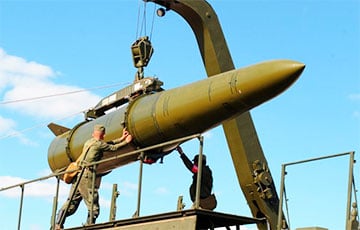
A military expert outlined two scenarios for the destruction of ballistic missile launchers in Russia.
Russia launches ballistic missiles from mobile “Iskander-M” systems, which quickly take up firing positions after emerging from cover, launch the missiles, and then leave the area. Therefore, the main challenge for Ukraine lies not only in detecting such a system but also in managing to strike it within a short period of time.
Military expert and founder of the “Reactive Mail” Foundation Pavel Narozhny on the air “Channel 24” explained under what conditions the Ukrainian Defense Forces could “intercept” Russian launchers and why, for one of the scenarios, it is critically important to have their own ballistic missiles. He also described another, as yet significantly more complex option for hunting down “Iskanders” deep inside Russian territory.
How can Ukraine “intercept” Russian launchers?
Russia may have up to a hundred “Iskander-M” launchers, but the area of their potential deployment can be narrowed down to a certain extent. The system’s maximum range—about 500 kilometers—and the directions of previous launches are known. In addition, launching a missile requires a suitable area free of obstacles in its flight path—such as buildings, trees, or terrain—that would interfere with the launch.
- Can we detect them? It’s entirely possible. “The Iskander-M is a fairly large and distinctive vehicle that looks very different from civilian trucks. When it emerges from its cover, a satellite can spot it,” explained Narozhny.
Destroying the system while it’s actually on the move is much more difficult. It’s more realistic to strike once the system has already arrived at its firing position and has come to a stop for a few minutes before launch. Such a strike requires a weapon capable of covering the distance from Ukraine to the target very quickly.
“It remains in its firing position for several minutes. That’s enough time for us to destroy it from Ukrainian territory using a ballistic missile traveling at Mach 3 or faster.” But we need to have precisely these missiles,” the military expert emphasized.
Under current conditions, it is precisely the lack of a sufficient number of our own ballistic missiles that significantly hinders such strikes.
Scenario Two: Drones Over Russia
Another option for targeting Russian launchers is significantly more complex and, for now, largely theoretical. For this, Ukraine would need stable satellite communication over Russian territory, which would allow it to control strike drones directly behind enemy lines.
“If we can reach an agreement with SpaceX and they enable communication over enemy territory, then, in theory, we could build a drone carrier,” Narozhny said.
Such a platform could be, for example, the “Neptune” cruise missile, which would carry several loitering munitions. It could be sent in advance to the area of a probable launch, and once an “Iskander” is detected, the drones could be launched from a position close to the target.
“We see the launcher approaching the firing position; drones take off from the ‘Neptune’ and destroy it via Starlink.” Right now, this sounds more like science fiction, but such a scenario could become a reality in the future,” explained the military expert.
The feasibility of this option depends directly on the ability to use SpaceX’s satellite network over Russia. Until such conditions exist, this method remains a promising concept rather than a ready-made solution for the Ukrainian Defense Forces.

Bank's name: Bank Millennium S.A.
Address: ul. Stanislawa Zaryna, 2A, 02-593, Warszawa
IBAN: PL97116022020000000216711123
SWIFT: BIGBPLPW
Name of the account holder: Fundacja “KARTA ‘97”
Purpose/title of payment: Donation for statuary aims
You can contact us by the e-mail charter97@gmail.com