
Russia Has Identified Those "Responsible" For The Hogweed Invasion
1- 26.08.2026, 11:58
- 2,754
They are barred from leaving the Russian Federation.
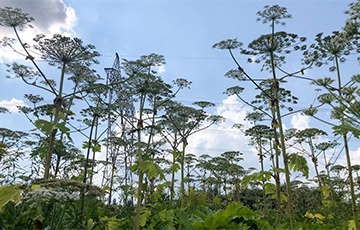
The area overrun by hogweed in Russia is not shrinking because landowners are not taking comprehensive measures to combat the weed. RIA Novosti stated by the Federal Service for Veterinary and Phytosanitary Surveillance (Rosselkhoznadzor).
According to the agency, between 2022 and 2026, this plant is expected to overrun approximately 22,000–27,000 hectares of agricultural land each year.
Rosselkhoznadzor notes that legislative changes designed to combat the spread of dangerous invasive plants, including Sosnovsky’s hogweed, took effect in Russia on March 1, 2026. Property owners, tenants, landowners, and land users are required to take measures to combat dangerous vegetation. Failure to comply with this requirement may result in the compulsory seizure of the property.
So far, there have been no cases of confiscation due to hogweed in Russia; authorities have limited themselves to a “milder” ban on traveling abroad. Last week, two residents of the Perm Krai were barred from traveling abroad because their property was overgrown with hogweed. Municipal authorities ordered the owners to clean up the property and completely remove the plant, but the requirements were not met, after which bailiffs intervened.
To combat hogweed, the Federal Service for Veterinary and Phytosanitary Surveillance (Rosselkhoznadzor) recommends that Russians use herbicides: It is recommended to “burn” stands of this dangerous weed using chemical treatment, and then plow, cultivate, and sow the area with perennial leguminous grasses, specifically red clover, hybrid clover, or creeping clover.
In areas where the use of herbicides is restricted or chemical treatment could not be carried out in a timely manner, giant hogweed should be mowed, according to Rosselkhoznadzor: in the summer—at least once every 14 days, continuing the work until the stands are completely eradicated.

Bank's name: Bank Millennium S.A.
Address: ul. Stanislawa Zaryna, 2A, 02-593, Warszawa
IBAN: PL97116022020000000216711123
SWIFT: BIGBPLPW
Name of the account holder: Fundacja “KARTA ‘97”
Purpose/title of payment: Donation for statuary aims
You can contact us by the e-mail charter97@gmail.com